Contents:
-1903-The Return of Kid Curry
-Jim Thornhill, Kid Curry’s Accomplice?
The Return of Kid Curry
By 1903 the good citizens of Montana were feeling relieved. Their most notorious outlaw was no longer a threat. Harvey Logan, otherwise known as Kid Curry, was sitting in a Knoxville, Tennessee jail. Soon he would be on his way to a federal penitentiary in Ohio. The judge had given him 20 years for robbing the Great Northern express car near Malta in 1901. The $40,000 in loot he got away with was mostly in unsigned Montana National Bank at Helena notes. Much of the loot was recovered when Curry and his partner Fitzpatrick were captured. Still more was found when the other robber, Camilla Hanks, was killed in Texas.
Unfortunately, Curry managed to escape on June 27, 1903. The whole country went on high alert. Where would he strike next? Maybe he would return to his old haunts in Montana’s Little Rockies. Maybe he’d head for the Hole in the Rock sanctuary used by his former partners in crime, Butch Cassidy and the Sundance Kid. Nobody knew where he was, but there was lot of speculation. A letter allegedly written by Curry from jail during his trial had arrived in Montana in late 1902. It was addressed to an old friend, Edward Hanlon. In the letter Curry promised, “I will get out of this scrape yet.” He further declared, “It won’t be so long before I’m back in Montana, and when I am, there’ll be hell to pay.”
The thought of Curry settling old scores was pretty frightening to his former neighbors. Three weeks after the Great Northern robbery, someone had ambushed rancher Jim Winters in the Little Rockies. Winters had killed Curry’s brother, Johnny in a previous shootout over property ownership. Prophetically, Curry’s letter went on to say, “I’ll cut my way through hell before they take me again.” After his escape Curry first hid out in the North Carolina Mountains with a friend and fellow outlaw, Sam Atkins. The pair were tracked by a U.S. Marshal and a Pinkerton detective to an area called Jeffrey’s Hell. The trail was lost when they were unable to recruit a posse fast enough. Curry’s attorney, the former Tennessee Congressman L. C. Houck, said he had seen Curry in Atlanta shortly after his escape. Curry was on a ship bound for parts unknown. The Jeffrey’s Hell story had the most credibility. It wouldn’t be long until Curry acquired the resources to return to the West and resume his outlaw lifestyle.
Before long rumors surfaced that Curry had returned to his old stomping grounds of the Little Rockies. Someone said they heard he had been seen in Malta. Great Northern and Pinkerton detectives headed for Montana in force. Kid Curry had to be stopped. In mid-August two Valley County Ranchers had a squabble near Hinsdale. Bob Walsh shot his old friend, Josh Truax, over a dispute involving a team of horses. The team had allegedly been loaned to Kid Curry’s girlfriend and never returned. One of Truax’s other neighbors claimed that two years earlier the former friends had helped the Curry gang make their escape by supplying them with fresh horses. Maybe the shooting was to keep Truax from telling what he knew.
By the 22nd of August, the Fergus County Argus was speculating that Kid Curry had or would return to the Bad Lands near the Little Rockies. Nobody had forgotten that Curry was the prime suspect in the 1901 revenge killing of Jim Winters. One of those most worried would be Winters’ ranching partner, Abraham Gill. (Gill would mysteriously disappear in 1907, shortly after selling the ranch to the Coburn Cattle Company.) Others wondered if his former neighbors who had spoken freely about the Kid during his incarceration would now be living in fear. The paper also reported that two detectives had been dispatched to Carlton, near Missoula, to arrest a man believed to be Curry. Though the man “answered in a measure to the description” he proved not to be Curry. They soon joined another detective in Great Falls to check out another man being harbored by an Indian family on the “Reservation.”
On the night of August 28, 1903, there was what appeared to be an attempted holdup on the Westbound Flyer near Malta. The circumstances mirrored the 1901 robbery by the Curry gang. As the train was pulling out, a detective caught two men climbing onto the coal tender. Brandishing his gun, he ordered them off the train. They slid off and disappeared into the night. A third man, seen earlier with the pair, had boarded a day coach. All were reportedly armed. A cache of dynamite was subsequently found near the railroad tracks. This sure looked like the modus operandi of Kid Curry. A fourth gang member had tried to get off the train at Harlem, but was arrested by a stock detective and turned over to Great Northern agents in Havre. He turned out to be a local cowboy and part-time rustler named Baker. Three other potential train robbers were arrested at Malta a few days later. Great Northern officials were now denying that Kid Curry had been involved. To be on the safe side, they suspended cash shipments on the line.
Meanwhile, The Butte Inter Mountain reported that, “Landusky authorities declare Curry was seen in the hills near there Saturday.” Around Midnight on September 15, 1903, a hobo showed up at the door of James Moran’s ranch at Yantic, near Chinook. He said he had just gotten off a train from the east. Dirty and disheveled, he tried to convince Moran that he was none other than Kid Curry. He demanded the immediate use of a horse and saddle. The rancher had known Curry for years and was too afraid of him not to comply. The man departed saying he was headed north, but that was probably just a ruse to throw pursuers off. To Moran’s amazement, the horse somehow got returned the next night with a package containing some money for its hire.
Reports reached Chinook a week later that there had been two men shot near Landusky. One of them was said to be Chouteau County Deputy Sheriff Lund. Lund, however, was very much alive, having never left Fort Benton. About the same time, a sheepherder named Pessler claimed he have seen Curry up near the Canadian line. He was riding a pinto and asked for food.
Meanwhile to the south, panic was gripping the Northern Pacific Railway Line. Someone was threatening to blow up the tracks. The first letter to the N.P. demanded $25,000. To signal compliance, the railway was instructed to mount a white flag on each of its passing locomotives. James J. Hill, who controlled both the Northern Pacific and Great Northern Railroads, refused to pay the ransom. More railroad detectives and Pinkerton men poured into the state. The threats posed by the extortionist who might be the escaped train robber had to be taken seriously.
Then the bomber struck. A bridge over the Yellowstone near Livingston was dynamited on August 2, 1903. Someone had placed explosives on the center pier. The blast was heard a mile away in Livingston and was powerful enough to break windows there. Three trains passed over the damaged bridge that night before an engineer reported that it was out of alignment. Fortunately, there were no injuries and the damage was quickly repaired.
Two days later there was attempt to blow up a train on the tracks near Bozeman. The blast damaged the headlight, blew a hole in the roadbed and broke windows in the locomotive’s cab. The next morning a stick of “giant powder” was found in a box near the tracks. A report from Billings indicated that “the powder house of the Yegan brothers was rifled” on July 31st. The Northern Pacific Railway increased its reward to $2500 and the State of Montana chipped in another thousand. The County ponied up another $500.
The search for the culprits intensified as even more railroad detectives and Pinkerton men poured into the state. By now, detectives were asserting that Curry was no longer in Northern Montana. Rumor, once again, had Curry hanging around Deer Lodge in the western part of the state. Was he there to spring some of his pals from the state penitentiary? Or perhaps he was plotting mischief against the railroad. Who knew? He could easily have been the culprit in the extortion plot against the Northern Pacific. There were too many similarities to ignore Curry as a suspect. Curry hated railway mogul James Hill who had done everything in his power to track him down after Hill’s Great Northern train was robbed in 1901. The Great Northern Express Company had paid for the extra guards who watched over Curry as he had languished in that Tennessee jail. Like the Great Northern, the N.P. was under Hill’s control. The bomber was now demanding $50,000 or he would blow up more of the railway’s property. This number was close to the amount Curry had bagged in the 1901 holdup. Curry knew dynamite and had used it in the 1901 caper. Across Montana headlines screamed “Kid Curry” and the hunt was on.
Besides Curry, one early suspect was Sam Cohen. Slightly insane, he claimed to be the Livingston bomber. In his statement, Cohen said, “I dynamited the Northern Pacific bridge at Livingston. I had nothing to do with the blowing up of the engine at Bozeman. I found the dynamite by the side of the track and as the rails were crooked, I wanted to straighten them.” A posse rushed to Missoula to interview him. They thought perhaps the deranged man might have been used by Curry as part of the extortion plot. Then Cohen told them he had also blown up an airship high in the sky. The posse shrugged their shoulders and got back on the train to chase other leads. The man might be a lunatic, but he wasn’t their bomber. Kid Curry, perhaps the real bomber, was still at large.
On August 6th, a hobo named William Stadtz was arrested in Helena on suspicion of being one of the bombers. He was trying to sell a Winchester rifle for an Indian friend. The friend turned out to be Joseph Jarves, aka Jose Chavey. Jarves was caught a few days later. Looking through Jarvese’s campsite, police found a pillow case containing sixteen feet of fuse and thirty-one dynamite caps. Three more caps were found in the pocket of his overalls. Officers surmised that Jarves might be carrying a grudge against the railroad from having been kicked out of the yard a few weeks earlier. He even admitted passing through the area about the same time as the bombing of the moving train.
While incarcerated in Bozeman, Jarves and Stadtz tried to “burrow” their way through the jailhouse wall. Then someone sent a vile letter threatening to blow up Police Chief Travis’s house if the miscreants weren’t released. Some said the rude handwriting resembled that of the letters from the extortionist. Unable to pin the bombings on the pair, Police Judge Walker gave them 60 days in jail for vagrancy. Kid Curry remained a suspect in the plot against the N.P.
As the search for the bomber continued, N.P. officials at St. Paul kept getting threatening letters. Still they refused to cough up the demanded ransom. One letter warned that Sunday, October 2, 1903 would be the day of the next bombing. They were going to blow up more bridges or perhaps the depot in Livingston. Sunday came and passed quietly. The bombers must have been bluffing.
Finally, on October 18, 1903, detectives got their big break in the railway dynamite case. Operating on a tip, railway officers had intensified their patrolling of the tracks near Helena. Shortly after dark, an alert watchman came across a man digging under the tracks. The man jumped on a horse and fled. As soon as daylight arrived, two officers responded. They found the unique tracks of an unshod horse with a misshapen hoof and trailed it for miles. About noon, they came across a cabin. There they thwarted the escape of a well-armed man claiming to be J.A. Plummer. Plummer turned out to be Isaac Gravelle. He had just been released from prison in July. Further investigation revealed Gravelle had confided to his friend, Myron Shanks, that it was he who had bombed and extorted the Northern Pacific Line. Gravelle said he had stolen the dynamite from powder houses in East Helena and Bozeman. He further said he was planning to blow up another bridge at Townsend if the N.P. didn’t meet his demands. Shanks was ready to testify against Gravelle. The Northern Pacific bomber had been caught.
Kid Curry was no longer a suspect in the case. But where was he? The next sighting of the Kid occurred in February of 1904. A clerk at the Oxford Hotel in Denver said he recognized him. A bellboy confirmed that the stranger was acting suspiciously, especially when it came to the two satchels he was carrying. By the time police were summoned the man had disappeared. The Pinkerton Agency seemed to take the story seriously.
Back in Montana there was another odd event in early 1904. Curry’s old Little Rockies flame, Julia Landusky, married Alfred C. Conner on Friday the 4th of March. By Monday Conner was reported dead by suicide. Details were sketchy. What the hell was going on? And did Kid Curry play any part in it? According to a news report from May of 1904, Pinkerton men, operating out of Harlem, were still searching for him in the Harlem to Landusky area.
In June of 1904 Curry resurfaced in northwestern Colorado. With two accomplices, he robbed another train near Parachute, Colorado. They tried to make a getaway, but this time the posse was too fast. Curry was shot and wounded while trying to escape. Not wanting to be captured, he took his own life. Rancher Rolla Gardner was credited with the shot that wounded Curry. Huge rewards had been offered for Curry in the past, but Gardner only got $25 for his effort. He also got a new saddle and a replacement for the horse he had shot out from under him.
Even in death, Curry remained a mystery. It was hard to make positive identifications in 1904. Post mortem photos were taken and forwarded to Knoxville for identification by the lawmen who knew him from his time in jail. They agreed it was Curry. To be sure, the body was exhumed for further examination. One Doctor who saw it claimed that the corpse did not have the gunshot scar on the wrist that Curry was known to have. It was not until a month later that the Pinkerton Agency finally announced that the dead bandit was Kid Curry.
On November 1, 1904. a bank in Cody, Wyoming was robbed and the cashier killed. Local officials swore that the leader of the gang was none other than Kid Curry. The chase was on, this time featuring the old scout and showman, Buffalo Bill Cody, as a posse leader. The robbers slipped away. Maybe Curry was still out there, hiding in some lonesome canyon.
Ironically, the real Northern Pacific bomber and extortionist met a similar fate shortly after Curry’s death. On August 12, 1904, Isaac Gravelle shot Deputy Tony Korizek while escaping from the Lewis and Clark County Jail in Helena. Armed with a pistol, Gravelle hid in the alley behind Montana Governor Toole’s residence. After an initial exchange of gunfire, he ran into the basement of the Governor’s house. Wounded and cornered he shot and killed himself.
It is hard to say whether or not Kid Curry had returned to Montana in 1903. It sure seemed like he had a lot of friends in the Little Rockies. None of them were talking. As late as 1908, the Little Rockies Miner bragged about the Christian character of the community and made Curry look like a fallen saint whose only mistake was “his misguided act in holding up the Great Northern train…. Neither was he a ‘bad man’ as the term goes. His old neighbors speak of him as a man who always treated them right, paid his debts and always ready and willing to aid and assist those in need.”
Legends and outlaws tend to die hard. In 1907, William Pinkerton reversed his Agency’s assertion that Curry had been killed in 1904. He was now maintaining that Curry had, in fact, escaped to Argentina. There he rejoined Butch and Sundance as the Wild Bunch resumed their outlaw ways. Maybe it was true. Maybe Pinkerton didn’t want to pay out any more reward money. Who knows? Kid Curry sightings continued for years.
REFERENCES:The River Press. (Fort Benton, MT.) Sep 24, 1902.The Kalispell Bee. (Kalispell, MT.) Nov 28, 1902.The River Press. (Fort Benton, MT.) July 15, 1903.Fergus County Argus. (Lewistown, MT.) July 29, ‘03.The Billings Gazette. (Billings, MT.) Aug 4, 1903.The Billings Gazette. (Billings, MT.) Aug 7, 1903.The Billings Gazette. (Billings, MT.) Aug 11, 1903.The Butte Inter Mountain. (Butte, MT.) Aug 12, 1903.The Butte Inter Mountain. (Butte, MT.) Aug 17, 1903.The River Press. (Fort Benton, MT.) Aug 19, 1903.The Billings Gazette. (Billings, MT.) Aug 28, 1903.Fergus County Argus. (Lewistown, MT.) Aug 26, ‘03.The Butte Inter Mountain. (Butte, MT.) Aug 31, 1903.The River Press. (Fort Benton, MT.) Sep 2, 1903.Fergus County Argus. (Lewistown, MT.) Sep 2, 1903.Rosebud County News. (Forsyth, MT.) Sep 3, 1903.Fergus County Argus. (Lewistown, MT.) Sep 9, 1903.The River Press. (Fort Benton, MT.) Sep 23, 1903.Rosebud County News. (Forsyth, MT.) Sep 24, 1903.The Butte Inter Mountain. (Butte, MT.) Sep 28, ‘03.The River Press. (Fort Benton, MT.) Sep 30, 1903.Fergus County Argus. (Lewistown, MT.) Oct 31, 1903.The Billings Gazette. (Billings, MT.) Nov 13, 1903.The Butte Inter Mountain. (Butte, MT.) Oct 1, 1903.The Billings Gazette. (Billings, MT.) Oct 6, 1903.The River Press. (Fort Benton, MT.) Dec 23, 1903.Rosebud County News. (Forsyth, MT.) Aug 18, 1903.The Montanian. (Choteau, MT.) Feb 19, 1904.Big Hole Breezes. (Jackson, MT.) Mar 18, 1904.Fergus County Argus. (Lewistown, MT.) May 11, ’04.The Billings Gazette. (Billings, MT.) Jul 12, 1904.The Western News, *Stevensville, MT.) Aug 3, 1904.The Billings Gazette. (Billings, MT.) Nov 8, 1904.Fergus County Democrat. (Lewistown, MT.) Nov 15, 1904.Crow Creek Journal. (Tosten, MT.) Aug 8, 1907.The Little Rockies Miner, (Zortman, MT.) May 21, 1908.True West Magazine. Kid Curry’s Last Gunfight. Bob Boze Bell. November 2, 2012.
Jim Thornhill, Kid Curry’s Accomplice?
One of the characters nobody remembers from the heyday of Montana’s Little Rockies goldrush days is Jim Thornhill. Thornhill was a friend and partner of the notorious outlaw, Harvey Logan, better known as Kid Curry. The two had a long history going back to the shooting of Pike Landusky in 1894. Though Thornhill was never directly connected to any of the Kid’s crimes, he was often nearby. Maybe Thornhill was the part of the reason Curry had escaped jail twice and managed to elude law enforcement during his decade on the run.
It was Thornhill, along with Curry’s brother Lonie, who accompanied Harvey to Jew Jake’s Saloon that fateful day to confront Pike Landusky. Logan was upset with Landusky over his earlier arrest and brutal treatment at Landusky’s hands. He aimed to get even by picking a fight. As the fight began, Lonie Curry and Thornhill kept the crowd back calling for a “fair fight”. When Curry’s pistol fell from his pocket to the floor Thornhill retrieved and brandished it to keep the spectators away. Eventually Curry got the best of the larger, older man. The fight seemed over as Landusky lay bleeding on the floor. Then Pike reached for something inside his pocket. Was he fumbling for a gun or a handkerchief to staunch his wounds? Accounts vary. It was payday. There was a holiday party going on. The witnesses were probably all drunk.
Seeing Landusky’s movement, Thornhill tossed Curry’s gun back to him. In an instant Pike Landusky was dead. Pike Landusky was a popular man in the Little Rockies country: a miner, a rancher, part-time deputy and founder of his namesake town. Now he was gone. Someone must pay. Curry was already out on bail from a previous assault where he had posted a $500 bond. Feeling threatened and facing new charges, he became a man on the run. Thornhill and young Lonie Curry were both arrested for their role in the fight. They were tried separately in Fort Benton and acquitted.
Kid Curry’s life on the run would mean that no one would ever be held accountable for Landusky’s death. Eventually, Curry teamed up with elements of Butch Cassidy’s infamous Hole-in-the-Wall Gang. Though Logan had adopted the name Curry as early as 1894, he would become “Kid” Curry through his association with his outlaw mentor, Flat-Nose George Currie. In late June, 1897, the gang tried to rob a bank in Belle Fourche, South Dakota. Among the robbers were Flat-Nose George and the “Kid”. Part of the gang fled to Montana, where Kid Curry’s friends would surely help outlaws on the run. In September they were spotted passing through Red Lodge, Montana. They were headed North when the posse caught up with them near Lavina on the Musselshell about 100 miles from their Little Rockies destination. The trio were using the aliases of “Smith and Jones” when captured. It took a while for authorities to sort it out, but “Smith” was Kid Curry.
After being returned to South Dakota for trial they escaped. Curry made a clean break. His two accomplices were caught, tried and acquitted. They soon joined Kid Curry at Wyoming’s Hole-in-the-Wall sanctuary. There they planned more crimes. The robbery of the Union Pacific Railway on June 2, 1899 near Wilcox, Wyoming put the noted Pinkerton Detective, Charlie Siringo, on Kid Curry’s trail. Siringo learned that Curry’s brother Lonie and cousin Bob Lee had been running a saloon in Harlem, Montana. After trying to exchange some damaged money from the Wilcox robbery, the pair had closed up shop and disappeared.
Siringo was sent to Montana to pick up the trail of the Wilcox bandits. His hunch was that someone in the Little Rockies knew something about Kid Curry’s whereabouts. In the dead of Winter in 1900, Siringo got off the train in Great Falls. He rode to Lewistown before turning North. There was only one ranch between Lewistown and the crossing of the Missouri River at Rock Point, a distance of 50 miles. He endured a brutal February blizzard and had to wait for a chinook before finishing his journey. Finally arriving in Landusky, he used the alias of Charles L. Carter, a drifting cowboy with a criminal past from down Texas way. With Siringo, this was pretty close to the truth. He was a cowboy and he had done some unsavory things in his time. His goal was to befriend and gain the confidence of those who might still know the outlaw Kid Curry. In particular, he wanted to find a man he called “Jim T”. It didn’t take long. As he arrived in Landusky, his horse spooked and threw him in front of a laughing crowd of miners and cowboys. As he picked himself up, he noticed that his gun had somehow been lost in the dust-up with his horse. The man who retrieved it was none other than Jim Thornhill.
Siringo couldn’t believe his luck. He immediately treated Thornhill and the bemused crowd to a drink in the nearby saloon. Over the next few months the undercover detective became close with Thornhill and learned a lot about his relationship with the Kid. Thornhill was obviously still Curry’s confidant, partner and friend. The two were partners in a horse ranch running about 500 head. Thornhill had even named his young son Harvey after the “Kid”. Since mail to Landusky was being watched, Curry and Thornhill used the Chinook Post Office to communicate by letter. Siringo also surmised that Jim Thornhill was an alias. The Pinkertons were pretty sure Thornhill was actually an outlaw named “Dad” Jackson who had run with the Sam Bass Gang. (In this, the Pinkertons got it wrong. Thornhill was too young to have been an active outlaw in Jackson’s heyday.)
Another odd contact that Siringo made was with Pike Landusky’s daughter, Eliza. In the kind of bizarre coupling that can only happen in a remote mining camp, Eliza Landusky was now the common-law wife of Lonie Curry. Yes, the same Lonie Curry that had held off bystanders as her own father was being beaten and killed. Lonie had followed his brother into a life of crime and had recently been killed while hiding out in his old hometown of Dodson Missouri. Siringo’s employer, the Pinkerton Agency, had played a prominent role in tracking Lonie and his cousin, Bob Lee, down. Thornhill spoke bitterly about the Pinkertons for the killing of Lonie Curry and the arrest of Bob Lee.
The Pinkertons had traced Lee to Cripple Creek, Colorado when he asked the postmaster for a registered letter sent from Montana. Siringo probably had to struggle to maintain a straight face when he heard this. In all likelihood it was the undercover detective who tipped his employer off to the location of Bob Lee and maybe even Lonie Curry.
After his capture Bob Lee, aka. Bob Curry, was facing trial in Cheyenne Wyoming for the Wilcox train robbery. Lee’s high-priced Kansas City attorney came to Montana for help in building his case for Lee’s defense. The counselor met quietly with Eliza and Thornhill as he tried to build a case to defend Lee. Siringo listened in and reported what he heard to the Pinkerton Agency.
Thornhill never gave Siringo any definitive information on Kid Curry’s whereabouts. He did mention in general terms that the Kid was somewhere to the south planning another train robbery. Mad at the Union Pacific Railway and the Pinkerton’s for what had happened to Lonie Curry and Bob Lee, the “Kid” was going to hit them again, and hard.
Siringo spent nearly six months on his undercover mission in the Little Rockies. Finally determining that he had learned all he would ever learn, he resolved to take the search elsewhere. The Pinkertons had heard Curry was in Mexico. After recovering from a runaway wagon accident while running an errand for James Thornhill, Siringo boarded a train for the East.
If he had assumed Kid Curry would never return to the Little Rockies, he would have been wrong, dead wrong. Kid Curry did return to Montana at least once, maybe two or more times. On July 3, 1901, Curry and two accomplices held up a Great Northern train near Wagner, about 60 miles from the Little Rockies. They tried three times to blow the safe nearly destroying the Express Car in the process. They netted about $40,000, mostly in unsigned Montana Bank Notes. During the robbery, two passengers were wounded and another passenger, the Valley County Sheriff, was held at bay by gunfire.
The bandits made a clean getaway on fast horses. Sheriff Griffith was quick to organize a posse in pursuit. They tracked the gang to the Little Rockies. There the trail ran cold and the locals had little in the way of information to offer. Griffith thought the Curry gang might be holed up in in some remote gulch the Little Rockies, but lacked enough men for a thorough search.
The Sheriff was also watching a “person of interest”, one Jim Thornhill. Griffith told the press that Thornhill, who normally ran a herd of breed mares, now had a number of saddle horses. Thornhill was also seen with another man watching the posse through field glasses. As the search continued, the Great Northern telegraphed the Sheriff not to recruit any posse members from the area between Malta and the Little Rockies. Curry had too many friends there. Perhaps they learned this from Siringo’s reports from the year before. Curry had been on the lam for over 6 years, and was said to have a hideout in the area. There is a place on the Missouri River, just South of Jim Thornhill’s Ranch on Rock Creek, called Hideout Coulee. Perhaps a nearby friend kept the hideout stocked with food and supplies for outlaws such as Kid Curry.
The Curry gang most likely made their escape by having relays of fresh horses along the way. You don’t leave horses picketed out on the Montana prairie without someone attending to them. Curry’s ranching partner, Jim Thornhill, was the most logical person to supply fresh mounts. (Over 60 years later Western fiction writer Walt Coburn would claim that it was he, under the direction of his older brother Bob, who held the relay horses that facilitated the escape of the Curry gang. The Coburns and Jim Thornhill were friends.)
Griffith’s posse was unable to exchange their tired mounts for fresh horses. Anyway, the trail was getting cold. Word had it that Curry and his gang had escaped across the Missouri near Fort Peck. While the posse was combing the Little Rockies for the Curry Gang they used Jim Winters’ ranch as their base. Winters was the mortal enemy of the Curry boys. In 1896 he had killed Johnnie Curry in a shootout. One story says Johnnie had taken up with an ex-wife of the former owner of the Winters Ranch. Though recently divorced, this woman thought she had some claim to the ranch. That woman would be Mrs. Dan Tressler. By 1900 she would be Jim Thornhill’s live-in girlfriend, Lucy.
Another account says that there was a dispute between Johnnie Curry and Winters over a piece of improved property on the Winters ranch. This dispute was carried on by the new owner of the late Johnnie Curry’s ranch, a man named Black. It was finally resolved in favor of the Winters-Gill ranch after the death of Winters. Anyway, the one-armed Johnnie Curry tried to shoot Winters and missed. Grabbing a shotgun from beside the doorway Winters let Curry have both barrels.
Sheriff Griffith finally concluded that Curry and his cohorts were out of his reach. The Sheriff was also out of his jurisdiction. Griffith and most of his men were from Valley County. In those days the crime scene and the Little Rockies were both in Choteau County. (In 1915 the area became part of the newly-established Phillips County.) Moreover, as the Great Northern had already told him, the little Rockies was no place to recruit a posse to hunt down one of their own. Worn out and having no good leads, Sheriff Griffith disbanded the posse and returned to Glasgow. The robbers would not be sighted again until they tried to spend the loot months later in places far to the east.
Speculation is that Curry learned of the departure of the posse from a friend in the Little Rockies. Perhaps that friend was Jim Thornhill. Curry also may have had good reasons to return. Some say he could have stashed the take from the Wagner robbery in the Little Rockies. Some say he had a romance going with none other than Julia Landusky. (Julia had just married Grant McGahn in May, but the marriage wouldn’t last.) Apparently, Curry was also motivated by revenge against the man who had killed his brother Johnnie. The life of rancher Jim Winters was in mortal danger. On July 25, 1901, Jim Winters was ambushed as he stepped out of his cabin near the Little Rockies. Three assassins were seen fleeing from the hog pen. They were pursued by friends of the murdered rancher, but never caught. In 1907 Winters’ partner, a man named Abraham Gill, sold everything he owned and was preparing to leave the Little Rockies. Before he could close out his affairs Gill mysteriously disappeared, never to be heard from again. His relatives were so terrified, they refused to come to Montana to claim his effects. Though there is no evidence to suggest that Jim Thornhill was involved in either case, he probably knew who was. One local history says Thornhill had arranged an alibi by staying at someone else’s place during the Winters murder.
Kid Curry was apprehended by authorities near Knoxville Tennessee in mid-December, 1901. He had a gotten into a fight in a pool hall and wounded the two Knoxville police officers who responded. He was captured by citizens two days later. While jailed Kid Curry tried his best to avoid being identified. He insisted he was William Wilson. He refused to sit still for photographs. Witnesses were summoned from the Great Northern Railway. Arriving on the same train as the witnesses were Montana friends of the “Kid”, a man and a woman. The Great Northern witnesses identified Kid Curry as the leader of the Wagner train robbery. Siringo, who was then infiltrating the Hole-in-the-Wall Gang in Wyoming, heard that Jim Thornhill was one of the Montana friends now in Knoxville.
The Montanans secured the services of some top-notch attorneys, to include former Tennessee Congressman John C. Houk, to defend Curry. This crack legal team managed to delay the proceedings for a year and a half before Curry was finally tried, convicted and sentenced. Meanwhile Curry languished in the Knox County jail which would prove far less secure than the federal prison he was bound for. While Curry was awaiting trial, someone had tried to smuggle several saws hidden in a box of tobacco and extra-long pipes to him.
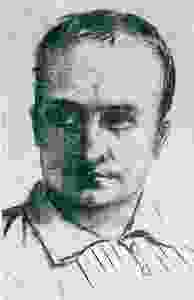
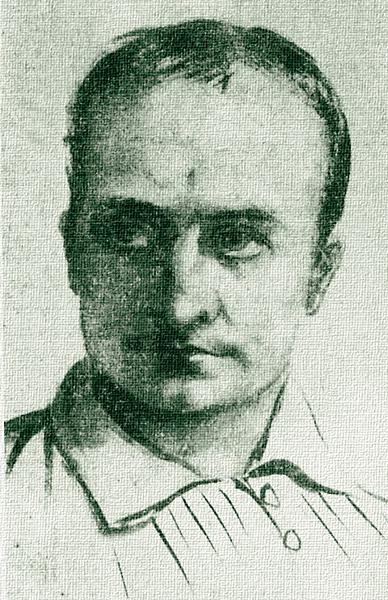
Newspaper sketch of Kid Curry in Knoxville Jail
After being sentenced to 20 years in Federal Prison, Curry managed a desperate escape from the Knoxville jail. He took the wire binding from a broom, garroted the guard and tied him to the cell. He then used a stick to pull a box containing two guns to within reach. Now armed, he summoned the other guard and took the keys. Sheriff Fox came out of his quarters just in time to see Curry escaping on the Sheriff’s favorite horse. One local paper joked that. “Sheriff Fox says he couldn’t capture Logan because he had just returned from a funeral and was unarmed. Possibly he did not make the attempt because he did not want to attend another funeral on the same day.”
Although it appears that Curry escaped on his own, Siringo heard that someone had paid off the Sheriff. The federal authorities were so outraged they sued Fox for dereliction of duty. Fox settled out of court and left law enforcement behind. One story holds that an old outlaw friend, Sam Adkins, rendezvoused with Curry after his escape. Together the pair made for the North Carolina mountains where they hid out for a time.
If Curry got any help from his Montana friends, it was probably through the mails while he was in North Carolina. A story soon circulated in Montana that, “a well to do stockman from Chouteau (County) is said to have given as a reason for not meeting a note of several thousand dollars when due, that his spare money was necessary to help Logan (Curry) in his trial.” Could that stockman have been Jim Thornhill? In 1903, there was one credible report that Kid Curry had been seen near Harlem, Montana. There were also dozens of rumors of Curry sightings in Montana. When someone tried to extort the Northern Pacific railway by blowing up trains and bridges, thoughts turned to Curry as a suspect. He was never found and later turned up dead by his own hand after a botched train robbery near Parachute, Colorado in 1904.
Apart from Siringo’s book, there is little mention of Jim Thornhill in contemporary accounts. He remained in the Little Rockies for a number of years. Newspapers occasionally cited him for community activities like serving as an election judge or as a member of the Good Roads Committee. There is still no direct evidence to prove that Thornhill helped Kid Curry in his career of outlawry. Looking at the record as a whole, however, it can be supposed that Thornhill was aiding Curry during his entire time on the run.
By 1903 Jim Thornhill began showing some signs of new prosperity. In May of ’03 an old friend named Snyder died in Great Falls. Thornhill split the cost of Snyder’s funeral with cowboy artist Charley Russell. Years earlier the trio had cowboyed together in Central Montana. Jim made an honest woman out of Lucy Sanderson by marrying her in Landusky on March 29, 1904. Shortly afterward he bought an English Shire stallion in Fort Benton for the princely sum of $725. (Over $20,000 in today’s dollars.) In November of 1906 he sold his horse herd to a Canadian buyer. It was said to be the largest horse sale of the year in Montana. Then he went into the cattle business.
In 1912 Charlie Siringo published his book, “A Cowboy Detective.” Though he changed the names of many of his characters, it was pretty obvious to everyone in Montana that “Jim T.” was none other than Jim Thornhill. One wonders of the oaths that were sworn when Thornhill found out his good friend “Charles Carter” was in reality a Pinkerton detective. Lonie Curry and Bob Lee had both been tracked down by the Pinkertons. Had his careless talk with the undercover detective revealed too much about them? It was time for Jim Thornhill to disappear from the pages of Montana history. The final reference to him was made in a newspaper article about the death of former Montana cattle baron Robert Coburn in 1918. It seems that Thornhill was working as Foreman for the Coburn outfit when the whole operation moved to Arizona about 1915. (Kid Curry is also said to have worked for Coburn outfit in the early ‘90’s.)
After Coburn’s death, Thornhill may have re-entered the cattle business near Globe, Arizona. He was granted two Arizona brands in 1921. He died in 1936 and was buried at Globe. Lucy joined him the very next year. In 2011, someone posted on Jim’s findagrave.com memorial, “Thanks for being a loyal friend to the Logan’s.”
REFERENCES:
A Cowboy Detective: A True story Of Twenty-Two Years With A World Famous Detective Agency. Charles A. Siringo, W.B. Conkey Company. 1912.
In the Land of Chinook: The Story of Blaine County. Alva J. Noyes. State Publishing Co., Helena, Mont. 1917.
Coburn, Walt. Pioneer Cattlemen of Montana: “The Story of the Circle C Ranch”. Norman, University of Oklahoma Press [c1968.
The River Press. (Fort Benton, Mont.) September 4, 1895.
The River Press. (Fort Benton, Mont.) February 5, 1896.
Black Hills Union. (Rapid City, South Dakota) July 2, 1897.
The River Press. (Fort Benton, Mont.) September 29, 1897.
The River Press, (Fort Benton, Mont.) January 17, 1900.
The Fergus County Argus. (Lewistown, Mont.) January 17, 1900.
The River Press, (Fort Benton, Mont.) March 21, 1900.
The River Press. (Fort Benton, Mont.) July 17, 1901.The Kalispell Bee. (Kalispell, Mont.) July 31, 1901.
The River Press. (Fort Benton, Mont.). December 25, 1901
The River Press. (Fort Benton, Mont.). January 15, 1902.
The Bolivar Bulletin. (Bolivar, Tenn.). October 3, 1902.
The Kalispell Bee. (Kalispell, Mont.) May 5, 1903.
The Federal Reporter, Logan v. United States, June 2, 1903.
The Comet. (Johnson City, Tenn.). July 2, 1903.
The Columbia Herald. (Columbia, Tenn.). July 3, 1903.
Fergus County Argus. (Lewistown, MT.) Aug 26, 1903.
The River Press. (Fort Benton, Mont.) May 4, 1904.The River Press. (Fort Benton, Mont.) November 7, 1906.
The Mineral Independent, (Superior, Mont.) Oct 31, 1918.
Arizona Republican. (Phoenix, Ariz.) February 21, 1921.“
Pike Peaked, Kid Curry vs Pike Landusky” Bob Boze Bell, True West, June 2, 2006.
https://worldhistory.us/american-history/this-wild-wild-west/wild-bunch-kid-currys-escape-the-missing-months.phpFindagrave.com, Memorial #8558407Harvey Logan, aka Kid Curry-Stories. B. Gill. June 11, 2007. fold3.com
 Outlaws, Outrages and Outright Lies