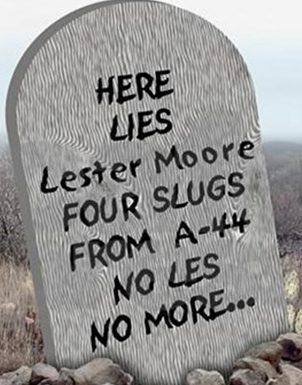
Kapow! Kapow! Kapow!
Reuben had just settled down for a good night’s sleep when he heard the three shots. There was trouble, but where?
The gunfire obviously came from one of his Sugar Creek neighbors. Reuben scanned the night as he exited his canvas shelter. A red glow came from Mace Johnson’s place. Fire! Had there been a raid?
He grabbed his pistol and saddled up. He didn’t know if he would be fighting fire or Missouri Ruffians when he got there. Just before reaching the main road, he heard pounding hooves. He paused as the riders went by. He couldn’t tell if they were friend or foe, but he suspected they were the latter.
Arriving at the Johnson place, he quickly dismounted. Johnson was beating what was left of his burning cabin with a wet blanket. His distraught wife and three small children looked on in anguish.
“What happened?” asked Reuben as began pitching dirt on the burning cabin with his bare hands.
“Damn Ruffians! I recognized one of them. It was George Clarke from Fort Scott.”
“The government land agent?”
“Yep. First, he did everything he could to keep me from filing my claim. Then he led a mob to burn me out.”
“I just missed the mob on the way here. They were headed up Sugar Creek.”
Both men paused. The fire had consumed most of the cabin and was dying down. They looked to the west. There was another fire glowing in the night sky.
“Them bastards are gonna hit every place on Sugar Creek!” Johnson lamented. “This cabin is a lost cause. Let’s head toward Montgomery’s and see if we can stop them.”
Reuben didn’t wait for Johnson to saddle his horse. If he caught up with the raiders he might be able to pick one of the rear guard off. He rode as hard as he could. As he passed the second burning cabin, he spied another one on fire up ahead. Soon there was a line of burning cabins and barns along the creek. By the time he reached Montgomery’s fort the fires had stopped.
“Did they try to get you?” Reuben asked as he swung down from his lathered-up mount.
“They filled my wagon with hay, rolled it to the top of the hill and set it afire. It missed the house on the way down. I think my Sharps might have winged one of them.”
“Should we organize a pursuit?”
“No, they’re moving too fast. Probably half way to Missouri by now.”
“Mace Johnson said one of them was George Clarke.”
“Clarke? That figures. I already had him on my list. Vengeance will be mine.”
“When will we go after them?”
“We need intelligence. I might just head over to Missouri and do some snooping around. Meanwhile, you and the boys need to rebuild and stay calm.”
The raid had been a shock to the Free State settlers of Linn County. Some gave up in disgust, but most stayed, vowing revenge. There was much rebuilding to do. Some fortified their houses like Montgomery’s. A wall of piled rocks provided quick protection.
Montgomery’s next move was to infiltrate the Missouri Ruffians. He boldly rode into the state and stopped at the house of a border ruffian named Burnett. Burnett’s wife let him in and even nursed him through an illness until Captain Burnett returned from a raid. Montgomery convinced Burnett that he was a teacher from back East.
This ruse got him a teaching job. He taught the Three R’s for two weeks; Reading, Writing and Revenge. He kept his eyes and ears open until the raiders dropped their guard and began to boast of their exploits. As the two weeks ended, he had a list of the ringleaders of the Sugar Creek raid. He returned to Linn County to organize his men. Only seven men, including Reuben, had been summoned. They assembled at Fort Montgomery to get their instructions.
After the prayer and roll call, Montgomery pointed to an oblong wooden box on the table.
“Beecher’s Bibles, Gentlemen.”
He grabbed a pry bar and began opening the crate. Reuben was about to get one of Henry Ward Beecher’s Bibles. As the top came off, he could see a layer of straw cushioning the contents. Montgomery reached in and pulled out a Sharps riffle.
Reuben finally understood what Beecher’s Bibles were. The good pastor had smuggled the most advanced rifles in the country past the prying eyes of Missourians in boxes labeled Bibles. Beecher’s Testaments turned out to be boxes of cartridges. The Lord does work in mysterious ways, Reuben thought.
The raid was planned for the next night. Montgomery didn’t want the Missourians to have time to notice the disappearance of their teacher. His plan was simple. Montgomery would take over Captain Burnett’s home. Two of the men would dress as Indians and ride through the settlement to create a distraction. This would bring the Sugar Creek raiders to the home of their leader.
Reuben was assigned to the group that would watch the house as the Ruffians made their way to the assembly point. Before the raid began, he spent some time familiarizing himself with his new Bible. It was quick to load and deadly accurate. His revolver would serve as a backup if things got too hot.
The men dressed as Indians went in first. They slipped about the periphery of the town making sure they were noticed. As the alarm began spreading, Montgomery went up to the Burnett house and knocked. He was hurriedly admitted. A minute later, he opened the door and signaled to the men outside. They were shortly reinforced by the “Indians.” The trap had been set.
“Hold up there! Put your hands in the air!” Reuben demanded as the first victim rushed to the house.
“Who are you?” queried his dumbfounded captive.
“Never you mind,” Reuben said, disarming the man. “Just go inside with this feller.”
The scene was repeated many more times until the house contained twenty-one prisoners. The captives couldn’t believe they had been tricked into surrendering by a handful of men.
“Set your cash and your valuables on this table,” Montgomery ordered as each new captive arrived. Soon the table was covered with watches, rings, and a mound of cash. Montgomery scooped the booty up. The cash alone came to $250.
“My force is watching this house. You men stay here until daybreak. Anyone leaving sooner will be shot.”
The prisoners looked on sullenly. Outside, Montgomery’s men selected eleven of their best horses to take back to Kansas. It was just compensation for the damage caused by the Sugar Creek raiders.
The company met again at Montgomery’s place on Thursday. By then the captured horses had been sent off to Topeka for sale. Montgomery divided up the cash from the raid. Those who had been burned out got most of it. Reuben got eleven dollars for his participation. That seemed fair.
The company compared notes on what had made the raid successful and what they could do better the next time. Then Montgomery brought out a newspaper.
“We’re famous boys, the Leavenworth Times called us ‘Robbers and ruffians of the worst character, practicing their rascality under the pretense of defending the Free State cause.’”
The men laughed heartily. They saw themselves as pious farmers, not robbers and ruffians.
Then they began planning activities that were closer to home. It was time to make sure the remaining pro-slavery settlers in the area learned that their power had waned. Montgomery insisted on warning each before any direct action was taken. No one who didn’t pose a threat would be burned out.
He formed groups and gave them lists of pro-slavery settlers to visit. Reuben rode with Montgomery’s squad. They called on about a dozen of the pro-slavery men. After the raid into Missouri, their task turned out to be easy. At each cabin, the owner came out and professed his desire to avoid trouble.
Last on the list was Judge Davis, one of three county officials who had appointed pro-slavery men to every Linn County position. He was also a territorial militia captain who was eager to enforce the “Bogus Laws” of the Lecompton Legislature. Being on the pro-slavery side had made him wealthy by local standards. He had large place with a big barn and a comfortable house.
“Did you ride with George Clarke?” Montgomery demanded. Davis’s face went white.
“No!” he protested.
Then Montgomery exploded, “I think you did! The shoe is now on the other foot. This is going to be a free state. We are the majority. As punishment for committing violence against the free state settlers, you are hereby banished. Pack up and get out, bag and baggage.”
With a large force of well-armed men backing Montgomery up, Davis caved to the inevitable. As it happened, an English immigrant bought him out at a bargain price the next day.
Word of the company’s visits to their neighbors spread quickly. The Lawrence Republican reported, “Captain Montgomery was called upon by the Free State men of Bourbon and Linn County to aid them in the defense of their lives and property…Every man whose name was given as one who would sustain the Blue Laws of the pro-slavery Lecompton government by fraud, violence, and murder was warned to leave the territory. Those who did not were visited again, and houses searched and their arms, ammunition, and horses taken. Only those who had been formerly active in robbing his neighbors were ordered off.”
As time went on, Montgomery’s force grew to fifty mounted men, each armed with a Sharps rifle. The “Immortal Fifty” were some of the first Kansans to be called Jayhawkers. The term referred to an Irish bird that raided the nests of other birds. Not considering himself a thief, Montgomery was not fond of the term. His men, on the other hand, loved it.
One day Montgomery led his force to Trading Post. The tiny settlement was known for its saloons which were frequented by bawdy ruffians from Missouri. Dividing his force, Montgomery attacked both of the settlement’s saloons simultaneously. The imbibers inside were caught totally off guard.
“Throw up your hands!” Montgomery roared. Reuben and the other men quickly lined the drinkers up against the wall and disarmed them. Reuben searched his man and found a hidden derringer. Small caliber, single shot. The other weapons seized were not much better.
“No wonder you scoundrels only attack at night,” Reuben chided as he took another man’s gun. “This pea shooter ain’t much good against my Sharps.”
The men stared back glumly as they were led outside. There, the Immortal Fifty broke the stocks on the guns and threw them into a pile. As they were pondering what to do next, Montgomery emerged from the saloon rolling a barrel of whiskey. He grabbed an ax from a nearby woodpile and broke the end open. Some of his men looked on in horror as their teetotaler leader poured the spirits on the stack of weapons. Soon a hot fire was blazing. Everyone retreated when the unexploded rounds in the guns started going off.
Montgomery then turned his wrath onto the Missourians, “You men don’t belong here. You do nothing for Kansas except cause trouble. Go back to where you came from and let Kansas choose its own path. If ever you return, all your possessions will be consecrated to our cause and you will be run off with hot tar and feathers.”
By the end of the summer of 1856, the worst of the pro-slavery faction were gone from Linn County. The tide was turning, but the fight was far from over.
Index- Unbowed: The Saga of a Civil War Cavalryman– Unbowed: The Saga of a Civil War Cavalryman-Index – Outlaws, Outrages and Outright Lies (azrockdodger.com)
Main Menu- http://www.azrockdodger.com
 Outlaws, Outrages and Outright Lies
I finally caught up! I’m curious now as to how much is pretty much fact and how much is historical fiction that “could be”. Sure was a lot different than nowadays, but there were good guys and bad guys in both eras!
LikeLike
The raids described in this chapter happened while Reuben was in Linn County. I don’t know if Reuben participated in them or not. I do know that later in life, he “had some stories to tell” about his time in Bleeding Kansas. Unfortunately, no one wrote them down.
LikeLike
For your information the next one, Chapter 7: Sam will be pure fiction. I will use the story to get Reuben back to Iowa where he married our Great-Great Grandmother, Margaret Thomas in January of 1857.
LikeLike