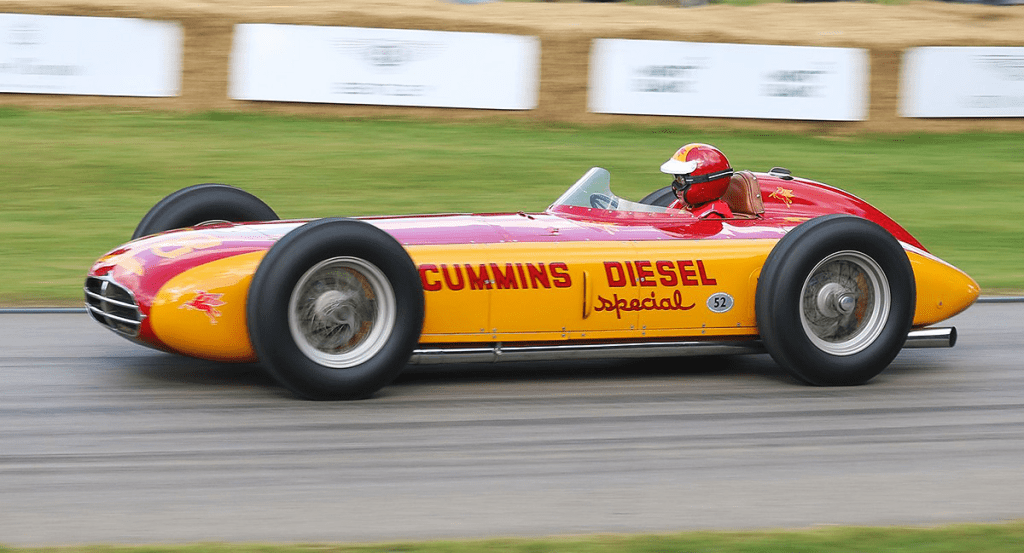
One car in the storied history of the Indianapolis 500 Race stands out for its improbable powerplant. In 1952, Fred Agabashian drove an Indy race car powered by a Cummins Diesel engine. Cummins had been fielding Diesel Indy cars off-and-on since 1931 with limited success. By 1952 Cummins had refined its engines to the point where they were producing impressive horsepower numbers. They decided to go all out for the 1952 race to promote their brand. It would be the stuff that legends are made of. Fuel-injected and turbo-charged, the engine was at the cutting edge of Diesel technology. The use of aluminum castings helped keep the weight manageable. It produced over 400 horsepower at 4500 RPM.
Cummins commissioned Kurtis-Craft to build a car around their massive six-cylinder diesel engine. This was during the era that virtually all Indy cars were powered by the four-cylinder Offenhauser gasoline engine. Kurtis looked at the towering height of the diesel and concluded that it would not work in the traditional configuration of their Indy car chassis. It had too much frontal area which would increase drag. They came up with a creative solution for the problem. They would lay the engine on its side. This not only reduced drag, but it lowered the center of gravity and shifted the weight bias to improve the car’s handling in the corners.
Then Cummins hired Freddie Agabashian to drive the car. In practice, Fred discovered that the 400-horsepower behemoth performed remarkably well. So well, in fact, that he laid off the throttle a bit to keep officials and other competitors from sizing up the threat it posed. Though they saw the car as interesting, no one thought it would be competitive on race day.
Everyone was astonished when Agabashian put the Cummins Diesel on the pole for the 1952 race with a blistering 138.010 MPH qualifying run. Was the era of Offy-powered racecars over? Time would tell.
Unfortunately, the race did not go as well as qualifying. Agabashian started and ran well, but he found that the Diesel car didn’t accelerate as quickly as his competitors. Still, he was running in a comfortable 5th place when disaster struck on lap 71. A build-up of rubber debris from the track caused the turbo-charger to seize. The innovative car was out of the race.
After the 1952 race the sponsoring body, USAC, tweaked the rules to make sure no Diesel-powered car would ever again grace the field at the famous “Brickyard” track. It was not until 2019 that a Cummins Diesel would spin around the Indy track. All five of the Cummins-powered cars that had raced at Indy from 1931 to 1952 appear in an impressive parade lap of vintage Indy cars before the race began.
Though I have never seen the Cummins Diesel #28 car that raced at Indy in 1952, I have seen its driver. Freddy Agabashian retired from racing in 1958 and took a job as spokesman for the Champion Spark Plug Company. He came to my High School about 1959 for a school assembly. I think his topic was automotive safety, but I was enthralled with his racing anecdotes. I also listened to him during the many years he served as a color commentator on the radio broadcasts of “the greatest spectacle in racing.” Though Freddy “Agravatin’” Agabashian died in 1989. His famous Diesel race car lives on. Still owned by Cummins, it can be seen at various vintage racing events and is often loaned to museums.
LDY May 27, ‘23
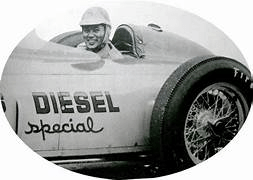
Freddie Agabashian in the Number 28 Cummins Diesel Indianapolis Motor Speedway, 1952
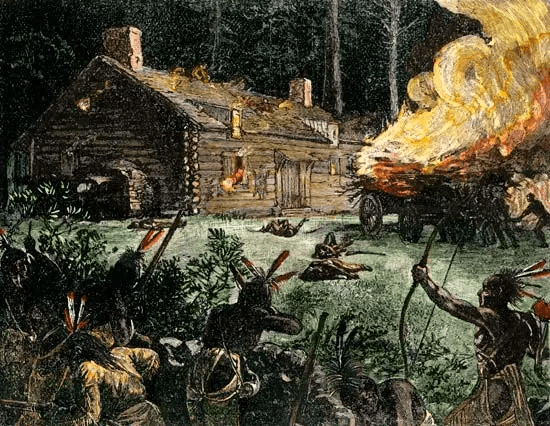
Wampanoag attack on a village. King Philips War 1675-76
Alerted by the sound of gunfire, Henry Adams carefully approached the door to his house. King Philip’s War had been raging since the previous year and there was reason for caution. Other settlements, like Mendon and Lancaster, had been attacked, emptied and torched by the warring tribes of New England. Militia troops rushing to retaliate had been ambushed and massacred. Now Medfield, reinforced by troops from Boston and Cambridge, stood on the exposed frontier of the Massachusetts Bay Colony.
To keep residents safe from attack, five sturdy garrison houses had been fortified and garrisoned. The safest of these was a formidable two-story stone house of seventy feet in length. The town had also purchased a “Greate Gunne”, or cannon, to be used in its defense. Men worked their fields with their muskets by their sides. They slept with their arms and even brought them to prayer meetings. Medfield was ready. Or so they thought.
Henry Adams, a Lieutenant in the local militia, realized the danger of staying in his exposed house, but his home and nearby mill had to be protected. He wisely sent his wife Elizabeth and their younger children to stay in the better protected garrison house of Reverend Wilson. Two of his older children remained overnight in the Adams house.
Sometime before dawn, several hundred native warriors crept undetected into the town. They began setting fire to buildings while training their weapons on the doors of houses waiting for the occupants to emerge. The first warning of attack came when Samuel Morse noticed an Indian hiding in his barn. Morse quietly collected his family and they fled to safety as his house and barn went up in flames. The fires caused other settlers to emerge from their houses to see what was the matter. The attackers began shooting at them. This alerted the rest of the town. Pandemonium reigned as the widely dispersed militia men tried to organize a defense.
Henry Adams lifted his latch and opened the door to see his mill going up in smoke. Before he could react, a shot rang out. The ball struck him in the neck. He fell dead in the doorway. His two children somehow managed to escape to the safety of one of the garrison houses as the carnage spread throughout the little community.
More settlers fell defending their homes or running for safety. The Wood brothers, Jonathan and Eleazer, were caught and scalped. Eleazer somehow survived. Johnathan’s wife gave birth to a child during the attack. She died, but the orphaned child survived. After hiding his wife and children, Isaac Chenery returned to protect his property. Shouting, “Come on boys, there they are!” His single-handed charge at the attackers saved his home and barn. Ten-year-old Mary Thurston was captured by the Indians, never to be heard from again. At Ninety-Nine years of age Jonathan Fussell was too old to run or fight. He burned to death in his daughter’s house.
Compounding the tragedy of the Adams family was an accident involving Henry’s wife, Elizabeth. She had taken ill during the battle and was lying in bed in the upstairs loft of Reverend Wilson’s house. Downstairs, a musket in the hands of Captain Jacobs of the Boston contingent accidentally discharged. The ball went through the floor and struck Mrs. Adams. She died the next night.
The scattered soldiers of the garrison houses struggled to regroup and drive the attackers off. The sound of their Greate Gunne is believed to have made the crucial difference in scaring off the invaders.
In all, the massacre left seventeen Medfield residents and militia men dead and one missing. Most of the houses and barns of the town had been burned. The war would rage on until the leader of the Wampanoag confederation, King Philip, fell in battle six months later. In terms of the percentage of population killed, it is said to have been the deadliest war in American history.
Devastating as the war was, the colonists learned some valuable lessons from it. A hundred years later they would put aside religious, ethnic and regional differences to forge a new nation. Three descendants of Henry’s father would serve as Presidents of that nation.
The tribes of New England did not fare so well after the war. The colonists now needed Indian land and hunting grounds more than they needed the friendship, trade and expertise of these first Americans. Pushed off their lands and decimated by the White Man’s diseases and vices, many of the tribes, both friendly and hostile, would fade from the pages of history.
Henry and Elizabeth Adams were my ancestors on my Grandmother Pansy (Schempp) Wilson’s side.
SOURCES:
Hometown Weekly. “This Old Town: Medfield under attack” By Richard DeSorgher. February 17, 2016.
King Philip’s War. George Ellis & John Morris. The Grafton Press. New York. (1906).
Soldiers of the Massachusetts Bay Colony in King Philip’s War (Indian War of 1675-1676) George M. Bodge (abt 1870)
They brought all they had and they settled their claim.
The railroad men promised the land would provide,
And they came with high hopes to horizons so wide.
Oh, Charley and Eva, from Iowa soil,
Raised up on farms into lives of hard toil.
With two wagons, nine children, and a few head of stock,
They came with the tide of that immigrant lot.
The first years were hard but the land gave its best.
With crops and with cattle their efforts were blessed.
With a new baby born, and their trust in the Lord,
They bought an old piano and a Model-T Ford.
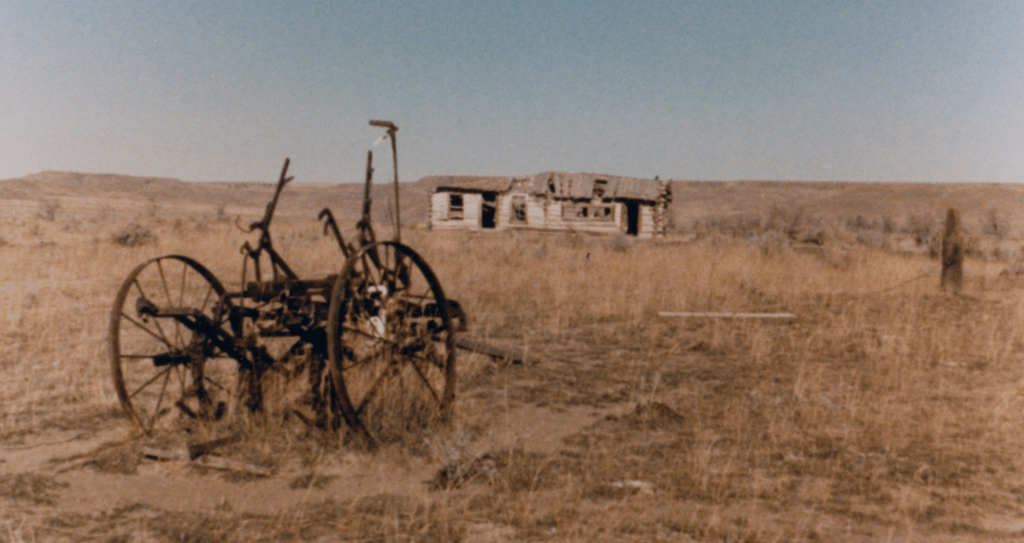
Then in 1918 on Montana’s North Plains,
They planted their crops and waited for rain.
The rain never came, and the crops all just died.
And all they had left was their hope and their pride.
So, Charley and Eva, from Iowa soil,
Gritted their teeth and they doubled their toil.
With their sons and their daughters, their backs, and their hands,
They somehow survived on that desolate land.
When I was a child my mother would tell,
Stories of that place I remember so well,
About the wind from Alberta blowing forty below,
And of searching for strays that were lost in the snow.
And how in the spring when the thaw had begun,
She and her brothers and sisters would run,
To watch ice on the river break up and flow down,
And to stand on the first open patches of ground.
And on warm summer evenings, when the stars shone bright,
She’d ride on her old horse, out into the night.
The sound of his hoof-steps, and the smell of the sage,
Helped her find peace at so tender an age.
Oh, the soft summer breeze that blows from the west,
Whispers that someday when you leave the nest,
You will find your own way to a land that is mild,
And a much different life than you had as a child.
But on warm summer evenings, when the stars shine bright,
You recall how you rode on the prairie at night.
And remember the pleasures a hard land provides.
On the plains of Montana you ride.
And remember the pleasures a hard land provides.
On the plains… of Montana… you ride.
Nick Winter is my mother’s cousin. His grandparents, Eva and Charles Wilson, homesteaded the ranch where his mother, Olive Wilson and subsequently my mother, Marian Wilson, grew up. Lyrics used by permission of the author.
Born for a curse to virtue and Mankind, Earth’s broadest realms can’t show so black a mind. Night’s sable veil your crimes can never hide, Each one’s so great—they glut the historic tide. Defunct —your memory will live. In all the glares that infamy can give. Curses of ages will attend your name. Traitors alone will glory in your shame.
Almighty justice sternly waits to roll Rivers of sulfur on your traitorous soul. Nature looks back, with conscious error sad, On such a tainted blot that she has made, Let Hell receive you rivetted in chains, Damn’d to the hottest of its flames.
An acrostic poem reveals its subject in the first letters of each line.
If you guessed that this was about Trump, you only missed by 240 years.




 Outlaws, Outrages and Outright Lies