Half A Mile From Lone Pine

Lone Pine, CA is on the East side of the Sierra Nevada Mountains

Half a mile from Lone Pine, a thousand more to go,

  This lonesome old highway sure makes time go slow.

Crossed the hot Mojave and the High Sierra range,

  The scenery is different, but I still need a change.

Waitress at the truck stop said the road ahead is good,

  Said someday she’d take it, if only that she could.

Nuthin’s up ahead as down the road I roll,

  The place is just as empty as the bottom of my soul.

The sun that bakes the asphalt parches all the land,

  Mocking all the troubles that I don’t understand.

I chose this road myself, I don’t even need a map,

  Somewhere I might pull off if I hafta take a nap.

A solitary coyote is skulkin’ through the brush,

  Reminds me that I shouldn’t be in such a rush.

Livin’ in the moment, no plans and no hopes,

  Just some lost wayfarer, whose yet to learn the ropes.

This road just takes me on my sad and lonesome way,

  A dead skunk to tell me, it’s not a place to stay.

A half a mile from Lone Pine, there’s nuthin’ up ahead,

  Maybe I should have taken the Interstate instead.

LDT March 11, 2023

Lone Pine, California is 160 miles from the nearest freeway.

Main Menu: http://www.azrockdodger.com

Book

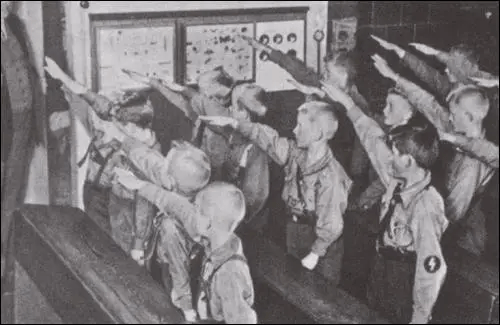
One of the first acts of the Nazis was to ban books.

I am right, I am left and somewhere in between,

I document all the horror that the world has seen.

I tell about the pain of living differently,

I patiently explain the struggle to be free.

My words express my ideals so carefully thought out,

And why the status quo has left me with some doubt.

I will not change your mind, you’ll do it for yourself,

Mostly I just sit upon some dusty shelf.

My thesis might be wrong,

some say I don’t belong.

Will you take me home to read,

Or to the bonfires feed?

After all, I’m just a book,

What harm can come from a look?

LDT February 26, ‘23

“Where they burn books, they will ultimately also burn people.”

-Heinrich Heine (1823)
(Heine’s books were among those burned by the Nazis.)

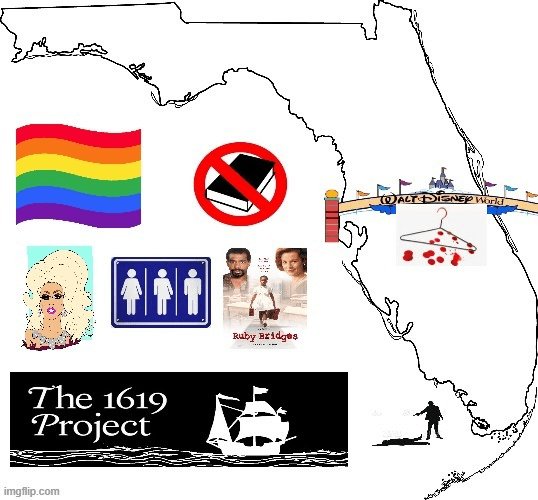
In Florida a teacher was recently fired for
posting a video of empty school library shelves.
The shelves were empty because of a series of new
laws requiring a review of all books in school libraries.
Some see this as authoritarian censorship of ideas.

Main Menu- http://www.azrockdodger.com

Road Home

A Review

Abused, rejected and confused, Cindy hits the road on a 10-year odyssey of discovery. Facing a world she sees as hostile she arms herself with the only weapon she has. Cynicism. The journey brings her to the depths of despair and destitution as she struggles to escape a world that is stacked against her. Along the way she meets secret angels who gradually shape her path to self-discovery. In the end she finds the faith and self-acceptance that has eluded her for so long.

         This is a good read by budding author Leigh Lincoln. The story is very engaging and revealing. The narrator brings the reader into her confidence in a disarming and thought-provoking way. It also informs readers of some of the trials of the homeless and the tools they use to cope. Overall, it is a powerful story of faith and renewal.

LDT February 25, ’23

(Full disclosure: The author is my daughter, Michele.)

Main Menu: http://www.azrockdodger.com

The World Might End Tomorrow

Warrick, Montana (Top)
Lewistown Drags (Bottom)

There’s a country dance at Warrick. There’s drags in Lewistown,

The world might end tomorrow, let’s have another round.

Jim B’s ridin’ shotgun, Black is in the back,

Don’t know where we are and that’s an actual fact.

Got gas in the tank, a six-pack on the seat,

a pair of Tony Lamas tappin’ out the beat.

K’MON Country station plays the latest tune,

Drivin’ through the night as Campbell starts to croon.

Finally got to Warrick the dancin’ had begun,

If they had more women, we could’a had some fun.

The Bear Paw Belles I’m told are somethin’ to behold,

Their charms are manyfold, but their shoulders can be cold.

At least one gal I know is dancin’ to and fro,

Such a tale of woe, I stepped upon her toe.

Outside there’s a fight, the first one of the night,

the loser is a sight, and he’s higher than a kite.

At two in the mornin’ the dance is finally done,

Head out on the road our night has just begun.

The Virgelle Ferry’s closed, we gotta’ go around,

The bridge at Fort Benton, the only route we found.

The needle’s peggin’ empty, but I don’t give a care,

The fumes inside my tank will take me anywhere.

At Benton nuthin’s open, the tank I cannot fill,

We cross that shaky bridge and head on up the hill.

The motor’s smooth as butter, before it starts to sputter,

“Damn it!” I do mutter, “I need an oar and rudder!”

Just a little bit of gas remains inside the tank,

Rock it to slosh it, the pickup says no thanks.

After one last pop we coasted to a stop,

Then I let it drop, “I think I think we need a cop.”

A colony of Hutterites emerges up ahead,

I gotta’ beg for gas I gotta’ clear my head.

Jacob’s got a beard, and his ways are kinda’ weird,

He’s not as he appeared, he oughta’ be revered.

We got a leaky can and filled it full of gas,

Feelin’ mighty grand, we paid him all in cash.

Back on the road we veer as we open our last beer,

Put her in high gear, the drags are gittin’ near.

Bush league at the airport, local yokel rods,

Timing lights are sittin’ on flimsy old tripods.

Lewistown’s the place to run what you brung,

The times and the speeds mostly go unsung.

That rail from California is gonna’ make a pass,

Intake balls got stuck, he’s gonna’ finish last.

The Dodges and the Goats, line up for their runs,

A farmer in a Shelby turns a time that stuns.

Best race of the day is no T nor Model A,

On this special day, two classics come to play.

A Twin H-Power Hudson rolls up to the line,

Think they got it running with balin’ wire and twine.

A little tiny Corvair lines on up on his side,

it’s maybe got a turbo hidden deep inside.

Tires start to squeal as the starter drops the flag,

It’s anybody’s guess who will win this drag.

Corvair gets the jump and starts to pull away,

Can an antique Hudson beat that Chevrolet?

On the coal they pour as down the track they roar,

The Corvair’s got no more, the Hudson shuts the door.

If you ever get the chance, never look askance,

Hit that Warrick dance, and maybe find romance.

If you wanna’ race your car, you needn’t travel far,

Just head out from the bar, Lewistown’s up to par.

There’s no time left to borrow, you need to get unwound,

The world might end tomorrow, let’s have another round.

LDT February 25, ’23

Main Menu: http://www.azrockdodger.com

Massai

Massai served as a US Army scout
before his two decades on the run.

A shadow dances on a canyon wall,

  where once was heard the bugle call.

His moccasins tread lightly o’er,

  the tangled trail that lies before.

A warrior of a long-lost band,

  the last to wander in this land.

They shipped him to the Everglades,

  though he wasn’t with the renegades.

Somewhere past the Mississip’,

  he left the train and gave the slip.

The stars to guide his lonesome trail,

  he longed to hear the coyote wail.

Sierra Madre, Mexico,

  the last wild place for him to go.

For twenty years he made his way,

  he moved by night and camped by day.

One day he stole a native bride,

  soon her love she couldn’t hide.

Chased by troops in Mexico,

  across the line they had to go.

Then a posse tracked him down,

  somewhere near Socorro town.

His family says he saved them all,

  when he took his fatal fall.

Sometimes if you listen close,

  you can hear Massai’s ghost.

The wind that whispers high above,

  or in the soft sound of a dove.

They tell us all that he is near,

  it’s freedom’s song that we hear.

LDT February 18, ‘22

         Massai was a Chiricahua Apache who served as a scout for the US Army in the early 1880’s. Like most Chiricahua, he was not with Geronimo’s renegade band that surrendered in 1886. Unfortunately, the decision was made to send all of the Chiricahua to Florida as prisoners of war. Massai escaped from the prison train somewhere near St Louis and made his way, undetected, back to his homeland. Living alone, he traveled between the mountains of Arizona, Sonora and New Mexico. At one point he kidnapped a young Apache girl named Zanagoliche from the Mescalero Reservation. She became his soulmate as they lived the wild life of the Bronco Apache. After 20 years on the run, Massai is believed to have met his fate at the hands of a cowboy posse in New Mexico in 1906. His daughter says that after ensuring their safety Massai tried to recover their horses when he was killed and dismembered.  Zanagoliche and their children re-settled at the Mescalero Reservation in New Mexico. Massai’s 20 years of freedom can be contrasted with the 27 years of captivity of the rest of the Chiricahua who did not regain their freedom until 1913. By then their ranks had been decimated by the White Man’s diseases. Massai Point in the Chiricahua Mountains is named in honor of Massai. It is a quiet, reflective place with a spectacular view.

Massai Point in Southeast Arizona’s
Chiricahua Mountains.

Main Menu: http://www.azrockdodger.com

Council Rock

The Dragoon Mountains

  Silent sentinels, they guard a place sacred to the history of Southern Arizona. Few go there. There are no signs to lead the way. It’s down a rugged dirt road, several miles from Middlemarch Pass in the Dragoon Mountains.

     Once these mountains were the perfect hideout for the fiercely independent Chiricahua Apache. On the East side was Cochise Stronghold, a massive jumble of rocks. Camp there, put a few sentinels on the crest of the mountain range and no intruder will ever surprise you. If trouble approaches, you can quickly disappear further into the rocks. It is quiet and beautiful. Directly across the crest of the Dragoons is a place where peace can be found.

Council rocks

     The Forest Road leading to Council Rocks runs up the Western side of the Dragoons. Side roads branch out to reach various canyons and camping grounds. One dead- ends at a place where the rocks seem to have tumbled down from the mountain, blocking the way. You have reached the most sacred place in all of Arizona.

     Take a deep breath, gaze back across the broad San Pedro valley. Note the tiny cars making their way along Highway 80. Forty miles away you can see Fort Huachuca and the city of Sierra Vista. Even closer, is Tombstone. The grass is good. Small streams fed by springs trickle nearby. It exudes serenity. Cochise, the Chief of the Chiricahua, loved this place. He is buried in a secret grave somewhere close.

     Look toward the rocks. You will see some steps carved in them. Follow them to the opening between the rocks. Here you will find a sheltered spot surrounded by protecting boulders. If you feel like you have just entered a holy place, you won’t be the first. Three very different, but remarkable, men met there in 1872. A general, a frontiersman and a fierce Apache warrior sat in council here. Throw your blanket down like they did and quietly reflect what they achieved.

Naiche, the son of Cochise, is said to resemble him.

     At about age 60, Cochise was the leader of the Chokonen band of the Chiricahua. The leaders of the other Apache bands looked to him in times of crisis. His Father-in-Law was Mangus Coloradas, leader of the Mimbrenos. Victorio, Geronimo and Ju were all allies of Cochise.

     Cochise had long been at war with his traditional enemies, the Mexicans, to the South. In 1854, the Gadsden purchase made much of Apacheria part of the United States. At first Cochise got along well with the soldiers, miners, ranchers and teamsters who began trickling in from the East. He maintained working trading relationships with the newcomers while still raiding down into Mexico. If someone got a horse or mule from the Apaches, chances are it had a Mexican brand. He trusted and got along well with the soldiers from Fort Buchanan, near modern Sonoita, Arizona.

     The peace between Cochise and the whites would end with the “Bascom Affair” in early 1861. Lt. Bascom accused Cochise of kidnapping a rancher’s stepson. Cochise said he didn’t have the boy and even offered to try to retrieve him. Instead of accepting his cooperation, the Army detained Cochise and some of his kinsmen at Apache Pass. Cochise cut his way out of a tent and escaped in a hail of bullets. Then things escalated. People died. The Chiricahua hostages were hung.

Apache Pass

     Simultaneously, the Civil War broke out. The Army abandoned its Arizona posts and headed East. Cochise drove the ranchers and miners out of the territory. Travel became impossible. Feeling abandoned, the citizens of Tucson allied themselves with the Confederacy. Nobody was safe as the Apaches attacked both Union and Confederate forces at Apache Pass. After driving the Rebels out, the Union’s California Column established Fort Bowie at the crucial Apache Pass, across the Sulphur Springs Valley from Cochise Stronghold. The Apaches would snipe at the soldiers from the surrounding hills for the next decade.

The Army built fort Bowie to guard Apache Pass

     The Apache troubles continued even after the Civil War ended. Nobody in Southeastern Arizona was safe. Most of the countryside had been depopulated. The riches of Arizona were never going to be developed at this rate.

     Back East in the 1870’s, opinions toward Native Americans had begun to change. President Grant shook up the reservation system by appointing Agents from various religious denominations to civilize and Christianize the tribes. Though some were naïve, they generally did a better job of maintaining order than the greedy political appointees who had preceded them.

     An appalling incident called the Camp Grant Massacre occurred in 1871. Peaceful Aravaipa Apaches were camped near Fort Grant on the San Pedro River. Rumors spread around Tucson that this band posed a danger. A raiding party made up of local Anglos, Mexicans and native warriors staged a surprise attack on their camp. Scores of men,  women and children were killed. A number of the surviving children were kidnapped to serve as servants for Mexican families. 

     President Grant and the East Coast establishment were outraged. Something needed to be done. He needed someone to address all of the issues affecting the tribes of the Southwest. He found his man in General Oliver Otis Howard. Howard had lost an arm in the Civil War but continued to soldier on with Sherman’s Army until the end. Just before his assassination, Abraham Lincoln had asked the Secretary of War to put Howard in charge of the Freedmen’s Bureau.

General Oliver Otis Howard

     Howard would spend most of the Civil War Reconstruction era looking out for the rights and well-being of the newly emancipated slaves. In the process he also found time to help establish Howard University in Washington, D.C.

     Grant asked Howard to take a leave from his duties at the bureau to serve as a Peace Commissioner to the troubled Southwest. He could not have picked a better man. Deeply religious, Howard was a man of great integrity with no axes to grind. With the Lord’s help, no task was too great for him. He would soon be taking the long roundabout trip by rail, ship, river boat and horseback required to get to Arizona in those days.

     Upon arrival in Arizona, he began a journey from West to East, visiting every tribe along the way. He would hear and adjust their grievances. He dealt with water issues along the Gila, where white settlers were diverting the water to their own fields. He met with Eskiminzin, Chief of the Aravaipa, and found a way to get some of their stolen children back. He set up a reservation for the Warm Springs Apaches along the Rio Grande. He took a contingent of Native leaders back to Washington to impress upon them the power of the nation and the benefits of civilization.

     His peace mission not complete, he returned to Arizona by the overland route in the summer of 1872. He had one more treaty to forge. But how would he find the wily and wary Cochise?

     Cochise and General Howard came from two different worlds. There was no way the one-armed General was going to ride right into the camp of Cochise. He needed an intermediary, a catalyst. Someone who knew the ways of the Apache and could understand them. Was there someone who Cochise trusted? That man turned out to be a rugged frontiersman named Tom Jeffords.

The 1950 film Broken Arrow depicted the meeting of Cochise, Howard and Jeffords at Council Rock.
The roles were played by Jeff Chandler, Basil Ruysdael and Jimmy Stewart.

     Tom Jeffords was a 40-year-old former sea captain on the Great Lakes who migrated west to follow the gold rushes in the late 1850’s. When the war broke out, he became a scout for the Union Army in Arizona and New Mexico. After the war, he got the mail contract between Socorro and Tucson. He often lost his mail couriers to the Apache as they made their way through the land of Cochise. Legend has it that Jeffords went alone into the camp of Cochise to seek a truce. Startled by the courage of this act, Cochise befriended him and agreed to let the mails pass. Not everyone buys this story. Some of Jeffords’ contemporaries claim he was only able to get the mail through by providing liquor and guns to the Chiricahua.  

     Hearing both stories about Jeffords, Howard decided he was still the only man who could get him into Cochise’s camp. He approached him at Tularosa, New Mexico.

     “Can you take me to the camp of the Indian Cochise?” Howard questioned.

    Jeffords studied Howard for a moment and asked, Will you go there with me, General, without soldiers?”

     Unflinchingly, Howard agreed. Apaches are always ready for flight. They keep their weapons handy. Every one of them has a deerskin emergency bag filled with items essential to escape. Even the babies spend most of the first year of life bundled on a cradle board, ready to be strapped to their mothers’ backs in an instant for a flight to safety. A troop of soldiers riding across an open valley would never get close to an occupied Apache camp.

     Jeffords helped Howard secure a couple of Apache guides and a couple of packers. Only one Army officer, Captain Sladen, would ride to the Dragoons with the party. It would be a long dusty trip filled with danger and with water holes few and far between. As they moved east into Chiricahua country, the guides would use signal fires and flags to communicate with Cochise’s band. First at Silver City, and later at a mining camp, the group would have to restrain hostile citizens from killing their guides. As they neared Chiricahua territory, they sent their wagon and packers back toward Fort Bowie. The smaller the party, the greater the likelihood of success. Along the way, Captain Sladen would show a momentary lack of courage.

     “General, aren’t we doing wrong? Don’t you think you are taking too much risk?” asked Sladen.

     Eventually the pious General responded back to the nervous officer, “Captain, whosoever will save his life shall lose it, but whosoever will lose his life for my sake, the same shall save it.” After that Sladen never wavered.

     Upon crossing the lofty Chiricahua Mountains, the group got their first glimpse of the Dragoons. In the middle of the Sulphur Springs Valley, they stopped at the Rogers’ Ranch, the last outpost of civilization. Soldiers from Fort Bowie shared their rations with the weary travelers.

     At midnight, they saddled up for a silent trip to Cochise’s hide-away. They camped beneath the scrub oaks by a quiet stream flowing out of the Dragoons. One of their Apache scouts went in search of Cochise, while the other directed them in building a circle of five signal fires. Then the party anxiously bided their time and waited. Toward evening two boys on a horse appeared. Through the interpreter, the boys bid them to follow them to their encampment. They were welcome. (From the description provided by Howard, I’m guessing this well-protected camp was in Melanie Canyon.)

Sentinel

     In the camp, they were approached by a sub-chief named Tygee. The taciturn Chief could offer no hint as to the mood of Cochise. Comforted by the warmth and friendliness of the Apache children, the little group made camp and rested.

     The next morning the group was packing up as if to leave, when an Apache known as Juan rode into camp. Jeffords embraced him as an old friend. Cochise and a few members of his family followed. He greeted Jeffords in Spanish.

     “This is the man.” Said the frontiersman to Howard.

     Howard described Cochise as “fully six feet in height, well-proportioned, with large eyes; his face was slightly colored with vermillion, hair straight and black, with a few silver threads….His countenance was pleasant, and made me feel how strange it is that such a man can be a notorious robber and cold-blooded murderer.”

     He greeted Howard with, “Buenos dias, Senor.”

     Then Cochise spoke in Apache. Jeffords translated, “Will the General explain the object of his visit?”

     “The President sent me to make peace between you and the white people.”

     “Nobody wants peace more than I do,” was the response.

     Cochise then poured out his grievances. The General listened. Sympathizing with Cochise’s troubles, the General then offered him a reservation on the Rio Grande. Cochise said he had no objection, but that some of his mountain people would not go there.

     Suddenly Cochise asked, “Why not give me Apache Pass?”

     Howard quickly realized that the New Mexico reservation was a non-starter. Using the full authority bestowed upon him by the President, he acceded to Cochise’s request. The Chiricahua could have half of what would become Cochise County to include the Chiricahua and Dragoon Mountains and everything in between.

     Howard’s party stayed in Cochise’s camp for about two weeks waiting for the sub-chiefs to come in and approve the treaty. The three Anglos, Howard, Jeffords and Sladen seemed to enjoy this time. Howard became fond of the children. Jeffords interceded between the wives of Cochise and their husband when he went on a home-brewed Tizwin drunk.

     Placing his trust in Howard, Cochise had him ride to Fort Bowie with only one Apache guide to ensure the garrison would honor the peace. While Howard was gone, the nervous Apaches changed their camp to Council Rocks. Jeffords and Cochise stood watch as Howard returned.

     Once back in camp, Howard’s attention was called to a white flag placed on a lone hill off toward the San Pedro. At the request of Cochise, Jeffords and Sladen had planted it there as a symbol of peace. Howard settled in to await the arrival of the sub-chiefs. Cochise sent Apache women to guard his animals and supplies at night. A dance was held. Two women took Howard’s good hand and empty sleeve as he danced. Like the other men, he was expected give his partners each a small present. A small coin was the perfect gift. Howard had fun entertaining and being entertained by the children. One night the Apaches held a ceremony to consult the spirits. Cochise addressed the group, mentioning “Staglito”, or what the Apaches called Jeffords, “Red Beard”. Howard discerned that they were discussing the proposed treaty.

     Then Cochise told Howard, “Hereafter the white man and the Indian are to drink of the same water, eat of the same bread, and be at peace.”

     Then Howard took Cochise and his men to Dragoon Springs to meet with officers from Bowie. They would hammer out the final details. The “metes and bounds of the reservation were fixed, the agency at Sulphur Springs was established and Jeffords was appointed as agent of the Indian Department.” They had a deal and Cochise would honor it to his dying day.

1872 Chiricahua Reservation

     Several years later the Apaches told a visiting Inspector that, “General Howard placed a stone on a mesa and told us that as long as the stone should last so long would the peace continue.”

     Sadly, there was much opposition in Southern Arizona to the refuge given such feared adversaries. Renegade Apaches continued their raids into Mexico. Cochise died in 1874. His sons, Taza and Naitche, kept the peace for a few more years. Jeffords would complain to the Indian Department about the lack of rations provided by the government.

     Internal strife, the raids into Mexico and the killing of some settlers put the Chiricahua Reservation in the sights of the government. They would have to move to the San Carlos Agency to the North. This place, east of Safford, had little to offer. It was hot, barren and devoid of game. They were forced to move there in 1876. A mountain people, the Chiricahua would grow to hate it. Jeffords quit in disgust. Geronimo would lead multiple breakouts from the desolate reservation. The Apache wars would not end until 1886. When they did, the Chiricahua would all be exiled to the East. They would remain as Prisoners of War until 1912. Howard’s rock of peace would simply disappear into the landscape of Cochise County.

LDT Jan ‘21

REFERENCE: My Life and Experience Among the Hostile Indians. (1907). General Oliver Otis Howard.

Main Menu: http://www.azrockdodger.com

tЯuth

Congressman Santos (R-NY) has been known to spin a tale or two.

It may be uncouth, but back in Duluth,

  where tЯuth isn’t tЯuth, like Rudy’s bucktooth.

I’ll build a Great Wall, so gorgeous, so big and so tall,

  it won’t ever fall, and Mexico will pay for it all.

George’s Mom died only twice, the second funeral was nice,

  to be a bit more precise, Twin Tower cancer put her on ice.

As Marjorie gazes at Jewish Space Lasers,

  her Q-Anon praises ignite the hell-raisers.

Kari Lake is extollin’ her election was stolen,

  she’ll do some cajolin’ while lawsuits are rollin’

Paul Ryan’s fib for the age, “Do taxes on half of a page.”

  our disgust we couldn’t assuage, as we sat figuring with rage.

In Kellyanne’s tracks, we got alternate facts,

  the faster she yaks, the more lies she unpacks.

The lies that Sarah did ply us, showed us some of her bias,

  lookin’ ever, ever so pious, her whoppers sure can belie us.

Tucker is rantin’ and ravin’, an alternate universe maven,

  how did he get so craven, and why is Faux his haven?

A carnival barking clown, in a position of great renown,

  tore the Capitol down, and left us all with a frown.

If they swore on a Bible, they’d commit libel,

  the tЯuth’s not viable, we’re just too damn tribal.

Some don’t even try, they’re timid and shy,

  they’ll never know why they fell for the Lie.

LDT February 11, ‘22

Main Menu: http://www.azrockdodger.com

Border Run

My Honda XR400R with the Huachuca Mountains in the background.
I added a street-legal kit so I could ride the numbered back roads.

I lit up the XR for my border run,

  for twenty-one years it was nuthin’ but fun.

I lived by the river, the San Pedro it’s called,

  where Coronado crossed before it was walled.

Canteen full of agua, air in a can,

  off to Nogales, a man with a plan.

Zigging and zagging up Montezuma Pass,

  on leaving the Monument, I can go fast.

Border Patrolman gives me a look,

  maybe he’s thinkin’ that I am a crook.

The San Rafael Valley stretches out before,

  a handful of throttle, that XR can roar.

The Aerostat floats up above the Huachucas,

  lookin’ for smugglers and airborne Palookas.

Surveillance camera watches my tail,

  if I should transgress, I’ll go to jail.

Off to my left, they’ll build Ducey’s wall,

  shipping containers, ugly and tall.

The road is rough, just as I like,

  an XR is not some novice’s bike.

I pass by a ranch that’s way off the grid,

  it’d be more rustic if the panels were hid.

A militia is camped near a big wash,

  in fear and hate they are awash.

With their AR’s they’ve killed an old oak tree,

  next thing you know they’ll be gunnin’ for me.

The San Rafael Ranch is a beautiful place,

  maybe I ought to lessen my pace.

If you saw “Oklahoma” you know what I mean,

  it was here that they shot most every scene.

At Locheil I dodge a cow on the road,

  it’s maybe a sign that danger forbodes.

The road gets smooth and I open her up,

  ridin’ slow just isn’t my cup.

Duquesne is a ghost town, the ore is played out,

  at Washington Camp, there’s still life about.

A pickup comes speedin’ around a blind curve,

  it’s good that I saw it in time to swerve.

He’s probably haulin’ a big load of pot,

  pretty soon they’ll catch him, likely as not.

Sycamore Canyon is narrow and deep,

  for a while the road will get steep.

Up ahead I see gnarly soft sand,

  up on the pegs I’ll have to stand.

There’s a checkpoint at the end of the road.

  my XR ain’t haulin’ much of a load.

They look me over and pass me on through,

  they probably think I’m a washed-up hot shoe.

At Eighty-Two I’ll head on into town,

  Nogales is good for bummin’ around.

I look to the left and what do I see,

  a Nogales cop eye-ballin’ me.

Fifty-six miles of bug eatin’ smiles.

  I’ll meet up with some border exiles.

I ‘d hafta’ say that it has been fun,

there ain’t nuthin’ like my border run.

LDT February 4, ‘23

Border Run

(Photo Essay)

“Fifty-six miles of bug-eatin’ smiles,”

The border road

The route “for my border run.” It is about 56 miles from Palominas, where I used to live, to Nogales, Arizona.

“Where Coronado crossed before it was walled.”

It is a good thing for history that this thing wasn’t blocking the San Pedro River when Coronado passed through our area in 1540. I expect that someday one of our torrential Monsoon rains will take it out.

“For my border run,”

Border fence near Naco, Arizona.
The Border Wall

This formidable fence was installed across the San Pedro Valley in about 2010. It does a good job of keeping out vehicles. People and wildlife, including endangered Jaguars, find their way over. under, around or through it. The Border Patrol maintains constant visual, video and electronic surveillance over this section of the border. They also use the old-school low-tech method of dragging tires along the dirt road. This helps them spot tracks if someone should cross. The fence ends just south of Montezuma Pass where my ride starts to get interesting.

“Zigging and zagging up Montezuma Pass,”

The parking lot at Montezuma Pass

The Border Patrol maintains a constant presence at Montezuma Pass. It provides a great view of the border all the way across the San Rafael Valley. They use agents with binoculars and sophisticated surveillance equipment to track any intruders.

“Border Patrolman gives me a look,”

The Border Patrol is everywhere

The people you are most likely to see in the San Rafael Valley are Border Patrol Agents. I was once stopped by one who asked me if I had been through the Drive Thru. For a second, I thought he was talking about the one at McDonalds.

“The San Rafael Valley stretches out before,”

San Rafael Valley

The San Rafael Valley between the Huachuca and Patagonia Mountains offers excellent grazing for a handful of remote ranches.

“The Aerostat floats up above the Huachucas,”

The Aerostat at Fort Huachuca

The Aerostat is a tethered radar balloon. Its primary mission is to watch for low-flying aircraft. It has some ground surveillance capability which causes some locals to feel like they are being spied upon.

“Surveillance camera watches my tail,”

Border Patrol technology

The Border Patrol uses a variety of high tech gadgets to watch over remote sections of the border. These include radar, ground sensors and cameras.

“Off to my left, they’ll build Ducey’s wall,”

Shipping Container Wall

In 2022, Arizona Governor Doug Ducey decided to build his own makeshift border wall across the San Rafael Valley. He didn’t have permits or permission to build it on federal land. He kept building even after the Feds took him to court. Eventually, concerned citizens placed themselves in the path of the equipment that was tearing up this pristine, and fragile landscape. Ducey relented and began removing the containers. The cost to Arizona taxpayers was estimated at $140 Million or more.

“I pass by a ranch that’s way off the grid,”

Ranches in the San Rafael Valley

A few ranches can be seen in the San Rafael Valley. Some are so remote, they rely on solar power and generators.

“A militia is camped near a big wash,”

Armed Militia group in Arizona

 It is not unusual to spot an armed militia group along the border. In 2005 hundreds of members of the Minutemen Militia descended upon our area to watch for illegal aliens. They accomplished little and their leader, Chris Simcox, is now in prison for child sexual abuse.

In 2016, Shane Bauer, a reporter for Mother Jones went undercover with one of the border militias near Nogales. He found them well-armed, scary, bigoted and clueless. Here’s a link to his excellent story Undercover With a Border Militia: I Went Undercover With a Border Militia. Here’s What I Saw. – Mother Jones

“The San Rafael Ranch is a beautiful place,”

The San Rafael Ranch

The San Rafael Ranch is located on the west end of the valley beneath the Patagonia Mountains. Several movies, including the musical “Oklahoma” have been filmed here. The property has been donated to the state of Arizona for future development as a state park. It is beautiful, but remote.

“Duquesne is a ghost town, the ore is played out,”

Duquesne

Duquesne is an abandoned mining town. A few people still live nearby in Locheil and Washington Camp.

“He’s probably haulin’ a big load of pot,”

Pot Bust

I have nearly been run off the road a few times by speeding pickups. I never know if its a rancher chasing a calf or a smuggler. Once, our breakfast was interrupted in Palominas when a speeding pickup with 4 flat tires and a big load of pot came through the parking lot. They got him.

“Sycamore Canyon is narrow and deep,”

Sycamore Canyon

Sycamore Canyon provides a spectacular view as you cross the Patagonia Mountains toward Nogales.

“Up ahead I see gnarly soft sand,”

This guy knows how to ride in the sand.

Coming out of Sycamore Canyon the trail gets very sandy. Sand riding is a special skill. The rider stands of the foot pegs, plants his butt as far back as he can and gases the bike. At about 25 MPH the bike gets on top of the sand. Then he can ride smoothly, safely and fast.

“Nogales is good for bummin’ around.”

Nogales Arizona and Nogales, Mexico

Nogales is the end of the ride. What used to be the main street of both Nogales, Arizona and Sonora is now divided down the middle by the border wall. Though once you could shop on both sides of the street, you now have to go through the Port of Entry. There is good dining and nightlife on the Mexican side. Americans also go there to get cheap dental work and prescriptions. I find the curio shops a bit tacky.

Am I going home by the highway?

Hell no! I’m taking the Border Road.

See you on the trail.

Main Menu: http://www.azrockdodger.com

Karl

A British WWII Orphan London, 1945

He showed up in Fifty, a little bit gaunt,

  none of us knew what memories did haunt.

We couldn’t know the hell he’d been through,

  Of his tale of woe, he gave not a clue,

Of our language, he knew not a word,

  and when he spoke, it was German we heard.

We might have fussed, when he boarded the bus,

  sometimes we cussed, ‘cuz he wasn’t like us.

With nowhere to hide, he took it in stride,

  it can’t be denied, that he always tried.

To thwart the wrong, he had to be strong,

  it didn’t take long, ‘til he would belong.

A friend to us all, he always stood tall,

  in things big and small, he carried the ball.

An orphan no more, a survivor of war,

  he came to our shore, and rose to the fore.

LDT January 28, ‘22

This poem is dedicated to the children of war.

It was inspired by my childhood friend Karl Waitschies.

Main Menu: http://www.azrockdodger.com

Karl went on to become a successful farmer, community leader and Montana state legislator. This story about visiting his wife offers a glimpse into his character. Couple married for 55 years reunites for first hug since start of pandemic (nbcnews.com)

Terrenate

The remains of the Presidio Terrernate in Cochise County, AZ

If the walls could talk, oh the tales they would tell,

  about a bastion on the river in high desert Hell.

The adobe slowly melts into the dirt,

  the fort once stood in the empty desert.

Where once stood crosses to honor the dead,

  and too many sad masses had to be said.

For five long years they fought for this land,

  the home of a notorious Apache band.

They boldly set forth, these lancers from Spain,

  only to die in the mud and the rain.

Through rivers they sloshed, over trails they crossed,

  when they measured the cost, four score had been lost.

They were defeated, and then they retreated,

  their progress impeded, they had not succeeded.

They thirsted for water, the river was near,

  they had not the courage to dampen their fear.

In their diaspora, some went to Sonora,

  some to Zamora, it was their Pandora.

The centuries passed, New Spain didn’t last,

  her soldiers out-classed, their grim fate was cast.

I might visit someday, but I’ll never stay,

  there are ghosts so they say, at Terrenate.

LDT 1/22/23

         The Presidio Santa Cruz de Terrenate (tĕr-ĕn-nä′tĕ) is located in Cochise County on the San Pedro River a mile or so northwest of the ghost town of Fairbank, Arizona. The small garrison was decimated in two major battles and several minor attacks. Terrenate opened in 1776 and was abandoned in 1780. The last commander gave these reasons for its closure:

The terror instilled in the troops and settlers of the Presidio of Santa Cruz (de Terrenate) that had seen two captains and more than 80 men perish at the hands of the enemies in the open rolling ground at a short distance from the post, and the incessant attacks which they suffered from the numerous bands of Apache, who do not permit cultivation of the crops, who surprise the mule trains carrying effects and supplies, who rob the horse herds and put the troops in the situation of not being able to attend their own defense, making them useless for the defense of the province.”

Main Menu: http://www.azrockdodger.com