Trooper DwLay: The Biography of a Civil War Cavalryman
I have decided to publish the biography I wrote on our ancestor, Reuben R. DeLay. It is a bit rough, as I have no editor, and I had decided to write a piece of historical fiction based on his life instead.
Things haven’t worked out as I planned. I was making steady progress on the novel when vision problems stopped me cold at 44,000 words. Meanwhile, I lost three of my cousins, Dayla, Mike, and Mary, while I was writing it. All were descendants of Reuben DeLay. I never got to tell them about this incredible man’s life. I feel I have to tell the story now, before I lose any more of you.
Below is a link to the book on Amazon. I recommend the Kindle version, because I will be updating/editing it from time to time. If you get the print version, you will forever be stuck with errors, like Fort Sumter, spelled with a p.
I expect to recover enough sight to read comfortably sometime in March. When that happens, I will resume writing the novel. It will cover the same ground as the biography, to include Bleeding Kansas, the campaigns of the 3rd Iowa Cavalry, and Reuben’s capture and life in Confederate prisons. The novel will offer my view of what he might have seen, thought, said, and done during a very tumultuous part of American history. If you are interested, I could use some help in beta reading or editing both books.
The latest outrage of the tЯump administration is an attack on charitable giving. That’s right, his hand-picked Director of the US Office of Personnel Management wants to end the Combined Federal Campaign. The CFC is the government’s way to enable military and civilian employees to give through payroll deductions. The reasoning for this action is questionable. If the CFC is cancelled, it will hurt hundreds of important local and national charities. Since this may be my last opportunity to give through CFC, I made sure some “Woke” charities got some of my money. These include a women’s health organization and an immigrant rights group. In addition, I have written the following to my Senators and Representative to express my concerns.
Letters to Senator Kelly, Senator Gallego, and Congressman Ciscomani:
Sierra Vista, AZ 85635
October 6, 2025
Dear Sir:
The Combined Federal Campaign is in danger of being terminated by USOPM Director Scott Kupor. As you surely know, the CFC is the primary means for federal civilian and military personnel to donate to worthwhile charities. Since its inception by President Kennedy in 1962, it has raised well over one billion dollars. It is an efficient and effective way for government personnel to give to reputable and carefully vetted local and national charities through payroll deductions.
Director Kupor is now threatening to end this vital and worthwhile program after the current campaign. In proposing this, he cites some highly questionable cost factors associated with the campaign. His numbers are ridiculous. This is a simple and efficient payroll deduction program. As a retiree, I just made my 2026 pledges online. My input required virtually no effort by any paid federal employee. You can be assured of this because I did it during the Government Shutdown. While I was an active employee, most of the effort directed toward conducting the CFC was done as a collateral duty. Again, I ought to know. As a federal employee, I participated in running the campaign. While doing so, I made sure that none of my official duties were neglected.
Below you will find a link to Director Kupor’s preposterous reasons for wanting to cancel the CFC in the future, published under the heading of “Secrets of OPM”. In it Kupor states that, “….OPM is concerned about excessive administrative costs associated with the CFC, along with steadily declining participation, and it is evaluating changes to the CFC for 2026 (including whether to continue the program).”
I would hope that you understand the value of the Combined Federal Campaign and do your part in preserving it.
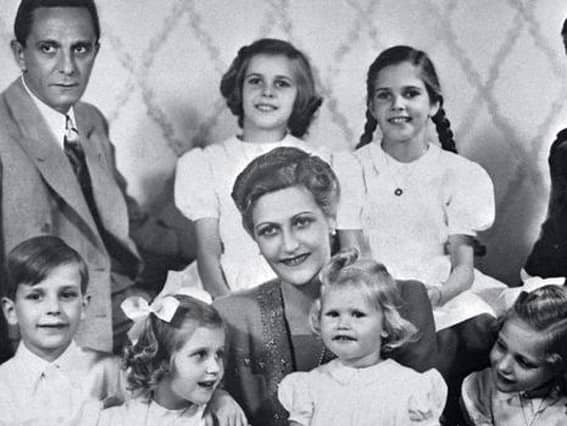
Magda Goebbels was the wife of Nazi Propaganda Minister Joseph Goebbels. She was portrayed as the ideal Aryan wife and mother. Before the War, she gave an interview with a German magazine where she shared her recipe for streusel. On May 1, 1945, she poisoned their children “for the sake of giving our national socialistic lives the only possible honourable end …”
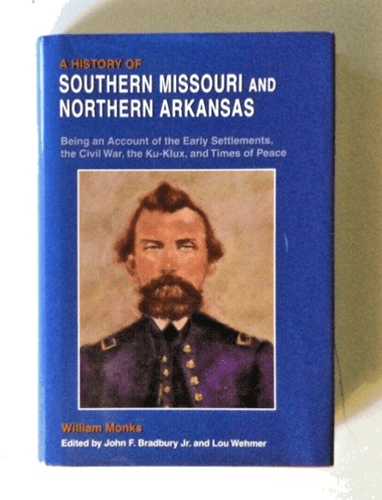
Captain William Monks was from West Plains, Missouri, where my Great-Great-Grandfather fought a battle in February 1862. A Union man, Monks and his family suffered greatly at the hands of Rebel bushwhackers and irregular troops. Escaping certain death in captivity, he joined the Union Army, spending the rest of the war fighting those who had driven him from his home and executed many of his neighbors. After the war, he became an assistant prosecutor. He brought his fellow Union survivors and his defeated Confederate neighbors together to rebuild Howell County, which had been devastated and depopulated by the War.
“God forbid that we ever have any more civil war. War is the enemy of good society, degrades the morals of the people, causes rapine and murder, destroys thousands of lives, brings misery and trouble upon the whole people, creates a government debt that our children will not see paid, makes friends enemies. God forbid that any more sectional strife ever may grow up among the people; may there be no North, no South, no East, no West, but let it be a government of the whole people, for the people and by the people. May the time speedily come when the civilized nations of the earth will know war no more; when the civilized nations meet in an international congress, pass an international law that all differences between nations shall be settled by arbitration. May this nation in truth and in deed become a Christian nation and every man speak the truth to his neighbor and adopt the Golden Rule, “Do unto others as you would have them do unto you.”
— William Monks
After the War, Monks sued two of his neighbors who were part of the Rebel unit that captured him. They had verbally abused and promised to kill him. He won an $8,000 judgment, which allowed him to seize their property. They begged forgiveness, one of them explaining his actions as a ruse to keep the other Rebels from killing him. Monks forgave them and deeded their property back to their wives.
Monks had two daughters. Both married sons of Confederate soldiers.
Sometimes, that disagreement would lead to a great compromise that moved us forward to solve the problems of the day. The US Constitution was such a compromise. To gain agreement, one really horrible thing called the 3/5ths Compromise was added. slave states got 3/5ths credit in apportioning seats in the US House of Representatives for each slave they owned. Who among us would sign on to that today?
A better compromise was the Bill of Rights, the first 10 Amendments. States wanted these assurances before they would ratify the Constitution.
My favorite right enumerated in the Bill of Rights is the First Amendment. It gives me the right to voice my opinion without fear of retribution. It also gives you the right to tell me when I’m wrong.
I lived through an era of political assassinations. JFK, MLK, Medgar Evers, and James Meridith, to name a few. Each one broke my heart, but I was curiously unmoved when Governor George Wallace was seriously wounded in 1968. Why? I saw him as a racist who was running to overturn the hard-won progress in Civil Rights. Though I still don’t like him, it was awful that someone shot him.
We moved forward as a nation from these terrible events in the 1960s..
We came together to stand up for what is right. We got rid of a Vice-President who turned out to be a crook. Then we conducted a thorough bipartisan investigation of a President who had exceeded his authority and lied about it. We argued about big vs small government and found ways to keep the economy running while taking care of the least of us. Presidents from both parties provided us with good leadership and inspiration.
When 911 hit us like an atomic bomb, we quickly pulled together in a show of unity not seen since WWII.
Then, we let ourselves get polarized. We formed tribes, each accusing the other of being extreme. Some of the accusations were more true than others. We stopped short of demonizing each other for a while and the country continued to function for all.
In 2026 America fell apart. Those who wanted to blame all their problems on others found their champion. The country immediately became catastrophically divided. Too many of us learned to hate those who are different. The way we handled Race, ethnicity, national origin, and diversity had once made America a shining light. Suddenly, we were bitching about which bathroom to use. Hateful rhetoric was normalized because one man in a position of power used it. Fortunately, our guardrails held as he became increasingly despotic and self-serving.
The end of American democracy came on January 6, 2021. You might have seen it on TV. “Stop the vote!” “Hang Mike Pence!”
Those of us who foolishly thought democracy had survived that day were mistaken. A partisan Senate refused to hold the instigator to account. Four years later, the fools who followed his direction were pardoned.
Let me return to Charlie Kirk. He was a polarizing figure who seems to have angered some folks. He was even a target of criticism by such right-wing figures as Laura Loomer and Nick Fuentes. He was not killed by an immigrant, a Muslim, a Transvestite, or a liberal. Lower your flag if you wish. He deserves to be mourned. Let us not make his unfortunate death at the hands of someone who appeared to look a lot like him further divide us.
We have now arrived at the point where we have one party rule with a Unitary Executive. He is accountable to no one but his narcissistic self. There are no checks and balances. Those who love freedom and democracy are doomed.
The angst has generated a new wave of political violence. We should deplore all of it, not just when it happens to our champion. I fear our Unitary Executive will use these events to solidify his power. Hitler got the Enabling Act after the Reichstag fire. Don’t be surprised if elections are cancelled or the results overturned. This leader loves to declare a crisis so he can rule by Executive Decree. The court has put him above the law. He faces no consequences for destroying our decency, democracy or the Rule of Law.
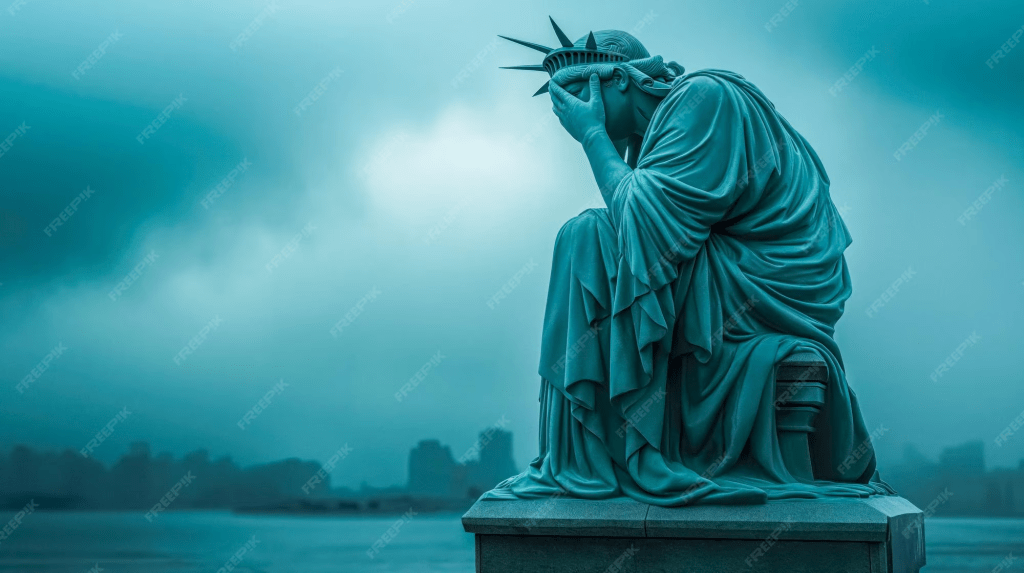
Buckle up. We appear to be screwed. Hopefully, the next voice that is silenced won’t be yours.
On a personal note, my retina appears to be detaching, so this post may be my last for a while.
Godspeed America.
I hope to see you on the other side, but probably won’t live long enough to see a resolution to this nightmare.
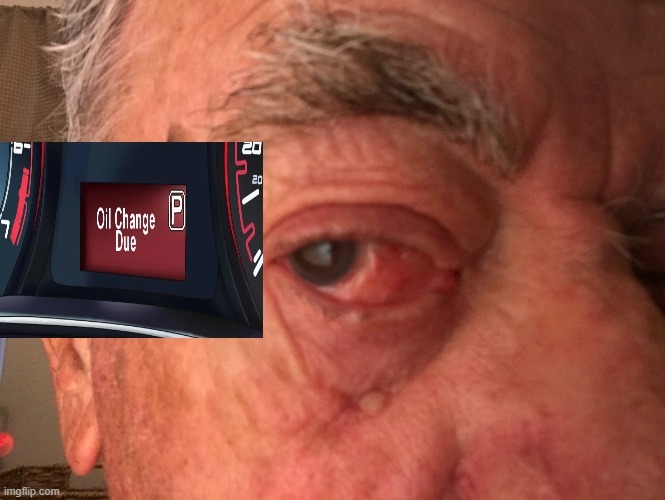
‘m having a minor procedure to remove the silicone oil from my right eye on September the 4th. The oil has been in there since 2018. Though it has done a great job of keeping my retina attached, it is causing other problems, such as retina swelling and eye irritation. Recently, it has emulsified, making my vision cloudy.
I expect to see better after the oil is removed. It will be replaced with a gas. I won’t be able to see anything with that eye for a week or so while the natural fluid displaces the gas. (I will be able to navigate the apartment with the limited vision I have in my left eye.) With the oil out, I will be at increased risk for another retina detachment. If that happens, the oil goes back in.
I will be out of touch for a while as the natural eye fluid is replenished. I’ll ask Karen to keep you posted if there are any significant developments.
Sorry I haven’t written. We have been on the march through hostile territory since April. We arrived at Helena, Ark on the 11th. We can now receive and send mail by steamboat, since Helena is on the Mississippi.
Tell Ma and Pa that Willis is hale and hearty. He is itching to put some more Rebs out of the War. John and Will are also doing fine. There isn’t much that can stop a DeLay. I wish I could say the same for Captain Taylor. He is very sick with the typhoid fever. He’ll be sent north on the next steamer. Bussey left the regiment to become a brigadier. Major Drake has taken his place as our commander.
I sure do miss you and the little ones. Can you get a picture taken of the baby? Perhaps you could hold him to get a good exposure. I’m eager to meet him for the first time. When that might happen, I cannot say.
I am sending you $3 I won at Poker. It is all I have until the Paymaster catches up with us. I know you will put it to good use. I have four months pay due. That is over $50. I need to spend some with the Quartermaster for a new pair of trousers. The Sutler, who has been traveling with us, will get his pound of flesh from each of us for the overpriced goods he sold us on the march. I should have about $40, left to send home by express. I trust you are making good use of all the money I am able to send. I hope you can pay some toward our planting expenses and use some for clothes and nice things for you and the kids. I hear that the New York troops are getting allotments deducted from their pay to send home to their families. I will sign up for one as soon as it becomes available to us.
It is good that you sew. Socks are in great demand here. Mine have been holding up well, but the Infantry can use all they can get. They will gladly trade coffee and sugar for them.
Could you please tell me how the crops are doing? Are you getting enough help from the neighbors? If all goes well with the harvest, you should be able to get a hired hand, assuming all the useful men are not already in the Army.
I don’t know how much news is getting back to you, but the 3d Iowa has been doing the country proud. We rejoined Col Bussey’s command at Forsyth, Mo in early April. We are now part of Sam Curtis’s Army of Southwest Missouri which fought so valiantly at Pea Ridge. His Army left Springfield in late March and picked up our 2 detached companies along the way. You may remember General Curtis as our district’s representative in the US Congress. He was a good congressman and is an even better general. After joining Curtis, we marched back into Arkansas, going through West Plains, where Willis lost his horse back in February.
At first, we were headed for Little Rock, but that would have stretched our supply lines too far. Instead, we turned toward Batesville following the White River east. The 3d led the Army for much of the way.
Major Drake, who was our commander at Salem, had a big dust up with the Rebs at Kickapoo Bottoms, near Sylamore, Ark. He took 25 prisoners, suffering 1 dead and 2 wounded. He also came back with 25 Negroes, who had been hidden in the Boston Mountains by Union men. Unfortunately, the Rebs caught and abused the Union men badly. Three of them who refused to join the Rebel Army were hanged.
As the Army approached Batesville, Ark, we expected to find our old adversary, Col Coleman. We were determined to surround him with an overwhelming force. We arrived at Batesville on the 3dt of May, only to be greeted by a handful of Rebs who soon fled across the river. We captured some much-needed stores of sugar and rice. Coleman was holed up on the other side of the river, but we couldn’t get across. He tried to shoot at us from his side, but the range was too far. The whole town turned out when we brought up our howitzers to return the fire. A couple of well-aimed rounds drove them off. Four Rebs were seen to fall to the fire. The locals later said that one of them was a Lt Col.
We stayed at Batesville a while trying to get resupplied by steamer. Alas, that was not to be. We resorted to foraging to feed ourselves and our animals. Then we marched east toward Helena.
Though General Van Dorn took his Army and left Arkansas, there are still plenty of small bands of Rebs that harassed us on the march. As always, the cavalry leads the march, so we encountered these bushwhackers regularly. I Company ran into a roadblock of fallen timbers at a place called Bayou Cache. Twelve of us went into the woods to see if the Rebs were fixing to ambush us. We flushed out 18 Rebs, killing or wounding half of them. The rest escaped across the river. A funny thing happened there. As the firing commenced, I felt a big thump in my side. It was a hot fight, so I kept on firing. When things slowed down, I reached down to see how badly I was hit. I touched what felt like blood. Then I noticed my canteen, which was full of molasses, was gone. My bloody owie turned out to be molasses from a ball that had taken my canteen clear off. An inch closer, I would have come home on convalescent leave.
As we crossed Arkansas, we lived off the land. The Army split into separate columns, and we scavenged the countryside for anything we needed. What we didn’t take, we often burned to keep it from helping the Rebs. Because all the forage along our path was used up, we had to send a foraging party before us. I knew many of the men because the party was mostly drawn from Company K. On the way back, they got ambushed by a large force. They had a hot fight, with Lt Griswold and 2 troopers I knew well being killed. We were dispatched to save them, but the 9th Illinois beat us to the rescue.
The lower delta of the White River is cotton country. We had many runaway slaves follow us to Helena. Their masters won’t need them since we burned all the cotton fields we came across. Curtis is requisitioning food to feed them from the local citizenry. It bothers none of us that these secessionists are not happy about feeding their former slaves.
Helena is a pretty important place to occupy. It’s on a bluff overlooking the big river. It’s easy to defend and has a good port. We are getting boatloads of rations and ammunition and can send our sick and wounded upriver. The new leader of the Confederates in Arkansas is Gen Hindman. I’m not sure he’s happy that Gen Curtis is now headquartered in the Hindman Mansion here in Helena. Hindman is busy trying to organize the various outlaw Rebel bands of Ark into a real army. The Union men and runaways coming here are telling us that Hindman is abusing Arkansas’s citizens at least as much as we did. He’s taking everything he wants from them and offering potential recruits the choice of a rifle or a noose. Once we get fully resupplied, we’ll be going after him.
Speculation holds that Grant has his eye on Vicksburg as his next prize. With New Orleans now in Union hands, the Mississippi River could be ours again. That would surely help Iowa farmers.
Kiss my babies for me and tell them Daddy loves them.
P.S. The Adjutant says it’s OK to share the details in this letter, except for the part about Grant’s plans to take Vicksburg.
Centerville Iowa
July 28, 1862
My Dearest Husband,
Thank God, my brave and noble husband is safe! We worried so much while you were on the march. We had no word for nearly 3 months. I prayed constantly for your safety. A vigil at church went on for weeks. There was great rejoicing when the papers reported that the 3d Iowa had reached Helena. We were still worried that some of our soldiers might not have made it.
We are fine. The kids are growing like weeds. I spend most of my evenings making new clothes for them. Rosellen says she misses her Papa. I’m teaching her to cook and sew. The kids found a rattler under the porch, and I killed it with a shovel. Hopefully, you can dispatch the next one. My family is fine, as is yours. Uncle Jacob is still here, but looking for a posting as a regimental chaplain.
Your Pa and the neighbors are helping with crops. If conditions hold, it will be a good harvest this year. I hope to hire someone, perhaps an invalid from the Army, to help next year. I hear that freed slaves are arriving in Keokuk. They are supposed to be good workers. The farmers are saying, “Keep sending them our way.”
I’m afraid I have some bad news to report. Captain Taylor died on his way home. He is to be buried in Illinois, but we are having a memorial service here. Everyone is stunned by his loss.
I hope you are getting some news of the War now. While you were in the field. President Lincoln signed the Homestead Act. Think of it! We can now get a farm free and clear just for working it 5 years. Let’s do Nebraska next time. I really hated Kansas with all its troubles. I am so glad you missed that horrible battle at Shiloh. I can’t imagine how many families are grieving. Did you hear about the Union men who stole a locomotive in Georgia and almost made it to Tennessee while tearing up the tracks? They were caught and, I fear, executed. Don’t you go trying any such foolishness!
It is time to put the children to bed. You will be in our prayers as always.
Love,
Margaret
Chapter 21: Slog
Where the hell are the transports with the infantry? Reuben asked himself as he stared at the Rebel pickets on the other side of the Arkansas. This was supposed to be his first big fight. The Third Iowa had spent a miserable night slogging through water up to their horses’ necks. It had rained constantly, making the cold November trek even more miserable.
Since their triumphant march to Helena, the Third Iowa had seen little action. Reuben had been on half a dozen patrols throughout the northeastern corner of Arkansas, trying to flush out scattered bands of rebel irregulars. Several times he had been bushwhacked from hidden places along the trail. Each time the guerrillas quickly vanished into the woods. The Yankees could get no intelligence from the locals on where the rebel camps might be. Reuben and his fellow troopers had begun to grow frustrated in their seeming ineffectiveness.
Elsewhere, the first full year of the war was proving to be anything but boring. McClelland had launched the bold Peninsula Campaign to take Richmond from the East. It had failed, due in large part to Little Mac’s caution. Then Lee tried a daring invasion of Maryland. In a stroke of luck, McClelland’s men found a discarded copy of Lee’s battle plan. The two armies met at Antietam on September 17. The horrific battle became the bloodiest day in American history. Despite his greater numbers and the intelligence coup, McCleland barely won the fight. In a baffling display of risk avoidance, he failed to pursue Lee’s battered army back into Virginia. Across the river from Helena, Grant’s move south was progressing slowly as his supply lines became overextended and vulnerable.
Reuben began speculating on how things might have been different if only the Third Iowa had been involved in these big campaigns. He imagined the troopers riding around the flanks of the enemy to determine his strength and plans. Could they not probe deep in the enemy’s rear and disrupt their communications and supply lines? Why not? The Rebels did it all the time. Cavalry raiders like Mosbey and J.E.B. Stuart had become legends in the South. It was time for the Union cavalry to detach itself from the slow-moving armies and step into the fray. And what better unit to do it than the Third Iowa Cavalry?
That opportunity had finally come in late November. Their mission was straightforward. General Hovey was directed to move against Arkansas Post from Helena. He had assembled 6000 infantry and 2000 cavalry troopers for the task. The Third Iowa was part of the cavalry brigade under Colonel Bussey. Their target was the fortified Fort Hindman on the Arkansas River near Arkansas Post. From Hindman, the Rebels controlled the Arkansas River and could launch gunboat raids on the Mississippi. Dislodging the 5000 Confederates defending this vital position would be difficult.
Hovey sought help from the Navy to transport his force downstream to the White River, which ran parallel to the Arkansas. The Navy would take them up the White to a place near the Confederate stronghold. Then they’d march overland and attack the earthwork that commanded the river at Fort Hindman. In storming the fort, they had to be wary of the Confederate gunboat CSS Ponchitrain, which operated out of Arkansas Post. Taking the fort would force the boat upriver and prevent her from interdicting traffic on the Mississippi. Moreover, if the operation were a success, it could provide a pathway to take the capital city of Little Rock. With its capture, the entire state of Arkansas would fall under Union control.
It was a grand plan, but the weather had not cooperated. With hopes high, the Union force had boarded thirteen transports at Helena on the morning of November 16, 1862. The men were comforted by the addition of a gunboat escort, provided by Navy Captain Henry Walke. The cavalry brigade crammed itself on board for what they expected to ber a brief trip.
“Them Rebs better watch out! We’re gonna lick ‘em good,” shouted one trooper as they cast off.
The convoy proceeded cautiously. The water was low due to the approaching winter. It took three long days to get to Montgomery Point at the mouth of White River, a mere 50 crow fly miles from Helena.
“This is where we get off,” announced Colonel Bussey. “The water is too low for our steamers to get up the White. The infantry will take the smaller vessels a ways further, and cross over on a channel called the Arkansas Cutoff. They’ll meet us above Fort Hindman at a place called Prairie Landing. We should have a good road to the landing, and the foot soldiers won’t have to march so far.”
As darkness fell, the cavalrymen eagerly offloaded from the transports. A cold chill came over then as the wind blew and rain threatened. Reuben rubbed Old Mexico’s limbs in an effort to restore his circulation after the three long days of confinement on the crowded vessel. Bussey sent some men forward to scout the route. Their report was not encouraging. The road was in poor shape after days of rain. It ran straight through a cypress swamp. The good news was that no Rebels were blocking it.
The route was so narrow that Bussey ordered his brigade to form a single column. That meant the 2000 horses and riders stretched out for several miles. It took two hours for the last of the troopers to leave the landing.
This single column is a terrible formation for an advance, Reuben thought. They could easily be ambushed and broken up. The stretched-out column also made it difficult to concentrate forces for an attack. It would take a couple of hours to reform the men for a fight.
The farther the men rode into the swamp, the deeper the water got. Then it started to rain hard. The night became pitch black as the stormclouds blocked out the moon. The riders cried out in frustration when they bumped into low-hanging branches or their horses stopped in deep holes. The soggy path turned into deep mud as they plodded along. The horses struggled to make headway. The churned-up muck made things even more difficult for those further back in the column. The troopers wrapped themselves tighyly in their gum rubber blankets and tried to stay dry. Water dripped from the brims of their hats. Their exposed blankets and clothing were soaked.
“I’ve never been this damn miserable in my life,” one trooper lamented.
“Cheer up. At least we’re not the infantry slogging through this mess,” consoled a sergeant.
“It might have been better if the Navy had taken us directly up the Arkansas. Hell, the water here is deep enough to float most of their damn boats,” Reuben groused.
As the mounted men plodded on in the dreary, wet darkness, the trail became harder and harder to follow. The head of the column got lost. Soon, they were struggling through a mass of tangled vines. Colonel Bussey called a halt for the night and sent men back to find where they had lost the trail. The rear of the column kept pressing on, only adding to the confusion as the riders stacked up.
There was no dry ground on which to sleep. Some men found places on stumps and fallen trees. Others climbed into the branches seeking shelter from the rain and freezing water. Reuben stayed in the saddle and shivered as he waited for dawn. There was no way to make a fire and the men had little in the way of rations.
Daybreak found the column moving along the watery path again. Finally, they approached the Arkansas. The emerging column filed up and down the riverbank. The ferry they were supposed to capture was nowhere in sight. Just out of rifle range, the Confederate pickets taunted them from the opposite bank.
“Hope you damn Yankees know how to swim!”
“What ya’all doin down this a-way? Ya lost or sumtin?”
Then one of them stood on top of the parapet and turned. The men hooted in derision as he dropped his drawers.
“We outa powder that ass!” someone shouted to the laughter of the troopers.
“Does your Mammy know you need a fresh diaper?”
The man pulled up his pants, turned, and made a sweeping bow.
“Y’all kin kiss it if’n ya like.”
“Don’t wanna catch what you got!”
“If my face looked like that, I’d keep it covered.”
They laughed heartily as the prankster rehooked his suspender straps, shouldered his rifle, and began marching back and forth along the parapet like a palace guard.
“Trade ya’all some tobaccy for coffee,” one of the Rebels yelled.
“That sounds mighty good. Why don’t you bring the ferry over, and we’ll do a trade?”
“Fraid not Yank. Just swim across, and we’ll deal.”
The banter went on for an hour as more of Bussey’s troopers arrived on the bank. It was apparent that neither party had the means to injure the other. That is, until one side could bring up an artillery piece capable of the range. Bussey was concerned that the Rebel gunboat, Pontchartrain, might make an appearance. His lightly armed troopers had no way to reply to its heavy guns.
Unbeknownst to the cavalrymen, the approach of the waterborne infantry had failed. No, they weren’t defeated by the might of the Confederate army or the guns of the Ponchatrain. Not even the rain hampered their forward movement. Ironically, as the cavalry was nearly drowning in the swamp, Walke’s flotilla had failed to get over a sandbar on the White. The infantry could not make its rendezvous because the water on the White River was too low. The attack on Arkansas Post could not happen..
General Hovey had no choice but to call it of. The ships retreated down the White. A rider was dispatched from Montgomery Point to inform Bussey.
The men groaned when they got the word. Now they would have to slog their way back through that diamal swamp. And it was began raining once more.
“Damn Navy,” one officer complained. “Why’d they send us up here if they couldn’t support us?”
A smile crossed Bussey’s face. He had a thought. The brigade hadn’t hauled a couple of small howitzers through the long, wet night for nothing.
“Maybe a parting shot is in order.”
Reuben joined other men on horseback, as they shielded the gun from the prying eyes of the Rebels as the artillerymen unlimbered and loaded it. Across the river, old Johnnie Rebs continued his exaggerated mocking mach.
“Bet you boys cain’t fight worth doodly!” hr called. “I heerd all Yankee mothers wuz whores!”
KABOOM!
The Rerbel dived for cover.
“We’ll be back!” yelled the troopers as they mounted up to leave.
Their taunt went unanswered. The Rebel pickets had skedaddled.

 Outlaws, Outrages and Outright Lies