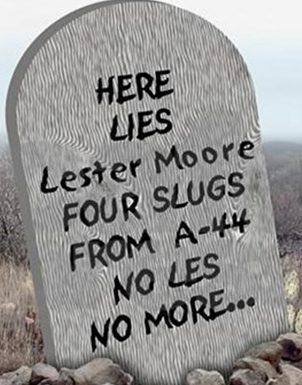
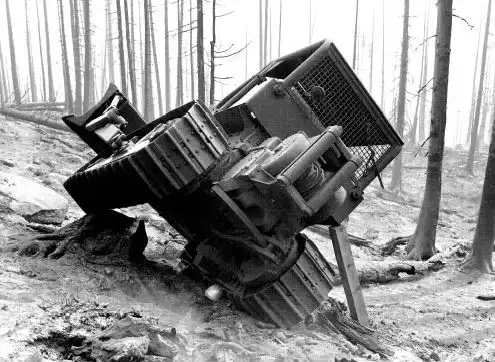
I grew up in Glasgow, Montana. During world War II, Glasgow was the site of a satellite B-17 bomber training base. When they left, it became Glasgow’s airport. My parents used to talk about the days when the young pilots would buzz the Nurses who lived in the Nurses Home across the street from us. I somehow got the impression this guy fell out while waving to his girlfriend. That seems unlikely if he wound up in a field 10 miles away.
Glasgow Courier May 13, 1943 Clinton H. Jackson fell out of a B-17 near Glasgow, Montana My parents said they used to buzz the Nurses Home across the street from us. Sgt Clinton Harding Jackson 1920-1943
B.B. DeLay, Son-in-Law Ed Covey and son Walt DeLay about 1920
Boen DeLay walked into his Homestead on the Missouri River. He and his cousins John and Jay Cochran had come to Miles City in 1912 but found no desirable land available. They decided to look farther north. John said, “If we go anywhere else, we’ll have to walk.” Boen replied, “I will if you will!” The two gathered their few necessities in light packs and hiked away. We don’t know whether they were able to find people to give them a meal or shelter now and then.
They arrived in good shape at the river where they filed on land side-by-side. There was much to do in the line of clearing and building before the DeLay family could come. When Mrs. DeLay and the four children came in 1914 they were fields cleared and a house almost built. It lacked a roof to top the log walls, a floor and a cookstove. Would you believe that anyone could make out about a year with an airtight heater for cooking? Must have been sort of limited meals unable to make bread the cook would fry dough gobs in that. These little hunks of light bread fried like donuts are delicious with butter and sugar but to make them every meal of every day?
The roof went on quickly but the floor had to wait a while. I always think of a dirt floor as having such hazards as a bunch of cactus sprouting under the stove or a gopher excavating a home under the word box. Nothing like that happened though and it wasn’t as hard to keep clean as you think.
The children were Belle, who married Ed Covey maybe because they were both musicians, Leona who is Mrs. Thill, Walter, who died some years ago, and Floyd who lives in Mesa, Arizona and came to visit a few weeks ago and told us a lot about his folk’s early days in Montana. Some near neighbors were Pinters (another family than the Pointers further up the river) Payants and MacLain’s.
Later Mrs. DeLay homesteaded back from the river. Her neighbors were the Hellands. Cochran sold his homestead to Mr. DeLay and moved on.
The principal crop in the place was alfalfa. It didn’t take too much to winter a herd in the brush on the river bottom so they had plenty to sell. Some sheepmen who ran up on the bench bought hay from DeLays year after year. The years that the second cutting of alfalfa produced a seed crop were red letter ones. According to Mrs. Walt Wittmayer, everyone paid all his debts, bought a new car and waited for the next seed year. A record that still may stand was made when the DeLay outfit shipped a whole carload of seed from their land.
The cattle grazed up on the benches (free range at that time) because of the direction of the river ran and the prevailing wind the first storm of the winter usually drifted the cattle right into their home grass where they wintered comfortably in the shelter of the trees. Sometimes during a very cold winter huge long horned steers came in from some remote coulee and competed with the tame cattle for feed.
The family got acquainted with some of the old trail rider‘s, part of the outfits that trailed the herd from Texas. They were Ernest Pearson , Frank Kinkaid and a character named Billious Bill. One day both Frank and Ernest rode into DeLays and spent the evening showing the boys how to tie useful knots in rawhide. Floyd said to himself, “Remember this, it may be the last time these find old gentleman get together.
The people who lived nearby were the best neighbors in the world, Floyd declared. They helped each other work and had wonderful times together at dances where Mr. and Mrs. Covey furnished the music along with our old friends Cliff and Lucy Doke. The whole country came to school affairs and brought plenty of lunch so they could spend most of the night visiting.
Leona’s children are Mrs. Merrill (Belle) Wilson who is employed at the First National Bank and resides in Fort Peck and DeLay Stockton to this day call “Dee” for short. They spent a good deal of time with their grandparents on the river. Belle had lived in Wichita Falls and thought Glasgow couldn’t even be called a town. Once it was over a year between trips to town for her. People didn’t care to make the journey very often behind a pair of oxen which was the only means of transportation DeLays had at first. Neighbors were very obliging about bringing mail and supplies and besides there was so much interesting work and fun right at home.
It was an ideal place for picnics with green meadows, large shade trees and wonderful cooks with the best of materials to work with. They had many picnics. Fishing parties were usually successful with everyone catching and eating all they could possibly want. Belle remembers a fishing expedition with her brother and grandmother best. The children had been warned never to go near the high bank of the river’s edge because of the water undercut, which left the top unsupported and easily broken off. The children heard an unusually loud splash. Frantic glances failed to locate the grandmother so they were sure she had fallen in. Little Bell was consoling smaller Dee, “Even if Grammy is lost, I know the way home.” But Granny was just out of sight behind a tree. She knew all about the dangerous banks.
Another memory is of a steamboat going by. The minute they heard the whistle the children hiked down to the place where they could see the boat through the opening in the trees.
Belle and Dee were with their grandmother one day when they came upon a man down on the ground, blood running from a wound in his shoulder. He needed help but Mrs. DeLay thought it must be a job for men not an old lady with two frightened kids. She whipped the horse toward home in record time.
Floyd remembers trying to teach Dee and Harold Helland to swim and dive. They learned to keep afloat and not to dive like a falling tree.
Dee said that he would rather ride a horse then go to school or to town or anything else you could think of. They all encouraged Dee to stick to it, never let any horse get the better of him. Dee became a very good cowboy and earned fame as a rodeo rider in saddle bronc. He rode by balance and knew in his bones what the horse was going to do next.
Floyd said some of his most precious memories were those early days in the best place in the world to live with the best people on earth for neighbors.
The above article was originally printed in The Glasgow Courier on September 14, 1967. It was also Published in the book, Pioneers Gone But Not Forgotten: Memories of Valley County, written and compiled by Wib an Sue Dolson in the 1970’s.
B.B DeLay and his extended family homesteaded on the Missouri River in the Lismas/Ninth Point area. Fort Peck Lake now covers the original homesteads. The DeLays, Cochrans, Leona (DeLay) Stockton, Coveys and Pointers were all related. They came from Oklahoma in 1912-1914. The DeLays were originally from Appanoose County, Iowa. The DeLay name is French and was originally spelled DeLaye. Claude DeLay Stockton’s nickname is usually spelled De.
Locations of the DeLay family homesteads Valley County, Montana
Humans make life-sustaining decisions based on whatever information is available to them at the time. Sometimes our information is anecdotal. Jill jumped out of an airplane without a parachute. In light of her tragic end perhaps the rest of us should don a chute before we launch ourselves into eternity. Seems logical.
Joe was diagnosed with cancer a few months ago. Then someone gave him a piece of Bazooka Bubble Gum. As he chewed it, Joe was warmed by memories of his childhood. He felt a little better. Soon he was at the store buying more Bazooka Bubble Gum. He even relearned how to blow bubbles. His grandkids were amazed at his bubble-blowing prowess. Joe was comforted by the sweet sticky taste of his Bazooka Bubble Gum. There was still pleasure in his life.
After a few months of regular chewing and bubble-blowing, Joe returned to his Oncologist for a check-up. Good news! His cancer was in remission. What a blessing, perhaps even a miracle. Joyful, Joe thought about all the changes he had made in his life since his original diagnosis. None of these seemed to have worked until he re-kindled his love for Bazooka Bubble Gum. Could that be the secret of his cure, he wondered?
Joe happened to mention his healing to fellow cancer patient, Tom. With nothing to lose, Tom began chewing Bazooka Bubble Gum. Amazingly, his next trip to the doctor revealed that his tumor had stopped growing and might even have shrunk a millimeter or two. Then their mutual friend Sally died of lung cancer. Both knew that Sally disliked Bazooka Bubble Gum and never chewed it. The facts were adding up. Soon they would be hard to deny. Sam and Kathy started on Bazooka Bubble Gum therapy for their cancers. Though it was too early to tell for sure, they seemed to be getting better.
Joe, Tom and Sally’s daughter, Liz started sharing their experiences on social media. The local paper picked up the story. Soon more people were experimenting with Bazooka Bubble Gum as a cure for various forms of cancer. Interest picked up even more when, Dr Foz, a licensed Anesthesiologist, began suggesting the treatment on his Healthy Life Vitamin Supplement website. Soon the story was picked up by a major cable news political analyst. He asked, “With all this compelling evidence, shouldn’t we be looking at Bazooka Bubble Gum as cancer’s silver bullet cure?” Twitter lit up like a wildfire. Soon store shelves were emptied of Bazooka Bubble Gum. Frantic patients turned to alternatives like Double Bubble Bubble Gum in hopes that it might contain similar ingredients. Sadly, those who tried Double Bubble Bubble gum failed to achieve the same results as those who had used the real thing, Bazooka Bubble Gum. Stores began to limit customers to one pack of Bazooka Bubble Gum at a time, while the manufacturer ramped up production.
Things really came to a head when Zeke Tregaskis, a cancer patient from Ottumwa sued his doctor for not prescribing Bazooka Bubble Gum as part of his treatment. The callous physician maintained that there was no scientific evidence that Bazooka Bubble Gum cured any form of cancer. He at least acknowledged in court, however, that there were no known adverse effects from the tasty treat other than an increased possibility of dental cavities. Tragically, Zeke died before his court case could be resolved. Several cable news pundits were outraged at this denial of a vital, life-saving treatment.
OK, this is satire. Unfortunately, it is all too similar to some of the things we have seen as the Coronavirus raged through our population. At first, we had little scientific information to go on. We got confusing information on the virus and how to protect ourselves. Many viewed infectious disease precautions as too burdensome and harmful to their livelihoods. Others heard of anecdotal cures. A small study claimed limited success with Hydroxychloroquine, a malaria drug. A man in Phoenix died after drinking an aquarium cleaning fluid whose label said it contained the chemical. Cable news pundits brought guests on their shows promoting the drug. People took Hydroxychloroquine both as a preventative and a cure. They literally sued doctors and hospitals to get it. The results of the initial Hydroxychloroquine study could not be replicated by more rigorous scientific trials. The drug was useless and might have some bad side effects. People still took it and are taking it to this day.
We’ve now seen numerous peaks and valleys of virus infections. Each time we thought we were done with the virus, it reminded us that it was not done with us. New variants emerged along with new ways to treat the infection. Finally, there was a promising vaccine. Science had at last triumphed. Statistics told us that the vaccine was highly effective. There would be fewer cases and far less hospitalizations and deaths.
At this point, all should have gone well. It didn’t. Why?
We just began the third year of the pandemic and though receding, it is still a major public health problem. People are resisting the vaccines, still taking Hydroxychloroquine and turning to other unproven drugs like the horse de-wormer Ivermectin. Young people, in particular, feel like the disease is not their problem. They can catch it and usually suffer little or no consequences. Unfortunately, everyone who catches COVID is a vector for transmission to other, more vulnerable populations. At least now older and immunocompromised people are able to do a pretty good job of protecting themselves with vaccines and avoiding the unvaccinated.
The current variant, Omicron, is proving itself to be more contagious, but less lethal, than earlier variants. Let us hope that the next variant will be even less malign. There are no guarantees.
Besides quack cures like Hydroxychloroquine and Ivermectin, I am particularly concerned with vaccine resistance. People cite a variety of reasons for not getting the vaccine. Often their excuses are based on anecdotal evidence rather than rigid scientific analysis of statistics. The Bazooka Bubble Gum cure for Joe’s cancer is an example of anecdotal evidence.
Some people are afraid to get the vaccine because it is too new or that it could be harmful to them. To date, over 500 million shots have been administered in the United States. There have been about 5 adverse reactions per million after receiving the shot. Some people have died after receiving their COVID shot. (In a good year 3 million people die, some after eating ice cream.) Only 9 of these deaths have been casually linked to the vaccine. All of the 9 victims received the Johnson and Johnson vaccine which is no longer being recommended.[i] From the anecdotal stories I hear, each of those 9 people must have had 10 million friends and relatives. The 100 million or so people who refuse to get vaccinated all seem to know someone who was killed by the vaccine.
I get that some might fear a new vaccine, but the alternative could be much worse. As a child, I lived through the Polio epidemic of the 1950’s. My wife caught Polio and is paralyzed in her right arm. Though the Polio vaccine was a godsend, one of the original 6 manufacturers allowed the vaccine to be contaminated with live Polio virus. The massive effort to vaccinate America’s children had to be paused while the problem was identified and fixed. The rigid controls on vaccines that were imposed after this debacle have kept all vaccines safe since that time.
Some people are saying that COVID only threatens a small portion of our population. They may even claim that the published figures on hospitalizations and deaths are over-reported for various nefarious reasons. Contrast this claim with the fact that the nation experienced over 400K excess deaths in 2020 and almost 500k excess deaths in 2021.[ii] In addition, the average life expectancy for Americans has fallen by 2.2 years since the pandemic began.[iii] If COVID didn’t cause this, what did?
No, the vaccine isn’t perfect. People are still getting breakthrough cases, especially since the highly contagious Omicron variant has become dominant. There is a stark difference, however, in the outcomes for those who are vaccinated vs those who are not. The unvaccinated are dying at a rate that is 20 times that of the unvaccinated. Many of the unvaccinated who are dying are younger than those lost in previous waves. The vaccinated people who also die are generally the elderly and those with compromised immune systems. [iv]
Like the people in the above anecdote that believed Bazooka Bubble Gum would save them from cancer, there are certain groups of people in the US who downplay their COVID risks or seek unconventional ways to protect themselves. The young simply think that it is not their problem. (OK, I’ll admit it. I stay away from young people who might not be vaccinated.) I would hope that we could somehow convince them that this is bad for the health of our society. Do they really want to kill Grandma?
The other group that seems most likely to avoid vaccines and other protective measures are the highly politicized. The disease is a hoax, the vaccine doesn’t work, just take some horse de-wormer they are told every night on television. Many of these people are elderly themselves making them more vulnerable to bad outcomes from the disease. A shocking number of pundits and celebrities bombarding them with this information have actually died of COVID.[v] Viewers of shows featuring COVID disinformation are now much more likely to have a bad outcome if they catch the disease.[vi] It didn’t have to be this way. May they rest in peace.
I would hope that America, which has suffered dearly in the pandemic, will stay vigilant and safe. It is no fun to see a loved one die or get long COVID. My family has lost 3 members to the disease. I hope yours fares better.