Bottom Land

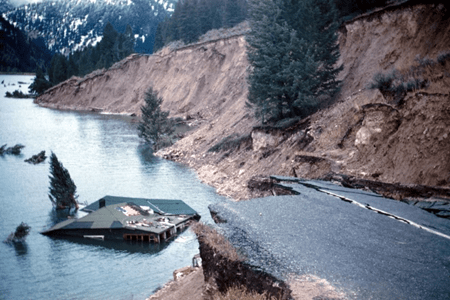
The Wilson Ranch, Phillips County, Montana

Rusty corn planter,

The plow horse,

Long gone.

A home,

Hewn from cottonwoods.

No lights, no water.

Much love.

Empty now,

It’s stories untold.

Of laughing children,

Chasing bugs,

Log cabin,

Two rooms,

Melting into the prairie.

The Wilson Ranch,

Lush grass,

Horses and Herefords,

Branded,

Rocking XA.

A lazy river,

After the flood.

The good years,

 And the bad.

The Depression,

Took it all.

Federal loan,

Roosevelt.

The War,

Better times.

Old and weary,

They left the land.

Retired,

With no pension.

Progress,

Some said.

LDT June 25, ‘25

Main Menu- http://www.azrockdodger.com

Chapter 14: Mounted Riflemen

Chapter 14 Mounted Riflemen

              “Yer out!”

            Cheers erupted from the crowd of spectators. The Country Boys had just defeated the Centerville Nine by a score of 3-2. They had finally learned to work together as a team and make the best of each player’s skills. There were Huzzahs all around and the opposing players rushed to congratulate their foes.

            The celebration was only muted by another contest that had happened a few weeks earlier in far-off Virginia. On July 21, 1861, over 60,000 soldiers clashed in the first major battle of the Civil War near Bull Run Creek in Virginia. The Union was so confident in victory that many residents of Washington, D.C., packed lunches and made their way into Virginia to watch the spectacle.

            The Battle of Bull Run, as it turned out, was nothing like the baseball games that young men were playing all over the North. They played with 50 caliber Minié balls. Catching one could mean losing life or limb. The rifles were lethal to 500 yards or more. Long lines of men faced each other and aimed to kill through the haze of powder smoke. Instead of running for bases, they often ran for cover.

            At first, it appeared Lincoln’s volunteers would get the best of the Rebels. The legion of spectators cheered the troops on. The tide turned when the Confederates brought in reinforcements. The Union line began to break. One by one, units fell back. Then panic set in. Men dropped their weapons and ran. Some ran right past the startled spectators who joined the rout. The fleeing army left everything behind, even their dead and wounded.

            The debacle at Bull Run convinced both sides that this was going to be a long, bloody war. Congress met and authorized Lincoln to enlist 500,000 more volunteers. These would not be 90-day men. The Congress gave Lincoln the power to recruit the men for 3 years. Men rushed to sign up as war fever raged.

            After the victory celebration, one of the players, Thomas J. Taylor, asked the men to stay to discuss preparations for war.

            “Men, you all know Lincoln has called for more volunteers. It will take a while to form all these new regiments. Meanwhile, our state is threatened by the Missouri State Guard of their ex-governor, Sterling Price. He’s said to be heading for Springfield to have a fight  with General Lyon’s Army. Even if he’s defeated, there are other Rebel militia groups not far from here.”

            “Now, a lot of folks in Missouri are pro-Union, and the state hasn’t joined the successionists.”

            “Yet!” someone shouted.

“So far, Missouri is showing a lot of sense. Most Missourians don’t have a horse in this race. The slaves are owned by a handful of big planters. They’ll stay with the Union if Lincoln convinces them their slaves aren’t threatened. It’s the outliers, like Price, who constitute a threat. He can mount his men and raid these parts at will. We need a force to meet him if, or when, he shows up.”

“So what are you proposing?” came a question from the crowd.

“We need to form our own militia unit, mounted men who can assemble and ride on a moment’s notice. We can guard our homes and crops until the new army gets better organized.”

“What about weapons?”

“We’ll have to supply our own for now. I’ll write the Governor and see if we can get some old Army muskets. If you have a musket, a rifle, or a pistol, bring it with you when we muster.”

“Mounted Riflemen? Do we need to have a horse?”

“For now, anyone without a horse can be in the Home Guard. Someone has to defend the town when the rest of us ride out. When we become part of the Army, I want to serve as cavalry. I’m sure Uncle Sam will provide us with decent mounts. For now, we’ll do the best we can with what we have.”

Reuben brooded as he listened to Taylor’s talk. He imagined Captain James Montgomery giving the same speech to the Jayhawkers of Linn County. All over America, North and South, men were rushing to fill the ranks of the armies that would shape America’s destiny. There was no turning back. A divided nation would slug it out until one side prevailed and the other gave up. He’d been there before. In Kansas, he had been forced to choose a side. This time, the stakes were bigger and the cause nobler. It was not about protecting his little place on Sugar Creek. The nation, his nation was in peril.

“Who will stand for the Union?” Taylor thundered.

“I will!” shouted Reuben, having raised his hand at the beginning of the question.

There was a chorus of ‘I wills’ and ‘Hear, hears.’ Men looked around, assuring themselves that they were not alone. There were no dissenters.

“Alright, you men. Go home and get your gear. We’ll meet at this field at 10 AM on Tuesday. Bring your friends if they are young and able. If any older men want to join up, they can serve in the Home Guard.”

“What was that all about?”  Margaret asked as Reuben helped his pregnant wife up to the seat of their wagon.

“We’re forming a company to defend ourselves.”

“Like Kansas?”

“Like Kansas. There is a chance that those old Missouri Ruffians will ride North to make trouble again.”

“Oh Lord. I thought we left all that behind in Kansas.”

“The trouble followed us home and spread to the whole country, or so it seems. We need to be ready for whatever comes our way. Most of the men want enlist in Lincoln’s new 500,000 man army.”

“FIVE HUNDRED THOUSAND! Tell me you won’t have anything to do with that!”

I’m just joining a militia company. Chances are, we won’t stray far from Appanoose County. If the war gets much worse, I may have to reconsider.”

“Reuben! For God’s sake, we have 3 little children and another one on the way. You can’t leave us here and go strutting off to war.”

“Like I say, only if I have to. Papa will help around the place if it comes to that.”

“I need my husband at home!”

Reuben tried to change the subject for the rest of the ride home as Margaret sat fuming.

On Tuesday, Reuben saddled up early and rode to Centerville. When he arrived at the field, he found dozens of other men already there. They brought a motley assortment of antiquated firearms with them. Reuben carried his Sharps, his revolver, a blanket, and a change of clothes.

Captain Taylor’s first order of business was to establish a muster roll. Over sixty names were soon added. Then the men were assigned places to stay. The loyal citizens of Centerville offered up any extra rooms they could spare. Men were also billeted in stables and barns. The women of the town served them lunch. Finally, it was time to learn the rudiments of soldiering.

Taylor appointed squad leaders and lined the men up in columns behind them. The men looked around at the admiring faces of the townspeople as they formed up.

“Stand at attention and keep your eyes locked forward!” Taylor barked. “We are going to learn to march. When I say Forward March, step off with your right foot.”

“FORWARD…”

“Did I say march, Private Smythe?”

“Er.. No you didn’t Joe.”

“My name ain’t Joe, you idiot! I’m Captain Taylor. You will address me by my rank or as Sir. Understand?”

“Er.., yep J.., I mean Sir.”

The rest of the afternoon was spent trying to get the men to march in step. It seemed a hopeless task. An old soldier from the Mexican War sat on a stool, laughing at the disorganized gaggle of men. By evening, some of them had learned the soldiery art of marching as Captain Taylor called cadence.

By the second day, Taylor had somehow acquired a copy of a company drill manual from 1835. He showed much more confidence as he began the day’s drill.

“Attention Company!”

The men looked up.

“Fall in!”

The men formed in two ragged rows.

“Count twos!”

The men counted off. “One, two, one two…”

“Right Face!”

Most of the men pivoted to the right.

“Your other right, Smythe!”

“In two ranks, Front!”

“Right, dress!”

The men looked confused.

“Stretch your right arm to touch the shoulder of the man next to you!”

Front!

The men faced forward. The commands were repeated for what seemed like half the morning. Finally, the men began to respond properly and in unison. By afternoon, they had learned Forward March, Column Left, and Column Right. Even the old-timer from the Mexican War was starting to show some appreciation.

The next day, Captain Taylor decided to drill the men with horses. Getting their mounts lined up was a challenge. Giving up, he decided to let the men have some fun demonstrating their martial skills on horseback.

He brought out an armload of laths and distributed the wooden sticks to the horsemen. A couple of men set up a scarecrow at the other end of the field. Each rider was directed to charge the scarecrow and swing his wooden “saber” at it. The scarecrow spooked most of the horses as they approached. The spectators joined the unmounted men with rounds of cheers and jeers as each rider tried his luck. Few of the mounted men successfully struck their prey.

The next task was to shoot a pistol while charging a target. The first rider’s shot went wild, nearly hitting some spectators. Taylor ordered them out of the way. The next rider’s horse threw him as he fired off a shot. Taylor decided to call it a day.

Contents: Unbowed: The Saga of a Civil War Cavalryman- Unbowed: The Saga of a Civil War Cavalryman-Index – Outlaws, Outrages and Outright Lies
No Damn Parade

There’s no damn parade for me,

  For some emperor wannabe.

I refuse to anoint a damn king,

  Bone spurs no accolades bring.

His whole life has been a charade,

  He ain’t earned no stinkin’ parade.

He dishonored the oath he swore,

  And we, who went off to war.

We’re losers and suckers he said,

  While ignoring our sac-a-red dead.

He stomped on our rights and our laws,

  And took what he could with his claws.

Each day, he’s taking revenge,

   On those who question his ends.

I should tell him where to go,

  Maybe that place down below.

In a land once proud and free,

  There’s no damn parade for me.

LDT June 14, ’25  #NoKings!

Main Menuhttp://www.azrockdodger.com

John Brown’s Body

The Execution of Abolitionist John Brown

John Brown’s Body

A lot can happen in a week. At 4:30 AM on April 12, 1861, the guns of the Confederate States of America opened a bombardment on Fort Sumter. The fort had been designed to defend Charleston Harbor from attacks by sea. It’s defenses were pointed the wrong way, and it was still under construction. Fort Sumter was defended by Major Robert Anderson and 127 men of the 1st US Artillery. Attacking Anderson was his former West Point student and protégé P.T. Beauregard. Overly cautious, Anderson took several hours before ordering his guns to return fire. The Union’s response was ineffective. After 34 hours of constant bombardment, Anderson surrendered Fort Sumter. The Civil War had begun.

An alarmed Abraham Lincoln resolved to put down what he saw as an insurrection. He called for 75.000 volunteers to serve 90 days, the maximum allowed under the existing law. Everyone assumed the rebellion would be over by then. Unhampered by U.S. laws, the Confederacy called for 100,000 volunteers. Four more states, including Virginia, seceded.

By Sunday, April 14th, the news of Fort Sumter’s fall had flashed across the telegraph lines to far-off Appanoose County, where it caused great excitement and apprehension. As Reuben and his family arrived at the Methodist-Episcopal Church in Centerville, they found worried parishioners gathered outside to discuss the news. A group of young men began singing a song that seemed written for the occasion.

John Brown’s body lies a-moldering in the grave; moldering in the grave, moldering in the grave….

Reuben had met John Brown in Kansas. Brown had moved his violent anti-slavery operation to Linn County before Reuben left. Luckily, the old man took sick and caused no trouble at first. Reuben and some of the men from the Sugar Creek Militia had once visited Brown at his fort. Despite his past bloodthirsty actions, the abolitionist seemed kindly and soft-spoken. He only got testy when someone suggested that non-violence might be the path to healing the divisions of Bleeding Kansas. Brown’s continued militancy had caused militia leader James Montgomery to keep his distance from him.

Brown made one final raid into Missouri in December of 1858, killing a slave-owner and freeing about a dozen slaves. Then he disappeared for several months as he plotted his next move to end slavery.

Brown’s plot turned out to be a bold one. He would raid the arsenal at Harper’s Ferry, Virginia, steal its guns, and arm the local slaves for a rebellion.

As the song went,

He captured Harper’s Ferry, with  his nineteen men so few,
And frightened “Old Virginny” till she trembled through and through….”

Brown had, indeed, captured the arsenal at Harper’s Ferry in October of 1859. The raid was a poorly planned disaster. Brown recruited only 2 local slaves for his rebellion. Eleven of his men, including 2 of his sons, were killed. Brown and 6 others were captured. As the song continued,
“They hung him for a traitor, themselves a traitor crew,

Brown’s raid had thoroughly alarmed the South. The slave states’ greatest fear was a repeat of the slave rebellion led by Nat Turner in 1831. They now had proof that Northern Abolitionists were willing to promote even larger rebellions. Worse yet, the new President, Abraham Lincoln, seemed sympathetic to the Abolitionists. The South didn’t trust in his assurances that he only wanted to contain slavery to the states where it had taken root. His election so alarmed them that 11 slave states eventually seceded from the Union. Brown’s raid, Lincoln’s election, and Fort Sumter had finally ignited America’s most devastating war.

As the couple entered the church, they heard a new verse to the song,

“We’ll hang Jeff Davis to a sour apple tree, sour apple tree, sour apple tree….”

“Hang Jeff Davis?” Margaret asked as they took their seats. “Will there be a war?”

“I reekin so,” Reuben responded. “Hopefully, a short one.”

Uncle Jacob’s sermon was more militant than ever before. The Union was broken. Men were going to die. He offered a prayer for a quick resolution to the crisis. After the service, the men gathered, as planned, for their baseball game. This time, the Country Boys did a little better. They lost by a score of 5 to 0.

A few days later, Lincoln’s proclamation calling for the mobilization of the 75,000 volunteers appeared in the papers. He pointed out the gravity of the situation, accusing the secessionist states of opposing and obstructing the execution of the nation’s laws. The 75,000 volunteers, he proclaimed, would be used to “suppress said combinations and cause the laws to be duly executed.” Iowa was to provide one regiment to support the effort.

He called on “all loyal citizens to favor, facilitate, and aid this effort to maintain the honor, the integrity, and the existence of the National Union, and the perpetuity of popular government; and to redress wrongs already long enough endured.”

He explained that the first service of the forces would be to recover the forts and property seized by the rebel states. He promised care in avoiding unnecessary harm to peaceful citizens and commanded the Rebels to disperse peaceably. He gave them 20 days to comply.  It was not to be.

By the next Sabbath, thousands of men had answered Lincoln’s call for volunteers. The Iowa quota for a regiment of 1000 men had filled up before anyone in Appanoose County could enlist. Reverend DeLay’s sermon was gloomy. Unless the South folded to Lincoln’s demands, men were going to die. A special offering was taken to purchase personal items for Iowa’s volunteers.

That afternoon, the Country Boys scored their first two runs against the Centerville Nine. They still lost by a score of 4 to 2. The post-game discussion centered on the rebellion.

“I can’t wait to get at them damn Rebels,” said one of the players.

“I’ve a notion to go to Missouri and see if I can join one of their regiments,” said another.

“Calm down,” Reuben responded. “If this turns into a real war, you’ll have plenty of opportunity to die for your country. With luck, the South will back down like they did in Kansas.”

“But first, they need to be taught a lesson. They can’t just go about seizing Federal property,” someone said.

“Like I say, they’ll probably back off. If they don’t, it will be a long, bloody war,” Reuben countered.

“Well have them outgunned and outmanned!’ exclaimed another man.

“Don’t be so sure of that. Remember that our armory at Harper’s Ferry is in Virginia. The Rebel state militias have thousands of surplus US muskets. They can make modern rifles at some of the arsenals they took over. They likely got dozens of spiked guns at the forts they seized. Now, Jeff Davis is asking for more volunteers than Lincoln requested. If there’s a war, it won’t be no cakewalk,” cautioned Reuben.

“We can lick ‘em!| shouted a chorus of men.

“Maybe so, but some of us will die in the process.”

After the post-game discussion broke up, Reuben loaded Margaret and the children into the wagon.

“The boys sure seem to want a war,” he told Margaret.

“God, I hate that. We had enough of that in Kansas. It’s hell not knowing when someone will show up during the night with a torch.”

“Let me remind you that Kansas just got admitted to the Union as a free state. We did that.”

“Was it worth it?” Margaret asked, her voice quaking. “We could have all been killed.”

“The country is better for it. So far, it looks like Missouri will stay in the Union. That makes us safer here on the border with them.”

“I suppose so. But I don’t want my man going off to war again.”

“I’ll only go if I have to.”

Behind them, the remaining players began to sing John Brown’s Body again. Their voices seemed increasingly militant. The lines from the chorus struck Reuben and Margaret as prophetic.

He has gone to be a soldier in the army of the Lord,

His soul is marching on.

Glory,  glory, hallelujah! Glory, glory, hallelujah!
Glory, glory, hallelujah! his soul is marching on!

          A few months later, John Brown’s Body, would be rewritten by Julia Ward Howe. It became The Battle Hymn of the Republic. That song would inspire the young men of the North to “die to make men free.”

Index: Unbowed: The Story of a Civil War cavalrymanUnbowed: The Saga of a Civil War Cavalryman-Index – Outlaws, Outrages and Outright Lies

No Kings Protest

Like many, I* will be attending my local No Kings Protest on June 14, 2025. Peaceful protests are the sacred right of all Americans. The right to assemble and seek redress of our grievances is enshrined in the First Amendment of the US Constitution.

Whether you are participating in the No Kings Protest, counter-protesting it, or just passing by, here are some suggestions on how to conduct yourself:

Stay safe and enjoy the democracy that allows us our sacred freedoms.

Main Menu- http://www.azrockdodger.com

Life in 2050

            Coltrane stopped and pivoted as he reached the steel door. The digital timer next to the little observation window ticked down. Eight seconds. He had plenty of time before the shock collar began buzzing. He held his wrist up to the scanner. He didn’t like the chip, but what could he do? He had once spent 30 days in the hole for prying it out with a broken piece of glass. The reimplantation had put it behind the tendons of his wrist. It hurt.

            The door opened automatically. He had 5 seconds to get inside. No shocks tonight. He stepped in as the door swung shut and closed with a clunk. Then the lock motors whirred as the bolts engaged. Home, sweet home, he thought.

            It had been a long, tedious day at his workstation.. His assignment was to monitor the state media consumption of a block of citizens. They were required to read or listen to each day’s official bulletin. The bulletins were propaganda designed to cower the citizens into compliance with the dictates of the regime. Citizens were expected to complete a short questionnaire indicating they understood and agreed with the bulletin. Failure to log into the system or missing too many questions resulted in an alert. Too many alerts could result in being sent to a Re-education Camp. A creative man, Coltrane had found ways to make his job more interesting and rewarding.

            The system was old, and Coltrane constantly looked for ways to thwart it. No matter what his clients did or didn’t do, they never got more than a warning. Meanwhile, his alternate persona was busy hacking the system. He made sure his tormentors in the guard force got scheduled for re-education regularly. Sometimes he planted damaging items in their personal messaging accounts. He didn’t worry that getting caught meant certain death. Lisa would be fine. She had access to millions in untraceable digital currency. Where did it come from? You probably shouldn’t ask. If you really want to know, the former Prison Warden was executed for embezzlement. It served him right as he had helped the regime steal the assets of his prisoners.

            Coltrane’s tiny cell included a combination stainless-steel commode and washstand. His bunk was a metal rack suspended by chains. The top bunk was empty now. He’d had cellmates over the years. Some collaborated with the regime and got released. One had been called out at 6 AM. Coltrane remembered feeling the bullets thudding into the wall. Later, the guards came and collected the prisoner’s meager belongings. At least he would suffer no more. The worst roommate had been Frank. He was a snitch. He only stayed 3 nights. After warning the other inmates, Coltrane used his computer skills to ensure Frank would become a real inmate.

            Coltrane was now in the 25th year of his 25-year-to-life sentence. No parole hearing had been scheduled. In 2024, he’d been a minor bureaucrat in the Economic Statistics Analysis Division. He prided himself on his accurate reports. They helped the government spot and fix problems. All that had changed when the new regime came to power in 2025.

            The Nationalist Party had used force and intimidation to swing the election their way. The new leader soon clamped down on individuals and institutions that he considered enemies. The Press was silenced. Scholars were intimidated. Scientists saw their research stalled and their findings discarded. The justice system was stacked with syncopates. Dedicated civil servants were fired without cause. The political opposition was investigated. Ever cautious, Coltrane had deleted some social media posts that the regime might consider reactionary. He became careful in conversations with his friends and co-workers.

            By late 2025, Coltrane noticed a dip in some leading economic indicators. He gathered the data and submitted his reports and charts to his boss, Dr Benbow. Soon, he was summoned to Benbow’s office.

            “Your report is flawed,” Benbow snarled. “Take it back and double-check your sources.”

            Crestfallen, Coltrane retreated to his office. His reports had been checked and double-checked. They showed the regime’s policies weren’t working. Abruptly, his computer monitor lit up. A message came from a satellite office in a Western state.  Subject: Revised Report. The numbers were better. Then another message, and another. He looked at each one carefully. Eight thousand housing starts in Madison Township in July. Interesting. A few keyboard clicks told him that there were only 6,853 households in the entire county where Madison Township was located. What was going on?

            Alarmed, he brought the revised figures to Dr. Benbow. “The numbers are different, Sir, but something is off.”

            Benbow grabbed the new report. His face brightened as he scanned the figures and charts. “Well done, my boy. Now take the afternoon off. I’ll forward these new numbers to the Bureau of Information.”

            “Sir! The damn numbers are wrong. Someone is cooking the books!”

            “You have been working too hard. Take a little siesta. We’ll talk tomorrow.”

            Coltrane never saw Benbow again. At 9 AM the next day, he was escorted out of the building by security. He barely had time to grab Lisa’s picture from his desk. Things would get worse, much worse.

            He soon learned he was not likely to get a new job. Was he too old, under-qualified, or over-qualified? Or was it his mixed race, his immigrant parents, or his failure to convert to the State Religion?  He could only speculate. Then the hammer dropped.

            He was summoned to the headquarters of the Citizen Police. This new group of officers was made up of former members of the ruling party’s militia. They earned their jobs by helping the regime gain power. They didn’t play nice.

            He was escorted to a bare and windowless room. A naked white light shone down on the room’s only chair. He was told to take a seat.

            “What do you think of your new government?” asked the interrogator.

            “It’s OK. Some teething problems, but they will get it together,” he responded hopefully.

            “Are you now or have you ever been a member of the Resistance?”

            That was a shocker, but his answer was a firm, “No!”

            “You wrote this check to the opposition!” the man yelled, flashing the little white check in front of his face.

            “Oh God!” Coltrane thought. “That damned check!” Lisa had told him not to write it. Now the authorities had it. At least it hadn’t been written on their joint account. He was going to prison, but maybe Lisa would be spared.

            “Do you admit that this is your check with your signature?”

            “Yes.” There was no use in denying it.

            “By Executive Order of the Supreme Leader, I am placing you under arrest for sedition!”

            Coltrane’s trial was a joke. The judge was an appointee of the regime. His friends were so cowed that none would testify on his behalf. A frightened former co-worker made a damaging statement. The prosecution held all the cards. He was guilty.

            Coltrane washed up and sat on the bunk. The flatscreen on the wall showed the Leader’s stern face. He got up and stood at attention as the song, How I Love the Dear Leader played.  Lights out were sounded on the intercom. He took one last look at the camera that watched his every move. He remained poker-faced. Too much of a facial expression could put him in the hole. He stripped to his pink underwear and lay on the hard bunk and dreamed of 2024.

            Orwell had been right. He just got the year wrong.

LDT November 4, ‘24

Main Menu- http://www.azrockdodger.com

Movie Date

She said yes! I had a date with the prettiest dark-eyed girl at Buena High School.  Oh, how I had longed for this day. I had a secret crush on her since she showed up at our Freshman Orientation. It took a year to work up the nerve to talk to her. Her name was Marisa, which gave hint to her Hispanic heritage.

            There were problems, however. I only had a learner’s permit. I’d have to take Mom along when I picked her up. Worse yet, I’d have to drive Dad’s old truck since she lived on a dirt road in Palominas. Luckily, I was smitten and could endure these humiliations for the sake of romance.

            Mom and I arrived at her ranchette out on Clinton Lane ten minutes early.

            “Should I go in?”

            “You might as well. You’ve got every dog on the place barking.”

            I stepped out of the truck and was greeted by a large white pit bull with blood-red eyes. I recoiled as it sniffed me and began to raise its hind leg.  Fortunately, the stream only hit my right shoe. I resumed my long walk up the driveway to a double-wide trailer that had seen better days. I knocked as there was no bell.

            I heard heavy footsteps coming toward me. The knob turned and the door creaked open. A bloodshot eye peeked out through the crack. The chain was lifted, and the door opened. I gasped as I saw the heavy-set man with three days worth of grey whiskers.

            Marisa’s step-dad was none other than Ben Spencer, the leader of the militia group, Palominas Patriot Patrol.

            “You Mike?” he asked, patting the Glock on his hip. The gun was intimidating, and I knew he wouldn’t hesitate to use it. He had gotten some recent notoriety for shooting up his neighbor’s garage when he heard a noise outside.

            “Yessir.” I gulped.

            “Marisa ain’t ready. Come in and sit a spell. Tell me about yerself. You on the football team?”

            “No, sir. I play soccer.”

            “Soccer? Hmph. You ain’t one of them furruners are ya?”
            “No, sir, my people came over on the Mayflower.”

            “Near as bad being a damn Yankee,” he retorted.

            We were interrupted as Marisa made her grand entrance. God, she was beautiful. Her long, dark hair perfectly framed her gorgeous almond face. She wore turquoise earrings and a necklace to match. Her little black dress was perfect. She flashed me a smile as big as the Lavender Pit. My heart soared.

            “Who’s that in the truck?” she asked.

            “That’s my Mom.  She needs to use the truck while we’re at the movies.”

            Mr. Spencer jabbed me in the ribs with his elbow.

            “You ain’t no Mama’s boy?”

            I melted into the floor at this veiled attack on my masculinity.

            “No, Sir.”

            “The movie ends at nine. You git her home by ten.”

            “No problem, Sir.”

            When Marisa, the pit bull, and I reached the truck, Mom exited and introduced herself. Although Mom sometimes berated Mexicans for coming over here and taking her welfare benefits, she was gracious toward Marisa.

            “Oh, you look so nice.”

            “Thank you, Ma’am,” cooed my date.

            Clearly, Mom was signaling me that I needed to lay onb some compliments.

            “Uh um, nice place.”

Mom let Marisa in first, so she could sit by me. I pulled the seatbelt out from where it was stuck under the seat and brushed the crumbs off. Then I helped her get it fastened. I stepped on the clutch and turned the key. Old Blue started up, letting out a puff of its namesake smoke. The dog backed off from the leaky muffler. I checked the mirrors like I was taught in Drivers Ed, slipped the shifter into Reverse, and let the clutch out. It lurched backward. The engine died.

A few minutes later, we were finally on our way. Mom did most of the talking.

“Bumpy road. Your hair looks so nice. Mike wants to be an engineer.”

I turned onto Highway 92 and headed North. In a-half-hour I could ditch mom and have this deliciously sweet thing all to myself. Should I put my arm around her? Do people do first kisses in the movies? I wish my Dad were here. He knows about women. He just ran off with one.

Suddenly, I looked in the mirror. Lights were flashing. One of Arizona’s finest was pulling me over. As I slowed to a stop, two Border Patrol vehicles came out of nowhere and hemmed me in. This was a high-enforcement area. I must have aroused their suspicions by coming from the border. What excuse would they use this time? I wondered. Too much window tint, dirty license plate, air freshener on the mirror? It didn’t take much.

Stay calm, I told myself as the trooper approached.

“License and registration.”

I fished out my permit as Mom fumbled in the glove box for the registration. A Border Patrolman reached past her and grabbed the stash Pop had left in it.

“Your name, young lady?” he asked looking at Marisa.

“Marisa Lopez.”

“Got an ID?”

“No, I’m on a date. I left it at home.”

“Hmmm. US citizen?”

“Dreamer, I’ve got papers at home.”

Marisa spoke with a bit of a Spanish accent. The agent noticed.

“Get out of the truck, all of you.”

The next thing I knew, Mom and I were handcuffed in the back of a deputy’s car. We had just been read our rights. Human smuggling? Can this be real?

I looked back to see where Marisa was. Zip-tied and crying, she was being helped into the back of a Border Patrol van. She was headed for an ICE detention center in another state. We would get to call a lawyer from the Cochise County Jail. Marisa would not be so privileged.

How would I explain this to Ben Spencer? Would I ever see Marisa again? Life can be tough on the border.

LDT May 28, ’25

Main Menu- http://www.azrockdodger.com

Vigil

“Mourning Hearts” Artist: Jessica McCain
Old Post Cemetery, Fort Huachuca, AZ

Up a lonesome canyon so many miles from home,

  She misses her dear soldier never more to roam.

Not so long ago, he heard a bugle’s call,

  He was a handsome warrior, brave and proud and tall.

Now he lies beneath a stately old oak tree,

  Never more his widow nor his kids to see.

The Gods of War have taken him oh so far away,

  And she has come to visit, to weep, and softly pray.

And may we all remember forgotten heroes of yore,

  And keep alive the memory of those we lost in war.

LDT Memorial Day, May 26, ‘25

Main Menu- http://www.azrockdodger.com

Part II: War

Chapter 12: Better Angels

            Crack!

            Reuben slung the bat behind him and dashed for first base. He looked up to see the direction of the ball as he ran. It was fair, but flying high. As it started on its downward trajectory, the man on third base ran towards it. His bare hands clapped on the leather-wrapped orb. Reuben was out!

            It was the end of the game. The Centerville Nine had easily defeated the inept Country Boys by a score of eight to zero. For most of the Country Boys, it was their first try at baseball, the game that had recently arrived from the East. They had thrown wildly, dropped balls, struck out, run into each other, and stood by helplessly as runners stole bases. In comparison, the Centerville Nine had worked together with military precision. Each man knew his position and how to react when the action came his way.   This hurt the farm boys, who considered themselves stronger and more agile than the lads from the city.

            One of the losing players opined that, “This baseball game don’t mean nuthin’ anyway. It’s just a fad. It’ll never catch on.”

            After the game, the captain of the Centerville team approached the Country Boys.

            “We didn’t do right by your team. We’ve been practicin’ and playin’ since last year. Thus far, we’ve had trouble getting together with other teams because they are so few and far between. The game would be more fun if we had a local team to play against.  We were thinking about that when we challenged you to field a team. It wasn’t fair that you had never even seen baseball played before. If you are up for another matchup, we’ll teach you the basics beforehand.”

            “That’d be fine,” said one of the Country Boys. “I’m itchin’ to settle the score, but this swattin’ the ball business has me dogged.”

            “Not a problem. We’ll pitch slow meatballs at first, so’s you can get your hand-eye coordination down. I noticed Ben here throws the ball straight and fast. Maybe we can turn him into a pitcher.”

            “That would sorta help. Maybe you could teach us how to keep from runnin’ into each other catchin’ them fly balls.”

            “Ha! That we can do. We can give you some pointers on where to throw the ball to get an out. We call that assistin.”

            The men agreed to meet after church the next Sunday for a joint practice session. The Country Boys hoped they would do better in the next game.

Before Sunday rolled around, the men from both teams had other things on their minds. There was trouble in the South. As it had threatened, South Carolina had seceded from the Union shortly after Lincoln’s election. Six more states quickly followed them in leaving the United States. They had formed a new government called the Confederate States of America. The North still had military posts in the region that had left the Union. The successionist government wanted them out. In most cases, the Federal troops packed up and left. But the Federals refused to give up Fort Sumter, which guarded the entrance of Charleston harbor. Lincoln wanted them to hold out, but didn’t want to start a war over the fort. The South Carolinians were trying to force the garrison to leave by refusing to let supply ships into the harbor. They brought up cannons to further intimidate the installation. The opposing forces stared across the harbor, daring the other side to make the first move. Everyone waited anxiously for one side to blink. Thus far, neither had.

The day had started as a pleasant Sunday afternoon in April. The prairie grass was greening, and crops were sprouting. Unfortunately, the crisp Spring air was filled with apprehension over the unfolding drama in South Carolina. That morning, Pastor DeLay had spoken of the nation’s peril. His sermon drew on the eloquence of the nation’s new president, Abraham Lincoln.

            “Our nation is divided, brother against brother. One holds to a peculiar institution that is abhorrent to the other. No voice of reason has yet been able to calm them. Prayer and fasting have not produced a resolution.  As Mr. Lincoln once said, ‘A house divided against itself cannot stand…. I believe this government cannot endure permanently half slave and half free. I do not expect the Union to be dissolved—I do not expect the house to fall—but I do expect it will cease to be divided. It will become all one thing, or all the other.’

            “For me, dear brothers and sisters, that means that the best way to end the abomination of slavery is to bind this great nation back together. If the seven southern states that have seceded are allowed to break up these United States, the institution of slavery will endure for many more years. Only if we restore our unity can we work together to end this crime against God and man. I join our president in beseeching the South to come to its senses. If they do, we, the people, can find the means to end slavery without causing economic harm to anyone, North or South. I believe in Mr. Lincoln’s call to our better angels.”

            ‘The mystic chords of memory, stretching from every battlefield and patriot grave to every living heart and hearthstone all over this broad land, will yet swell the chorus of the Union, when again touched, as surely they will be, by the better angels of our nature.’

            Reverand DeLay then delivered a fervent closing prayer for peace and reconciliation. It wouldn’t be easy, he remarked.

            The young men of Appanoose County had hoped to distract themselves from the nation’s blooming troubles by practicing the fundamentals of baseball that afternoon. It was all too clear, though, that the approaching storm was about to engulf all of them. One wrong move by either side in Charleston could plunge the country into the abyss of war. Despite their bold talk, the men of Appanoose County wondered if they would be up to the task if called. What was war really like?

They turned to Reuben for advice as they limbered up for the practice session. He alone among them had faced hostile fire in the Kansas Border War.

            “What are them Southerners like?” asked one of the men.

            “It’s hard to put them all in the same kettle,” answered Reuben. “There are plenty of good folks in Missouri who couldn’t care less about slavery. The ones from Little Dixie are different.”

            “Little Dixie?”

            “Yep, that’s the part of the state where they grow slave crops like tobacco, mostly along the Missouri River. There’s two kinds there. The rich ones have lots of slaves. The rest of them are mostly ignorant and poor. They can’t get ahead because they don’t get free labor from slaves.”

            “Seems like that would make them side with the slaves, not the big planters.”

            “You’d think so, but the only status they have is that they are better off than the slaves. The meaner sort of them become overseers and slave hunters.”

            “How did you manage to drive those reprobates outa Kansas?”

            “It wasn’t easy. There wasn’t a lot of advantage to owning slaves there. The place doesn’t favor the kind of big plantations that require slave labor. The Missourians mostly just came over on election day to stir things up. Those who settled there were not much different from us. Of course, there were exceptions, but the real troublemakers were sons of plantation owners from Little Dixie and the deep South. They managed to rile up some of the locals with high-falutin’ talk about the Southern way of life being threatened if Kansas went Free-Soil.”

            “How were they in a fight?”

            “They were mean buggers who liked to throw their weight around. If they couldn’t scare you off the land, they’d come ridin’ in at night and burn you out.”

            “That why you left?”

            “Partly. I thought we had the best of ‘em, but they wouldn’t give up as long as they could sneak up on you. We had a militia company that went after them every time they caused trouble. We gave ‘em more than they got. Sometimes we raided the wrong places, though. Mostly, we went after the right ones.”

            “What happened if you had a head-to-head fight with them?”

            “We had our Sharps rifles. That made them keep their distance. All they had was coon guns, mostly old muzzle loaders. Good for bushwhackin, but useless in a fair fight. We captured or ran them off every time we had a direct fight.”

            “How many did you kill?” asked a teenager.

            Reuben spat on the ground.

            “None that I know of, but I fired a few balls in the right direction. We were mostly out to put the fear of God in them. If they left us alone, we left them alone.”

            “You think there’s gwine to be a war?

            Reuben thought for a minute and spat on the ground. “Boys, you are supposed to be teachin’ us how to swat that ball.”

Index: Unbowed: The Saga of a Civil War Cavalryman- Unbowed: The Saga of a Civil War Cavalryman-Index – Outlaws, Outrages and Outright Lies

Kidnapped

A.K.A. Sweetcakes

Yes, I knew what freedom was,

   I roamed the world just because.

Days of leisure, having fun,

  Basking in the summer sun.

Not a care in all the world,

  My destiny not unfurled.

But I was snatched from the street,

  By one who was soft and sweet.

A hostage was my heart made,

  And all my plans were waylaid.

Bound by rings of solid gold,

  As chapel bells mourning tolled.

A captive of love I am,

  There’s no escape from this jam.

The ransom’s high, I can’t pay,

  I am stuck, I have to stay.

All in all, I must admit,

  I miss freedom, not a bit.

LDT Mother’s Day, May 11, ‘25

Main Menu- http://www.azrockdodger.com