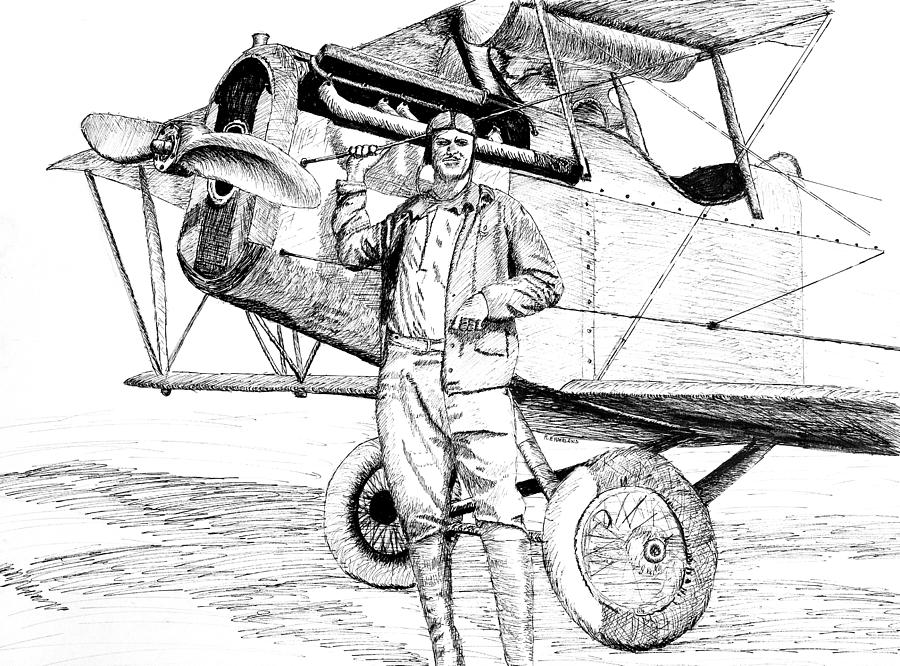
Pete Kitchen

Pete Kitchen
1819-1895

No, he weren’t the first, to see the Santa Cruz,

but the land was cursed, and others got the blues.

Vanquishers from Spain, through Mexico they came,

never could they reign, Apaches took their claim.

Next would come the Padres, robes of black or brown,

then arrived the cadres, the soldiers of the Crown.

Presidios and Missions, soon would dot the Trail,

wild Apache canyons, assured that most would fail.

For peace in the land, make the Spaniard pay,

‘cuz the Chiricuahua band, has got to have its way.

Gotta’ give ‘em tribute, the price the Spanish paid,

no more will they loot, no more will they raid.

Valley fills with cattle, Vaqueros ride the range,

tribe’s no longer feral, did they forever change?

Then Mexico revolts, against the Spanish dolts,

and Apacheria bolts, just like the wild colts.

Dyin’ ain’t so sweet, the Mexicans retreat,

left the cattle and the wheat, knowin’ that they’re beat.

The Mexican War, land’s empty like before,

Gadsden to acquire, in Eighteen Fifty-Four.

Settlers and miners, fillin’ up the land,

jingling cowboy spurs, achin’ to expand.

American Dragoons, playin’ fiddle tunes,

‘til Bascom he impugns, a peace of many moons.

Cochise is on the warpath, settlers they all flee,

runnin’ from his wrath, mercy is their plea.

Now Arizona’s empty, like a broken jar,

surely it’s a pity, prosperity to mar.

Only one holds out, at the Kitchen Ranch,

Apaches cannot rout, a man who’ll never blanch.

Hailin’ from Kentucky, Pete was kinda’ plucky,

brave as he was lucky, to friends he was ducky.

His ranch lush with grass, Rosa by his side,

his fortune to amass, his credo to abide.

The ranch becomes a fort, bastion up above,

raiders he will thwart, Pete’s no turtledove.

One by one the others, are driven from the land,

by Apache brothers, of Cochise’s hostile band.

Kitchen, he holds out, courage does he flout,

no battle is in doubt, whenever he’s about.

Down to his last cow, pigs will have to do,

Great Spirit don’t allow, cuz eatin” pork’s taboo.

Shoot ‘em full of arrows, pincushions they become,

grazin’ with the burros, out there in the sun.

Comes the big attack, the courage he don’t lack,

his rifle it will crack, as they’re driven back.

The Apache get the word, don’t mess with Kitchen’s gun,

no stealin’ of the herd, ‘cuz dyin’ ain’t that fun.

When the wars wars would pause, he hung a few outlaws,

don’t need no legal clause,  he hung ‘em just because.

And though it ain’t a sin, the railroad’s done come in,

his profits gittin’ thin, old Pete, he cannot win.

Sells it for some cash, then he makes his dash,

Gambles with his stash, losin’ in a flash.

No, he weren’t the first, to see the Santa Cruz,

Now the land ain’t cursed, ‘cuz Kitchen paid his dues.

LDT Oct 24, ‘21

Captain John Bourke’s description of Pete Kitchen

     Pete Kitchen was born in Kentucky about 1819. He fought in the Mexican War of 1846. He may have come to Arizona as early as 1854. In 1862 he started his ranch north of modern Nogales, Arizona. He raised cattle, pigs and produce. His ranch home became a fortified redoubt. No one ventured outside the wall unless they were heavily armed. A sentry constantly patrolled the parapet. The Apache Wars would ravage Arizona until the 1880’s. During the 1861-’72 war with Cochise, the Kitchen Ranch was virtually the only safe haven between Tucson and Magdalena, Mexico.

     Kitchen was known throughout the territory for his hams. Pork was the one product that the Apache did not covet. (They hated snakes and pigs eat snakes.) Peace, and the coming of the railroad ended the meat and produce monopoly Kitchen had enjoyed. He sold out in 1883 and moved to Tucson. Bad loans and gambling losses caused his fortune to wither. He died nearly broke in 1895. He was buried in Tucson.  His epitaph could easily have been, “Muy valiente! Muy bueno con rifle.”

Main Menu: http://www.azrockdodger.com

Book Link: https://azrockdodger.com/2021/10/03/the-rhythm-of-my-soul/
The Orphan Javelin

1974 AMC Javelin
360, 4-speed

I walk by this 1974 AMC Javelin a couple times a week. Though I am not a big fan of “orphan” cars produced by small manufacturers like American Motors, this one always grabs my attention. I love its racy fastback profile. The bulging fenders scream SPEED! The body lines are clean and smooth. Somehow, the bumpers managed to meet the Federal crash standards of the mid-70;s without becoming the godawful appendages used on other cars.. It is a beautiful car with an impressive sales and racing record.

The owner tells me this one is equipped with a 360 cubic inch engine and a 4-speed Borg Warner transmission. (When he told me this, the cash register in my brain went Ca Ching.) The car has a straight body, with rust damage to the right rear quarter panel.. The hood is missing its nose piece trim and appears to be slightly off-kilter. (Many Javelins have fiberglass hoods, which might explain its poor fit.) The owner says the car has had two paint resprays over the original black. I assumed it was an Arizona car until he volunteered that it came from New York. Hopefully their winter salt didn’t damage it too much.

This car is important for a number of reasons. 1974 was the last year for Javelin production. It was also built at the end of the Muscle Car Era. Due to the OPEC oil embargo, tighter emissions standards and higher insurance costs Muscle Cars briefly fell out of favor. This car has a very desirable drivetrain. The 360 may not have been the largest engine available from AMC, but it is bigger than the 305 engines powering AMC’s Trans Am Championship race cars. The four-speed manual transmissions is still coveted by old-school enthusiasts. Coming at the end of the Muscle Car Era, the engine is a bit down on power, but still pretty zippy by the standards of the Malaise Era. (There are plenty of ways to improve the power without destroying either the car’s authenticity or the planet. An E-85 Carburetor or a throttle-body fuel injection system would produce low emissions and could easily be hidden under the air cleaner.)

Probably the most compelling reason to love this car is its racing heritage. In the late 1960’s, tiny AMC decided to take on the Big 3 in the Trans Am racing series. They were up against well-funded factory teams running Mustangs, Camaros and ‘Cudas. When they didn’t succeed at first AMC turned their racing program over to Roger Penske with drivers like Mark Donohue. Their Javelins won the championship of this popular and competitive series in 1971, ’72 and ’76.

The AMC Javelin is the little car that could. It performed and handled well without costing an arm and a leg. Clean originals like this one are worth a small fortune. If I had it, I would only fix its mechanical issues and add a set of period-correct Magnum 500 wheels. The patina would stay.

Vintage Racing at Sonoma
A Javelin leads a Boss 302 Mustang and a Barracuda

LDT Oct 23, ’21

Runaway

My Route and My Ride
June 1970

It’s Nineteen-Seventy, finally got my degree,

Time for me to flee, ain’t got no pedigree.

Prospects lookin’ dim, head out on a whim,

Outlook’s pretty grim, glass without a brim.

My money is all blown, the future is unknown,

Call the banker on the phone, get a tittle loan,

I’m skippin’ graduation, to drive across the nation,

A man on the run, the pomp do I shun.

Head out ‘cross Dakota, knowin’ not one iota,

Prob’ly used my quota, this is no Minnesota.

Motored to Des Moines, someone to rejoin,

her heart to purloin, maybe make some coin.

“You ain’t the one for me!” she finally sets me free,

At last I can see, she wasn’t into me.

Head out once again, at lovin’ I can’t win,

Where do I begin? just a lonesome Bedouin.

Stop at Omaha for gas, damn ol’ starter’s stuck,

I ain’t got much class, and I ain’t got no luck.

Fix it with a wrench, then I’m on my way,

I’m never in a clinch, I can run all day.

At Rifle Colorado, parkin’ on a hill,

Goin’ with the flow, I will eat my fill.

Midnight run to Moab, stop outside a bar,

Thought I’d take a stab, at sleepin’ in my car.

Tendin’ bar tomorrow, thanks to Aunt Irene,

Ended all the sorrow, life becomes serene.

Only one week later, for Vancouver I am bound,

Nuthin’ can be greater, than haulin’ mail around.

Turnin’ North at Elko, lonesome highway blues,

Twistin’ like a gecko, wishin’ I could snooze.

Columbia River Basin, the freeway is so nice,

The future I am facin’, but I don’t think twice.

Message from Wah-Choo-ka*, in Arizona Land,

And never had I saw, a salary so grand.

Next mornin’ finds me packed, headin’ down the road,

And it’s a cold hard fact, it’s my next abode.

Mojave desert’s hot. Sonoran ain’t much better,

Radiator’s shot, wish my tongue was wetter.

Rollin’ into town, journey at an end,

Cool enough to drown, one more night to spend.

Lookin’ kind of rough, clean up in the park,

Barely got enough, for Finley’s Trailer Park.

Up in the High Desert, I could spend my life,

Soon I am a convert, and I’ve found a wife!

LDT Oct 17, ’21

*Fort Huachuca, Arizona

I arrived in Sierra Vista, Arizona in the late afternoon of July 4, 1970. My odyssey over, I slept in my car in the desert that night. The next morning, I cleaned up as best I could at the city park. Then I rented a tiny vintage trailer for 50 bucks at Finley’s Trailer Park on Fry Boulevard.  The rest of my money was spent on a frying pan and some food. I called home to get my last VA education check sent. It would be a long month before I got paid.

Main Menu: http://www.azrockdodger.com

Book Link: https://azrockdodger.com/2021/10/03/the-rhythm-of-my-soul/
Boxcar Bill

Boxcar Bill

He showed up in a boxcar, got off soakin’ wet,

if you thought he’d go far, you mighta’ lost that bet.

Bill had hit a hard spot, and he was in a bind,

his future was for naught, ‘twas messin’ up his mind.

Then he took to drinkin’, a little, then a lot,

the Devil was a-lurkin’, Bill had gone to pot.

Campin’ in the willows, across the railroad line,

like the other fellows, drinkin’ lots of wine.

He wouldn’t beg for money, traded work for cash,

he didn’t think it corny, haulin’ off the trash.

One day he heard an Oom-Pah, Salvation Army Band,

a broken man he was, they could lend a hand.

By Sunday Bill was sober, to the chapel he did amble,

he coulda’ used a barber, a Bible and a candle.

The service had begun, like always he was late,

maybe he should run, maybe it was fate.

Voices liftin’ up a song, ‘bout some long lost soul,

but now it wasn’t wrong, his spirit did console.

People looked at him, as he wandered in,

and that ancient hymn, did wash away his sin.

Welcomed by the Captain, he sat down in a pew,

“His love is like a fountain, Jesus died for you.”

The preachin’ and the prayin’, made him feel at home,

at last he felt like stayin’, t’was no need to roam.

Took Jesus as his Savior, then found a better path,

he’s no more a failure, though he needs a bath.

Gets a better suit of clothes, then he finds a job.

never turnin’ up his nose, Bill, he ain’t no snob.

Pretty soon he’s doin’ well, his chest begins to swell,

with that Salvo Army bell, he has now eluded Hell.

The Hobo Jungle denizen becomes our leadin’ citizen,

no matter where he’s been, doin’ good when he can.

Still that kettle he can’t pass, fills it up with his cash,

Boxcar Bill shows his class, sharin’ nearly all his stash.

And he made it pretty far, nothin’ to regret,

he came in on a boxcar, left out on a jet.

LDT October 16, ‘21

Main Menu: http://www.azrockdodger.com

Salvation Army NW Division donation link: https://give-nw.salvationarmy.org/give/166894/?&_ga=2.61781679.221041705.1634403365-2141266449.1634403365#!/donation/checkout

Book Link: https://azrockdodger.com/2021/10/03/the-rhythm-of-my-soul/
Happy Birthday US Navy!

The Last Stand if the Tin Can Sailors

The USS Johnston DD-557
The destroyer that fought like a battleship,

        The US Navy was created on October 13, 1775. The Navy has won numerous battles in its storied history. None was more improbable than a portion of the Leyte Gulf Battle in 1944 which is referred to as The Last Stand of the Tin Can Sailors or officially as The Battle Off Samar.

          US forces under the command of General MacArthur landed on the Philippine Island of Leyte in October of 1944. The battle went well. MacArthur famously waded ashore announcing to the people of the island, “I have returned!” The landing was supported by a powerful naval force under Admiral “Bull” Halsey.

          The Philippines were important to the overall war strategy of the Japanese. They guarded the shipping lanes for vital resources like oil, tin and rubber from the East Indies and Southeast Asia. The Imperial Navy came up with a bold three prong strategy to eject the US forces. They would send a powerful force, including the two biggest battleships in the world, through the San Bernadino Straits toward the landing beaches. Another force would attack from the South. A third force, consisting of Japan’s remaining aircraft carriers, would approach from the North. At this point in the war Japanese naval aviation was no longer the threat it had posed earlier. It had lost many of its aircraft and experienced pilot in battles like The Marianas Turkey Shoot. The goal of the carrier force was simply to decoy Halsey’s Third Fleet away from the landing beaches. Then the Center and Southern Forces could have their way with the un-protected Americans on the beaches.       

          Halsey’s search planes first discovered the Center Force under Admiral Kurita steaming toward the San Bernadino Strait.  On October 24 carrier-based aircraft sunk the super-battleship Musashi and drove the rest of the Center Force into retreat. On the night of October 24-25, the US virtually destroyed the Southern Force in the last ever battleship versus battleship confrontation in history. Only the Japanese carrier force remained as a threat, or so Halsey thought.

          Halsey took all of his fast Fleet Carriers and headed out to pursue the Northern “Decoy” Force. Because of confusing orders, the Leyte beaches were left almost undefended. The only thing protecting the landing was a light force called Taffy 3. They were no match for Kurita when he turned his Center Force around to resume the attack.

          Taffy 3 consisted of 3 Destroyers, 4 Destroyer Escorts and 6 light Escort, or Jeep, Carriers. The biggest guns mounted by Taffy 3 were short-range 5.38 inchers. They were facing the 18-inch guns of Japan’s other super battleship, the Yamato, and a host of other warships. The aircraft on the Escort Carriers were armed for ground attack. Taffy 3 and MacArthur’s troops were sitting ducks.

          About 7AM on October 25, the astonished sailors of Taffy 3 spotted the Kurita’s fleet heading straight for them. The range was too far, making their 5 inchers useless. The light carriers began to retreat. The situation looked hopeless.

          The only weapons Taffy 3 had that could possibly work against their heavily armored adversaries were their torpedoes. They would have to get in close to use them. The Destroyer Johnston led the way, followed by the other 2 Destroyers and the 4 diminutive Destroyer Escorts. Against the big guns, it was a suicide mission. They laid smoke to screen the retreating carriers as they attacked.

          The speeding American vessels got lucky. Kurita’s gunners thought they were shooting at heavily armored Cruisers and Fleet Carriers. They initially fired armor-piecing shells that went right through the thin skins of the American ships without exploding. By the time they realized their error, the tiny vessels of Taffy 3 were within torpedo range. Intermittent rain squalls also helped to conceal the attacking Tin Cans.

          Kurita’s ships fired everything they had at the approaching Americans. They inflicted heavy damage on the Johnston, the Hoel and the Samuel B. Roberts, but they kept coming. Holes were patched, systems were repaired and water was pumped out. Shells from the Johnston set the Heavy Cruiser Kumano on fire. Then two of the Johnston’s torpedoes blew the its bow off. The Americans got so close to the Japanese ships, that some of them couldn’t lower their guns far enough to shoot at the little ships. Meanwhile, aircraft from the Escort Carriers began attacking the Japanese fleet. Their land attack ordinance didn’t pose much of a threat, but they scared hell out of the Japanese seamen anyway. Some unarmed aircraft even made dummy attacks.

          The aggressive American attacks caused great confusion within Kurita’s force. His flagship Yamato swerved to avoid torpedoes, causing him to lose control of the battle. At one point, the badly damaged Johnston drove off 7 Japanese destroyers that were threatening the Escort Carriers. The tiny Roberts got close enough to score a torpedo hit on the Chōka. Then it was joined by the Heermann in a gun attack on the Heavy Cruiser Chikuma. The bigger ship was heavily damaged. The Hoel, the Roberts and the Johnston were eventually sunk, each firing until the last possible moment. In spite of the heroic efforts of the Taffy 3 Destroyers and Destroyer Escorts, the Escort Carrier Gambier Bay was sunk by naval gunfire. The Carrier St Lo became one of the first American ships to be sunk by an organized Kamikaze attack. Many of the survivors of the sunken ships endured 2 days in the water before rescue due to fear of enemy submarines in the area.

          Damage to Kurita’s fleet was far greater than Taffy Three’s. He lost 3 Heavy Cruisers and much of the rest of his fleet had varying degrees of damage. After being beaten by a force far smaller than what he thought he was facing, Kurita retreated. The day was saved. The troops on the beaches continued to carry the battle across Leyte. The Japanese fleet would never again be a threat in the Pacific War.

          Commander Evans, Captain of the Johnston, received a posthumous Medal of Honor for his courage and leadership. His body was never found. Taffy 3 received the Presidential Unit Citation along with numerous individual awards.

LDT Oct 13, ‘21

For more read “The Last Stand of the Tin Can Sailors” by James D. Hornfischer.

Republican Columbus

Columbus brought disease, cruelty and a cross.

I posted an item on Montana History, Mysteries and Memorabilia on Facebook. It was Columbus/ Indigenous Peoples’ Day. I made the mistake of mentioning how European diseases brought to the Americas by Columbus and those who followed him had decimated Native American populations. (The article was about the 1837 Smallpox Epidemic.)

Almost immediately 3 MAGAts started screaming about how unfairly Columbus is being treated and calling others names.

I posted this and then deleted the original post:

“I certainly didn’t post this to start a war over Columbus. My apologies for connecting the 1837 Small Pox epidemic to him. Like him or hate him, Columbus had little to do with Montana history. My bad. Having said that, anyone who wants to fight over Columbus, European contact or call folks brainwashed is welcome to discuss their feelings on Twitter. James Davies “

LDT Oct 11. ‘21

Link to article: https://azrockdodger.com/2021/07/14/the-deadly-cargo-of-the-st-peters/

Hi-Line Highway

Glasgow, Montana
Still a ways to go…

Hi-Line Highway

It ain’t the Mother Road, but Highway Two will do.

you’ll hit the Mother Lode, when y’er passin’ through.

Windin’ from the prairie, up to the Great Divide,

rollin’ through the country, Montana high and wide.

Watches set at State Line, good old Mountain Time,

the slot machines are fine, you can spend a dime.

Cowboy on a bronc, they open up the gate,

the buzzer it will honk when he hits the other state.

Six hundred long-long miles, then add three more score,

before you get the smiles, you’ll havta’ add six more.

An elevator full of grain, standin’ on the plain,

a monument to the rain, a-waitin’ for a train.

Add a bar and a school, then you’ve got a town.

learn the Golden Rule, or drink until you drown.

Drive through open range, there ain’t no passin’ lane,

don’t need no interchange, just rows of wavin’ grain.

The Reservations roll by, no one wonders why,

a treaty and a lie, took it all but the sky.

The road just seems to vanish somewhere up ahead.

where maybe it will banish your trouble and your dread.

Your speed is just a number, Montana doesn’t care,

there’s crosses to remember, you see ‘em everywhere.

Race the Empire Builder, where Curry robbed it once,

Sundance was a bungler, but Curry was no dunce.

The Rockies will stand out, as you leave the plain,

it’s a damn good route, you’ll wish you could remain.

The Big Sky has its code, this road makes it true.

It ain’t the Mother Road, but Highway Two will do.

LDT Oct 2, ‘21

US Route 2 runs 666.6 miles across Northern Montana. It parallels the BNSF (formerly Great Northern) railroad’s Hi-line. My home towns of Havre and Glasgow are both on the route.

Grain Elevator along Highway 2

Main Menu :www.azrockdodger.com

Book Link: https://azrockdodger.com/2021/10/03/the-rhythm-of-my-soul/

Captain John

of the Thunderhead

The Thunderhead
Palacios, Texas

He kept that Perkins perkin’ on Matagorda Bay,

for the shrimp were lurkin’ out beyond the Quay.

Castin’ off from the dock before the tide goes out,

headin’ steady as a rock, he’ll fill the net no doubt.

He’ll find the perfect spot, outriggers he will drop,

ties the bag with a knot, lowerin’ doors in the chop.

Slowly feedin’ out the net, no tangled screw to clear,

gonna’ make a tiny bet, the trawlin’s good right here.

Net scrapes on the bottom, the doors pull it wide,

gives a kind of freedom, along with the ride.

The Perkins chugs along, radio plays a song,

nuthin’ can go wrong, this pull won’t be long.

Net is getting’ full, the stern is sittin’ low,

Set the winch to pull, maybe make some dough.

Lift the net up high, the bag it is chock full,

Hope nuthin’ goes awry, just the knot to pull.

Dumps out on the deck, they wriggle and they squirm,

He hollers. “What the heck?” as he does confirm.

Cannon balls and crabs are mixed up with the shrimp,

each the deckhand grabs, proves she ain’t a wimp.

Throwin’ out the chum, gulls and dolphins play,

no reason to be glum, we’re gonna’ get some pay.

Put the haul on ice, the Bait Camp has the price,

Six Bits will suffice, a cold beer would be nice.

He kept that Perkins perkin’ on Matagorda Bay,

Little trawler jinkin’ on its merry way.

All of us were deckhands
Jess Loper culling shrimp
on the Thunderhead

lDT Oct 6, ‘21

Main Menu: http://www.azrockdodger.com

Book Link: https://azrockdodger.com/2021/10/03/the-rhythm-of-my-soul/