Back in the Sixties Ford Motor Company coined the slogan, “Ford Has a Better Idea!” Those were heady times, Boss Mustangs, Talladega NASCAR racers, F-150 Trucks, the GT-40. Everything Ford did generated excitement and sales. Trying to appeal not just to car nuts, Ford made all of their cars stylish and easy to drive. Tired of reaching down to disengage your emergency brake? Ford had a better idea. Starting in the mid-sixties upscale Fords like the Thunderbird began getting vacuum-operated emergency brake releases. Just put the car in gear and drive! No more ruining rear brakes by driving with the E-brake partially engaged. What could go wrong?
Enter the Ford C-6 transmission. In 1966 Ford came out with a new automatic transmission. Like its little brother, the C-4, it had three forward gears and a lightweight aluminum case. Bigger and stronger, it could handle the torque of Ford’s big block motors. It was widely used in trucks, luxury vehicles and muscle cars. Indeed, the C-6 was a better idea. At least for a few years.
Ford C-6 Transmission
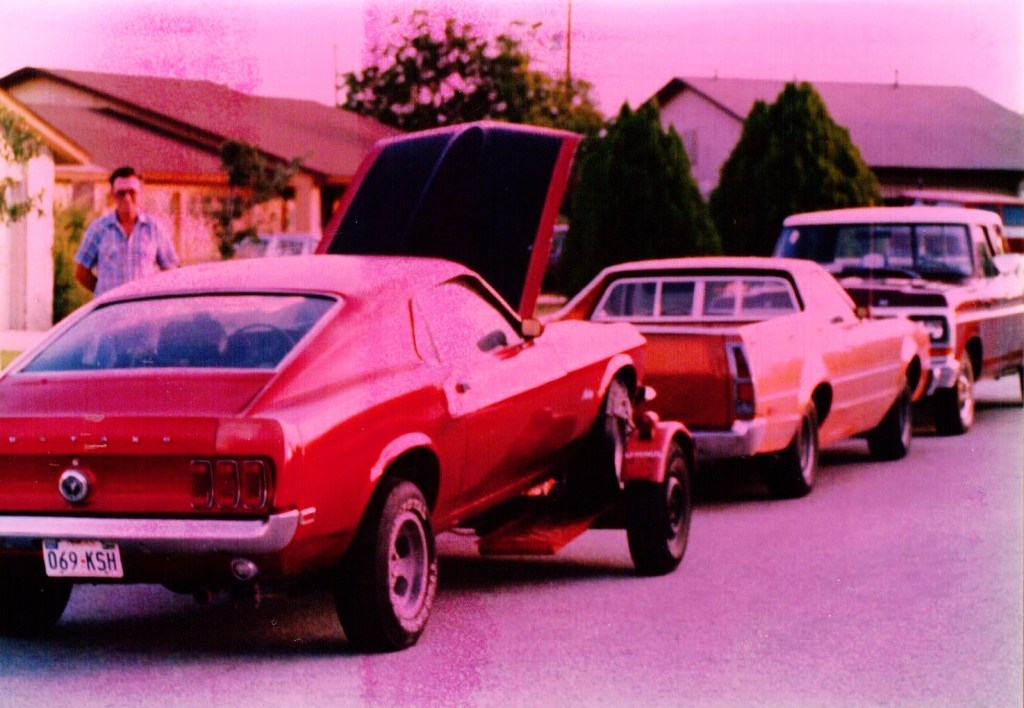
I have owned a couple of Ford’s with the C-6 transmission. In 1988 I bought a ’77 Ranchero with one. It also had an awesome 429 cubic inch engine from an earlier Ford model. With breathtaking power and torque, I loved it. My Ranchero was no Malaise-Era slug.
My ’77 Ranchero Towing My ’69 Mustang Fastback Home
Very early on, I discovered an odd feature on the Ranchero. The first time I went to release the emergency brake I couldn’t find a lever or handle. This was seriously weird. Crawling under the dash, I eventually located a tiny lever that released the brake. Upon releasing it, I heard a clunk and a hiss. Later on I tried to engage the e-brake while the motor was running and the truck was in gear. It wouldn’t engage. Maybe that’s a good thing I thought as I played around with the brake. Soon, I noticed that the emergency would engage if I was in park and automatically release when I put it in gear. Well that’s nice, or so it seemed.
This was in the late ’80’s. The C-6 transmission had been out for over twenty years. Millions of them were on American roads. Some were getting older, parts were starting to wear. Unbeknownsed to me, there were some alarming reports of Ford automobiles slipping out of park and motoring off by themselves in reverse. Ford blamed careless drivers. Drivers claimed their cars were in park and that they had set their emergency brakes and blamed Ford.
On television, there was a video of a driverless Lincoln Continental circling a cul-de-sac in reverse with the driver’s door open. It went for an hour before a brave cop jumped in and stopped it. After watching the video, I went out and disconnected and plugged the vacuum line that powered the brake release on the Chero. I would just have to use that little hard-to-find lever in the future.
The problem with Ford transmissions was serious. What happened all of a sudden to make these cars so dangerous? Analysis showed that most of the reported transmission slipping into gear incidents were in older cars. After ten or twenty years, shift linkage bushings were wearing out. Inside the transmission, the detent springs the held the selector in place were getting weaker. Since the problem wasn’t happening to other brands, Ford’s transmission design also came under suspicion. These issues coupled with a car with an automatic brake release spelled trouble, big trouble.
Reports started rolling into the National Highway Safety Administration. 23,000 incidents, 1710 injuries and 98 fatalities. NHTSA responded in 1978 by warning drivers not to leave their cars in park with the engine running. Lawsuits against Ford began to pile up. The magazine, Mother Jones, did an expose. NHTSA threatened to recall 10 million Fords. They backed down when Ford agreed to send a letter with a warning label to 23 million owners in December 1980. Complaints, injuries and as many as 300 more deaths occurred after the warning. Whoever owned my ’77 Ranchero in 1980 failed to attach the label to the dash as recommended. (Note, the problem was not limited to the C-6 transmission, but seemed more common on them. Larger, fancier Ford products with big engines used the C-6 along with the automatic emergency brake release in most cases.)
The warning labels were ugly and didn’t work.
If anything is to be learned from the Ford transmission fiasco, it is that both machines and people are fallible. Machines wear out. Sometimes people put forth defective designs, then try to cover up their mistakes. If you find something wrong with your machine, get it fixed or find ways to reduce the danger. And, yes, I did love my Ranchero!
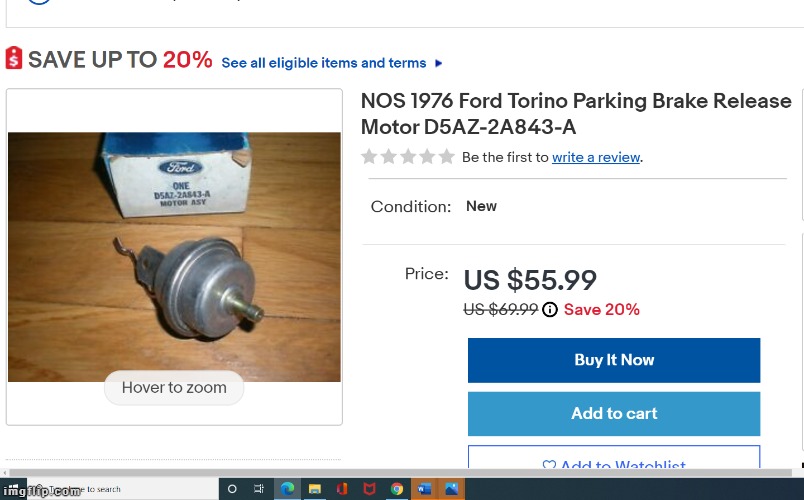
You can still buy an original ford emergency brake release vacuum motor. It will cost you 56 bucks and maybe your life!
By the 1830’s steamboats were navigating the Missouri River as far as the mouth of the Yellowstone
By 1837 the fur trade along the Upper Missouri had settled in to a comfortable routine. The advent of the annual steamboat had done more to enhance the trade than any other factor. Crews no longer had to endure the months-long, backbreaking journey up the river. No more using the cordelle, that laborious process of men with ropes dragging boats up the river. No more poling, no more hoping the wind would fill the sail, the steamboat had conquered the river. Most days the only members of the crew breaking a sweat were the hands that fed the ravenous furnace that generated the steam.
The steamboat had changed the very nature of the fur trade. Permanent trading posts could now be established at strategic points along the river. The once hostile tribes could be persuaded to bring their furs to the posts in order to trade. The free and company trappers could get their “possibles” at a trading post. The annual rendezvous began to disappear. The hated Hudson’s Bay Company of the North could no longer compete in fur trade of the Missouri. They had no great river for commerce , they had no steamboats.
Everyone benefitted from the trade. The fur company made huge profits. The lonely trapper had better access to vital supplies, sugar, coffee, tobacco, powder and lead. Manufactured goods, like clothing, knives and cookware were now easier to come by. One might even get one of those great Hawken rifles to defend himself with. The tribesmen of the Upper Missouri looked forward to the annual steamboat’s arrival as well. They had come to covet many of the same things the trappers did. Maybe they wouldn’t get a gun as good as the Hawken, but it would still be better than the tribe over the ridgeline had.
The St. Peters left St. Louis that spring with everything that the hardy inhabitants of the Upper Missouri wanted or needed. They might even have had a little “firewater” stashed on board. Liquor was highly valued on the frontier. It could help a lonesome trapper deal with the boredom and isolation. More importantly, the tribes would do almost anything to get it. Alcohol was worth more than anything else in the trader’s store to a native American. Not being used to it, however, they tended to overindulge. This left them at a disadvantage in trade. It also caused friction within the tribe and led to vital social and community tasks being neglected. Alarmed by the effects of alcohol on the tribes, the government sought to ban it from the Upper Missouri. Companies who violated the ban faced the possibility of having their licenses revoked. A small amount of liquor for consumption of the Whites was all that was allowed.
To get around the restrictions on alcohol, companies devised ingenious methods of hiding their cargos. Some portaged the contraband by land to get it past the inspectors at Fort Leavenworth. One boat was designed with an ingenious tram system that moved the liquor while the dark cargo hold was being inspected. One company transported a still to its post up the river. There was no limit on how many bags of sugar could be transported.
Sadly in 1837, alcohol was not the worst cargo that the St. Peters was carrying. It had something much worse on board. And it would easily slip by the government inspectors. When it got to its destination, it would decimate the tribes of the Upper Missouri. Unseen and without warning it would kill healthy people in a matter of days. The proud and fierce Native Americans would be helpless in the face of this threat. It was smallpox.
Smallpox is a disease that has a mortality rate as high as 30% amongst European populations. For Native Americans, with no natural immunities, the death rate can be as high as 90%. Forty years before the voyage of the St. Peters an effective vaccine for smallpox had been developed, but it had never reached the frontier. Some of the traders at the isolated posts on the river had previously been vaccinated. Others may have survived earlier outbreaks on their own. Smallpox had visited the Upper Missouri tribes before, once in 1781 and again in 1801. One possibility for these outbreaks not being so devastating was that the tribes were less interconnected by trade and travel in those days. Another reason might be that they were far less likely to be at war with their neighbors in 1837 than in the past. Having peaceful trade relations would suddenly become the greatest weakness of the tribes.
When the disease broke out amongst the tribes, it would wreak a deadly harvest of souls. In 1902 Chittenden reported that, “Deaths were almost instantaneous. The victim was seized with pains in the head and back, and in a few hours was dead. The body immediately turned black and swelled to thrice its natural size. Nearly everyone who was attacked died. “
All seemed well as the St. Peters pulled out of St. Louis in the Spring of 1837. The brand new vessel was on its maiden voyage up the Missouri for the American Fur Company. Early in the trip a crewmember fell ill with smallpox. There was no good place to put him off, so the sturdy sidewheeler just huffed its way on up the river. Soon a few more crewmembers and passengers became ill. The craft’s first major stop was at Fort Pierre in what is now South Dakota. A man named Jacob Halsey, bound for Fort Union, boarded there. Though Halsey had been vaccinated, he still came down with the disease.
The St Peters would head next for Fort Clark about 50 miles upstream from where the modern city of Bismarck, North Dakotas is located. The fort served the Mandans who had been so welcoming to Lewis and Clark back in 1804. Unlike most other plains tribes, the Mandans were a village dwelling people. They lived close together cultivating crops along the river. The wandering tribes of the Northern Plains came to them to trade. Their communal living style was a perfect incubator for contagious diseases. The Mandans were doomed.
Francis Chardon was the Bourgeois (head trader) at Fort Clark. Adding to his excitement of the coming of the St. Peters, was that his 2-year old son, Andrew Jackson Chardon, was on board. So delighted was he that he met the steamer 30 miles downstream just to see the boy. Horrified when he discovered that smallpox was on board, he retrieved child and made for the safety of Fort Clark.
To ensure the safety of the Mandans and other tribes, company officials devised a plan to keep them off of the boat when it docked. This did not work. The anxious tribesmen would not be deterred by some obstructionist crewmen with vague arguments they didn’t understand. They accused the company guards of trying to cheat them. One Mandan stole a blanket from a watchman who was infected with the disease. Chardon tried to bribe the brave to get it back but no avail. Then the Natives stormed aboard the St. Peters. This act would prove fatal for most of the tribe.
Before the disease could really take hold, the St. Peters was off to Fort Union, located at the mouth of the Yellowstone near the present Montana-North Dakota border. This would be its last stop on the trip. Makinaw boats full of goods would be muscled farther up the Missouri and the Yellowstone Rivers the old-fashioned way. Fort McKenzie, at the mouth of the Marias, and Van Buren on the Yellowstone would be their final destinations. At first it looked like the disease could be contained at Fort Union. The tribes had yet to come in to trade. The St. Peters only had one case of the smallpox on board when it docked. That was Jacob Halsey, who had gotten on at Ft. Pierre. Maybe they could just keep Halsey away from others.
Then another company clerk came down with the disease. Both he and Halsey would survive. Unfortunately, a Native woman residing at the post also caught the disease. Panicked, trader Charles Larpenteur searched his medical book for answers. He read about the vaccination process, but he lacked the needed cowpox cultures. Then he got an idea. Halsey had been vaccinated and his case wasn’t severe. Maybe he could use Halsey’s sores as a basis for a home-brewed version of the vaccine. There were thirty or so native women living at the post. He “vaccinated” all of them.
Fifteen days after the “vaccination” program began Fort Union became a scene of indescribable horror. The vaccinated women were dying. “There was such a stench that it could be smelt at the distance of 300 yards….some went crazy, and others were half eaten up by maggots….” Larpenteur put the blame on the failure of his vaccination effort on Halsey, who had a weak constitution. Larpentteur had hoped that the outbreak would be over before the Fall trade commenced in September. Regrettably, one band of natives arrived at the height of the epidemic. Though they were refused admittance to the fort, they later came down with the disease and spread it to their kin.
Smallpox was deadly to Native Americans, with a mortality rate of as much as 80% of those infected .
By September, the epidemic inside the fort was over. But beyond the wall was another matter. The sick outside of the fort were infecting more tribesmen as they arrived to trade. They died so fast that the bodies were merely hauled off and dumped in the brush. They had come for a few trinkets and manufactured goods. If they even left at all, they carried death back to their camps. The Piegans, the Blackfeet, the Assiniboine, all fell victim. The Crows, who were hunting in the Wind River Country were initially spared the outbreak. Their time would come in the fall when they headed back to the Yellowstone to trade.
The devastation on the Upper Missouri was almost unthinkable. Nowhere though was it as bad as it was at Fort Clark. Chardon kept a journal. It is chilling to read, even 180 years later.
-July 14, 1837. Less than a month after the arrival of the St. Peters, Chardon recorded the first death, a young Mandan. The disease would spread rapidly in the days that followed.
-July 20, 1837. The disease was reported to have reached the Little Missouri River country. Five days later it turned up at the meat drying camp of the Mandans.
-July 25, 1837. Four Bears, a Mandan Chief, went crazy from smallpox. Two days later 4 would die in the village.
-July 28, 1837. Alarmed by the epidemic and blaming the Whites, a young Mandan tried to kill Chardon. That night the Mandans and Rees (Arikara) held a “splendid” dance knowing they were all about to die.
-July 30, 1837. The disease had spread to the nearby Gros Ventres camp. 10 or 15 have died. Then Four Bears speaks. He blames the Whites for the plague and calls them “Black-harted Dogs” (sic). Then he says, “I do not fear death my friends….but to die with my face rotten, that even the wolves will shrink with horror at seeing me….”
-August 10, 1837. The Rees who had been camped with the Mandans flee to an island hoping to escape the pestilence. 10-15 Mandans died. The next day the Mandans moved their camp across the river. The day after that, one of Chardon’s best Mandan friends in the Little Village died.
-August 14, 1837. An old Mandan was exhorting the tribe to kill the Whites. The next day the Mandans try to get the Gros Ventres to join them in a revenge attack on the Whites.
-August 16, 1837. Very bad smell from the abandoned Mandan village. The dead and dying were left behind.
-August 17, 1837. A young Ree came to the fort looking for Chardon but instead shot Dutchman John Cliver in the back. The Ree was chased to his brother’s grave shouting that this was where he wanted to die. An employee named Garreau tackled the man and slit his body open. The Ree had smallpox.
-August 10, 1837. The suicides, previously unknown amongst the tribes, begin. A Mandan couple kill themselves. Many more suicides and murder-suicides will follow. Mandans are dying at the rate of 8-10 per day.
-August 20, 1837. A Mandan shoots his sick wife, then disembowels himself. Two young Rees stab themselves. It rained.
-August 22, 1837. Several more deaths including a Ree employed at the post. Two young Mandans shoot themselves. With the Mandans threatening to fire the fort, guards are posted in the bastions.
-August 26, 1837. A young Ree had his mother dig his grave. Chardon tried to persuade him to return to the village. The lad said no, that all his young friends were gone. He died that night. Healthy warriors left on a buffalo hunt.
-August 29, 1837. Chardon’s interpreter comes down with smallpox. Chardon frets that his services are critical to the company.
-August 31, 1837. A young Mandan widow kills her two children, then hangs herself. There are only 23 Mandans left.
-September 1, 1837. Two bodies wrapped in a buffalo robe float by on a raft. The Rees relocate to the unattended Mandan cornfields.
-September 4, 1837. A young Mandan came by the fort hunting his father who left him in the brush to die. He wants to kill him.
-September 8, 1837. Seven sick at the fort. The son of old L’etaile died.
;September 16, 1837. Two more of Bellehumeur’s children are sick. That makes his wife and five children ill.
-September 19, 1837. Only 14 left alive in the Little Village. At least 800 dead.
-September 20, 1837. Fourteen sick in the fort. Rainy and cold. No firewood. Bellehumeur’s youngest died.
-September 23, 1837. “Entered My Winter quarters, my youngest son (Andrew Jackson Chardon) died today.”
-October 16, 1837. The smallpox has broken out amongst the Sioux.
Blame for the 1837 Smallpox outbreak rests solely on the officials of the American Fur Company and the Captain of the St. Peters. The boat should have stopped at the nearest port and quarantined itself when the first case occurred. Granted, this would have led to privations at the Upper Missouri trading posts and a loss of a year’s worth of revenue. It might have even caused friction and conflict with the disappointed tribes. None of these consequences would have been as bad as what happened through the company’s negligence. Moreover, many of the company’s employees were felled by the disease. Most of their unvaccinated wives and children died.
Nobody knows how many died of the smallpox in 1837. Estimates range from 15,000 to 150,000. The Mandans and the Arikara nearly disappeared. Other tribes were greatly weakened. Eventually they would be pushed further west by the encroaching Sioux. (The Sioux, or Lakota, were probably the least impacted tribe, possibly due to their inability to get along with the whites and the neighboring tribes.) The fur trade would continue until the beaver, the buffalo and the Native Americans were all but extinct. Prince Maximillian of Prussia had visited the region a few years before the epidemic. When he heard the news of the disaster, he wrote. “The destroying angel has visited the unfortunate sons of the wilderness with terrors never before known….”
DEDICATION: This page is dedicated to Harrison Lane, Chair of the History Department at Northern Montana College (Now MSU-Northern). It was he who first told me the story of the 1837 smallpox epidemic during his “Westward Movement” course in 1968.
Mecuricome got slapped on all the skinned-up knees.
Never gave a lecture when you caught the clap,
But after the injection, he gave y’er butt a slap.
One day we loaded up, shippin’ out fer ‘Nam,
He gave us all another shot, Gama Globulin.
Gonna’ fight those Commies, over in a flash,
Then we’ll all get drunk, with that combat cash.
Didn’t go so well, but Doc, he kept us sane,
Always patched us up, with sumpin’ for the pain.
“Son I know y’er nerves are shot, all I got’s a pill,
Sit here for a minute, then git back up on the hill.”
I wasn’t there to see it, flew back into the World,
They said he was a hero, as the battle whirled.
Crawled out into the wire, to drag the wounded in,
Pulled one into safety, then went out agin.
AK’s rattle deadly, he never gives a care,
All the walkin’ wounded, he patches up right there.
Battle lines are shiftin’, finds a Viet Cong,
Bandages up his wound, no it isn’t wrong.
“Leave that body layin’, ferget them golden teeth,
Put that damn ol’ K-Bar back into its sheath!”
Maybe war is hell, but not when Doc’s about,
He took a higher path, of that there is no doubt.
LDT July 10, ‘21
Dedicated to all the Navy Hospital Corpsman who served with the United State Marines.
Twenty-two Corpsmen have earned the Medal of Honor, most while supporting their Marine buddies. Six hundred and thirty-nine Hospital Corpsmen were killed during the Vietnam War alone.
*APC-A cure-all pill containing Aspirin, Phenacetin and Caffeine.
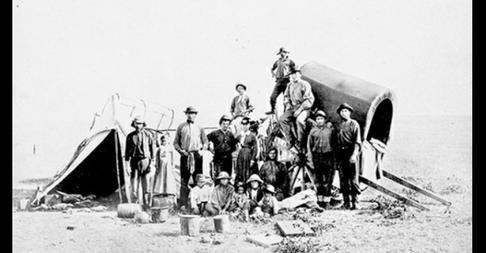
Métis Traders camped near the “Medicine Line” (49th Parallel)1873-1875
I never knew if she was Chippewa or Cree.
Perhaps it was her French side a people called Métis.
Somewhere near Red River, her forbearers did reside,
They traded and they hunted and did it all with pride.
The Company brought their fathers into the fur country,
Their mothers were the tribal gals, the kids were called Métis.
Across the plains they followed where the bison roamed,
Never had no roots, never were they homed.
Rupert’s Land-Dakota , no buffalo to roam,
Got a two-wheel cart, gonna’ call it home.
Wooden wheels a’squeakin’ fiddle drowns them out,
Singin’ in Francais, they’re headin’ west no doubt.
Head up on the Milk, the huntin’ there is good,
Be-friendin’ all the tribes in the neighborhood.
None will ask the question, Canuck or ’Merican?
Huntin’ for the robes, makin; pemmican.
They maybe cross the line, that isn’t even there,
Who can see the line or even know the where?
Even when they mark it, it’s kinda’ hard to find,
No. you’ll never stop ‘em, the Mountie he don’t mind.
Winter camp’s on Frenchman Creek, hidin’ from the chill,
Then tradin’ with the H.B.C.* upon the Cypress Hill.
They say they gave the Sioux their powder and their shot,
No Monsieur it wasn’t me, the whiskey that they got.
They lived in peace upon the land of the native sons,
Never caused no strife, never used no guns.
Then Colonel Miles from Keough, soldiers sallied forth,
You don’t belong on the Res, got to go up North.
Prove y’er blood is red, maybe you can stay,
Or maybe cross the river, Judith Gap’s O.K.
Canada don’t want ‘em, gives them worthless scrip,
The Battle of Batoche will make them rue the trip.
Back in old Montana, the life it ain’t so good,
No more huntin; buffalo, there’s wolfin’ and there’s wood.
If y’er lookin’ white you can prove up on the land,
Otherwise you’ll fit in Stone Child’s footloose band.
Forty years at Belknap, they maybe throw you out,
No, you aren’t a native, of that there is no doubt.
Somehow they remain, a people tall and proud,
They take it all in stride, never whine out loud.
It wouldn’t be Montana, if they never did come here,
So thank you to a people, give them all a cheer.
I never knew if she was Chippewa or Cree,
Perhaps it was her French side, that stole the heart of me.
LDT July 8, ‘21
Métis Woman
*HBC-The male progenitors of the Métis mostly worked with or for the Hudson’s Bay or Northwest Fur Companies. Not all were French. Some were Scotch or English. Most settled in the Red River Valley. Many Montana Métis can trace their roots to Pembina, North Dakota. Originally thought to be in Canada, an 1823 survey placed Pembina south of the 49th parallel. Those born south of this “Medicine Line” were Americans.
For further information on the Métis of Montana and the border, see Michel Hogue’s Metis and the Medicine Line: Creating a Border and Dividing a People.
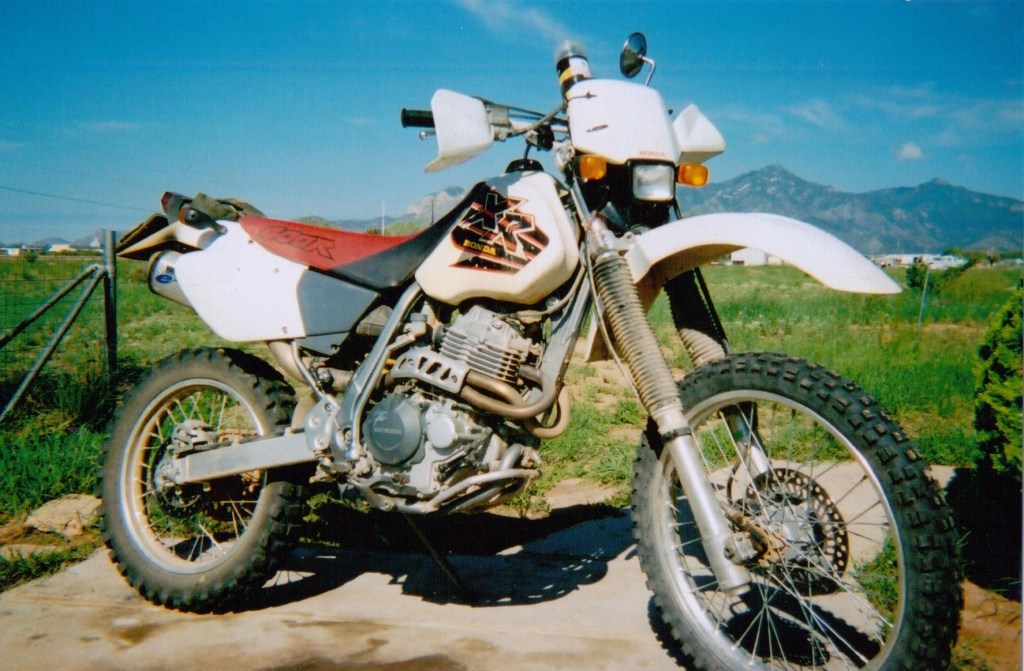
It’s been five long years since we moved away from the border. I miss it, but it’s still only 20 miles away. It is a wild and crazy place, full of contradictions. Cultures collide, then mix and sometimes even meld. People are sociable, opinionated and thorny as the Cholla cactus. One minute they are cussing the illegals, the next they complain about the Border Patrol as they pour salsa on their chorizo. Life is never dull. The Border Bandits we had in the beginning turned out to be from our side of the line. Life in our rural county attracts people that don’t like rules. Sagging trailers and falling down shacks sit within sight of mansions. Nobody cares. Life is as good as it will ever get for most. Want to know more about life on the Arizona border? I figure I own about 80 miles of it between Naco and Nogales. Good country, full of adventure. My favorite way to run the border was on my dirt bike. I made it marginally street legal for the highway sections. Come along on one of my rides.
A good dirt bike is handy in the border country. My XR400R
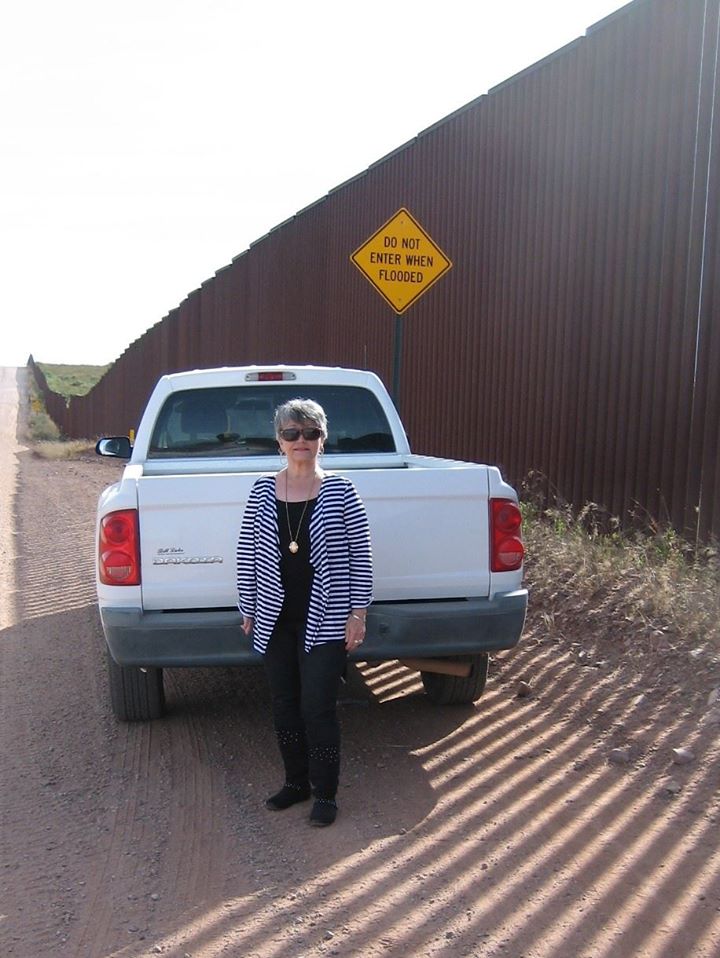
Let’s start at Paul’s Spur, east of Naco. Limestone plant, CTI, whatever that stands for. You can wash the white dust off later, it’s just where you turn to hit the wall, err… border fence. This is one of the few places you can drive right beside the international border. About fifteen years ago the Feds put in a multimillion-dollar Bollard fence. It’s steel posts with concrete footers. For a while a couple of local welders were kept busy mending holes in it. Those battery-powered cut-off tools can get through the steel in a Hong Kong minute. Still, it’s easier to use a ladder or find a wash that can’t be fenced. The more agile simply climb it. In towns like Naco and Nogales, they tunnel under it. At least the “wall” keeps the 18 wheelers out. Five miles north of the border is Highway 80. If you stopped your van there in the 90’s, a half dozen illegals would have tried to jump in. There are dozens of Border Patrol Agents in the area. One on every ridge, plus untold numbers of electronic sensors. I always feel I’m being watched here, because I am. Back in 2012 there was a big shootout in the hills between the border and the highway. Three agents checking on a sensor alert got in a shootout in the dark. One agent fired, hitting his partner. The third agent killed the shooter. We also lose a lot of agents due to off-duty accidents. One made the mistake of telling his drinking buddies in Cananea, Sonora where he worked. They dumped his body in the desert.
About 8 miles down the road I hit the twin Nacos. Naco Sonora was the scene of numerous battles in the Mexican Revolution. In 1928, Naco Arizona gained the distinction of being the first American city to be bombed from the air. The tiny border crossing at Naco is a good place to cross. You never have to wait in line. The first person you meet on the Mexican side is a soldier with an M-16. He’s wearing a ski mask. He’ll rotate out in a week or so. They don’t want the cartel getting to him. The locals and the snowbirds go to Naco to get cheap prescriptions and dental work. Others go for the night life.
Naco Border Crossing
In the old days, the Naco border fence was made out of recycled steel runway panels. I once watched a guy sitting on top of it one block from the border crossing. When the coast was clear, he signaled and two guys jumped over the fence. They ran to an abandoned car in someone’s back yard. The best use anyone in Naco ever found for the fence was the annual cross-border volleyball game. The Border Patrol officiated.
International Volleyball game. Naco Arizona vs Naco Sonora
Just west of Naco is a place you have all seen on TV news. John Ladd has a ranch there. No politician comes to Arizona without visiting his ranch for a photo op. Ladd may tell them a few tales about people crossing his land, but lately, they mostly get caught. Afterall, there are 900 agents stationed at the Brian Terry Station, hardly a mile away. You may remember Terry as the agent who was killed near Nogales in the botched “Fast and Furious” gun tracking episode in 2010. Critics of “Fast and Furious” completely lose sight of the fact that the project demonstrated that the Mexican cartels were arming themselves at Arizona gun shops.
Before losing two Senate races Martha McSally visited the border at John Ladd’s ranch
Nearby Bisbee, like all of the towns along the border, gets a lot of cross-border shoppers, eager to stimulate their economy. Every few months, Bisbee has an auction of seized vehicles. Human traffickers from across the line normally buy older cars in Arizona without bothering to register them. It can get a bit dicey if the former owner tries to reclaim the vehicle. Once, while drinking my morning coffee, I saw two unmarked trucks chasing a Cadillac across an irrigation ditch. It bounced to a stop in my neighbor’s yard after tearing out his fence. Five illegals bailed out, only to be quickly captured with the help of a helicopter. Bob, my neighbor, was fuming about who was going to pay for his fence. An agent ran a vehicle check and found that the car hadn’t been reported stolen. Since it landed on private property, Bob got to keep it. I bought it and my wife and daughter drove it for years. We called it “Cruella’s deVille.”
On my way out of Naco, I pass a small remnant of the Mexican Revolutio0n. After Pancho Villa’s raid on Columbus, New Mexico, General Pershing set up Camp Naco to secure this part of the border. Much of it still stands. Passing the camp, I head north toward Highway 92, cross it and enter the foothills of the Mule Mountains. I can no longer follow the border because it is all private land and John Ladd doesn’t like people like me scaring his cattle. As I look back over my shoulder, I can see the ugly scar that is the rusting border fence crossing the valley. Picking my way through protruding rocks in the unimproved road, I feel less like I’m being watched. All the sensors and cameras are pointing back toward the border. Behind me is a flapping blue pennant denoting a water station. Thank you, good Samaritans. None of us want to see people dying in the desert. The agents who got filmed kicking over water jugs were thankfully not ours.
Camp Naco is a reminder of our effort to control the border during the Mexican Revolution This guy was not one of our local agents. They are better than that.
About 20 years ago we were inundated with a force of militia-like border watchers. They came to show the government how to stop them damn Meskins. They brought enough weapons to start a small war. Luckily, they didn’t shoot anyone or cause any international incidents. (I saw a Mexican TV station interviewing a few of them across the border fence.) They happily waved at passing cars, not knowing that some of those waving back were probably illegal border crossers. (Amateurs can’t tell the difference.) The leader of the effort was Chris Simcox, publisher of the Tombstone Tumbleweed. He called his group the Minuteman Civil Defense Corps. He used conservative media to hype the event. Not long after the event, Simcox was ousted from the organization he had formed. In 2016 he was convicted of child sex abuse. We still get small groups of self-appointed vigilantes monitoring the border. They claim they give intel to the Border Patrol, but they mostly just shoot up the local cacti. In 2016 an undercover reporter for Mother Jones infiltrated a camp of the Three Percent United Patriots on my route to Nogales. What he wrote was a bit unsettling. I Went Undercover With a Border Militia. Here’s What I Saw. – Mother Jones
The Minute Man Civil Defense Corps in action
O.K., let’s get back to the highway for a mile in order to cross the San Pedro River. The river flows north out of Mexico providing a natural highway for wildlife and, yes illegal border crossers. It is the only free-flowing river left in our part of Arizona. With its lazy flow and tall cottonwoods, it has the feel of an oasis. Birders love it. Beaver were returned to it in the ‘90’s. The riparian area is protected by the Bureau of Land Management and monitored by the Border patrol. Until recently, the BP did a good job of surveilling the river without damaging its sensitive eco-system. To impede vehicle traffic, they placed some huge boulders in the river bed and a steel rail fence on the bank. Sensors and cameras ensured that any illegal pedestrians were caught. That wasn’t enough for the Trump Administration. The government installed a huge Rube-Goldberg set of gates across the river. They failed to consult with the BLM, the county and apparently any hydrologists before erecting this monstrosity. We all expect one of our powerful monsoon rains to take it out any day. The resultant flash flood may wreak havoc downstream.
The Trump Administration erected this barricade across the San Pedro River. It will probably get washed away
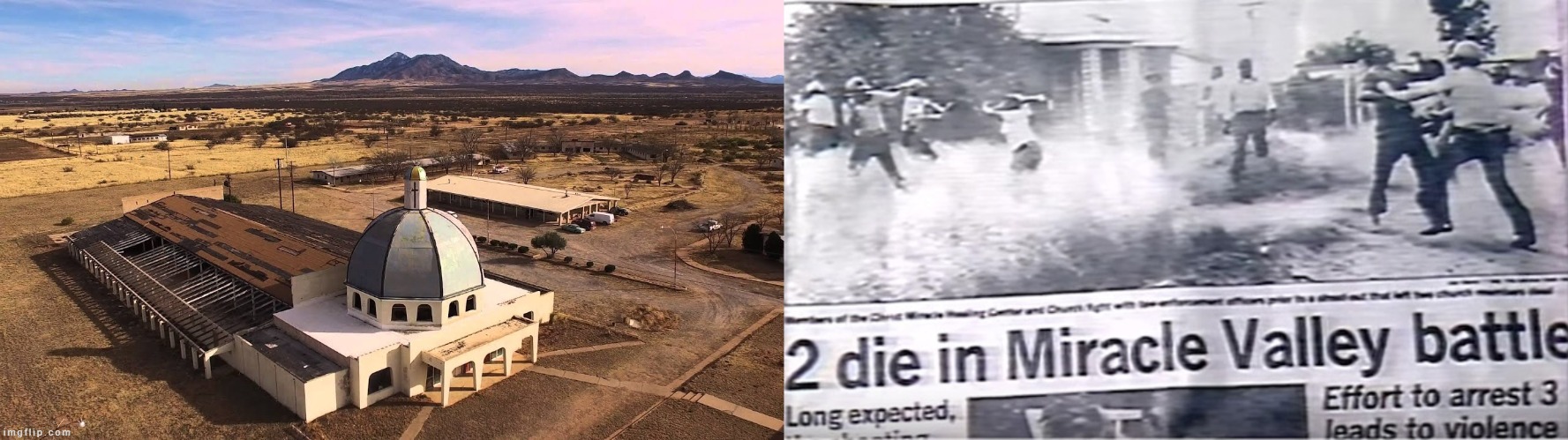
Crossing the river, we now arrive at beautiful downtown Palominas where I lived for 21 years. Highway 92 runs parallel to the border here. It’s only three miles away. All of the hills and the big San Jose Mountain you see to the south are in Mexico. Coronado decided this was a good place to enter the U.S. in 1540. Perhaps the Apache should have asked him for his papers. The faith healer, A.A. Allen, set up the headquarters of his ministry here in 1958. He called it “Miracle Valley”. People came from all over to receive their healings from Allen. In 1970, Allen turned up dead in the Jack Tar Hotel in San Francisco. His followers had a hard time accepting that he died of alcohol abuse. One of Allen’s disciples started the Christ Miracle healing Center in Miracle Valley in the Eighties. Their cult-like behavior led to a big shootout with the Sherriff’s Department in 1982. Two died at the scene and two others, including a Deputy Sherriff, died later from their injuries. Many of my neighbors witnessed the melee. Palominas is a weird place, but interesting.
A.A. Allen’s Miracle Valley Headquarters. Palominas, AZ. Miracle Valley Shootout 1982
One of the fun things to do in Palominas is to watch car chases. An agent turned his cruiser over at our Cana Street turnoff once. He had run over the spikes thrown out for the guy he was pursuing. Another time we were sitting in the Morning Star Café when a truck with four blown tires slid into the parking lot barely missing my truck. The driver bailed out and started running. He didn’t get far. The truck, probably stolen in Phoenix, was full of bundles of marijuana. Sadly, illegal immigrants have caused a few fatal crashes as they try to outrun the law. In 2004, a crash near Sierra Vista killed six, including a local couple and injured another 22, all apparently border crossers.
From Palominas, I head south on dirt roads approaching the border. When I hit Border Monument Road, I turn right following the border west. I pass Glenn Spencer’s “ranch”. Glenn is a retired Border Patrol Agent who feels like he needs to keep fighting the good fight. His small acreage sits right at the border. He runs an organization with the official-sounding name of The American Border Patrol. He used to get in trouble fairly often. One night he heard a noise and shot up his neighbor’s garage. Another time Air Force jets had to be scrambled when he overflew the international border. He also got caught with a prohibited weapon at nearby Coronado National Memorial. Lately, he seems to have reformed, concentrating on border surveillance technologies. He’s been trying to sell them to the Border Patrol.
Using his own drones and cameras, Spencer monitors the border
My next stop is Montezuma Pass at the southern end of the Huachuca Mountains. From here, I can see far into Mexico and for a long way along the border in both directions. At the foot of the mountains is the beginning of the Arizona Trail. The trail runs along the crest of the Huachucas before meandering off to the west. In the old days illegal entrants used to follow it to the various canyons on the east side of the mountains. There, they were picked up by smugglers, often American, who drove them north. These days, the Border Patrol has a significant number of agents and surveillance equipment at the pass. Nobody gets by and very few local hikers have ever followed the trail to its terminus the Utah line.
The Arizona Trail starts on the border beneath Montezuma Pass
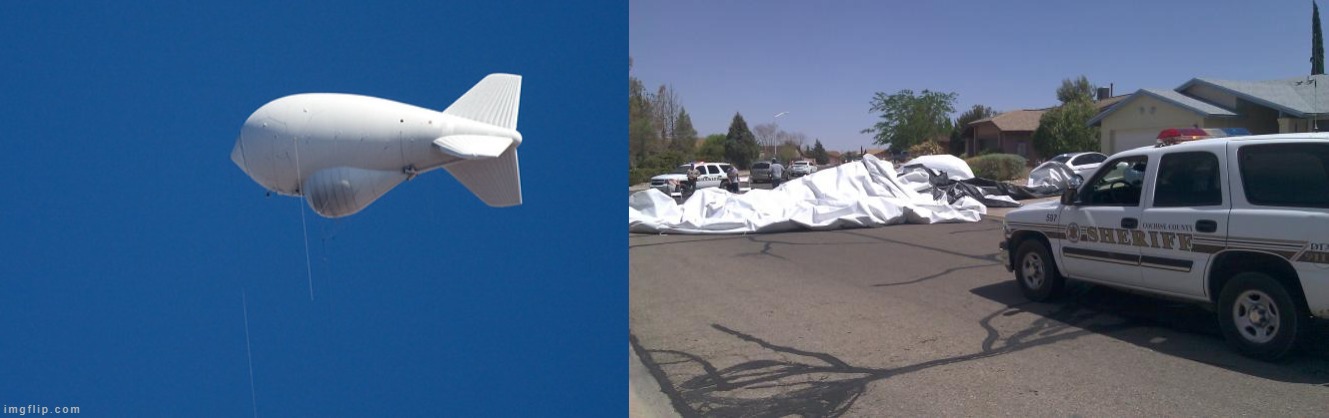
About 15 miles to the north of Montezuma Pass is a tethered balloon called the Aerostat. Its radar can detect low-flying aircraft trying to sneak into the country. It has crashed three times that I know of. The last time it fell in someone’s back yard.
The Aerostat, Fort Huachuca, Arizona. It crashes a lot.
High above, an unmanned aerial vehicle looks for signs of smuggling. Years ago, I had a fixed wing Border Patrol aircraft circle me as I was loading landscape boulders into the back of my truck. I guess he thought they were bundles of weed. These days, the Border Patrol has a Blackhawk helicopter with a machine gun. (I have stopped collecting boulders in washes next to the border.)
The Border Patrol has a constant presence at Montezuma Pass
Well, I’ll stop at the pass, pausing to admire the beautiful, unspoiled San Raphael Valley to the west. I won’t make Nogales this time, but I can see the sacred Baoquivare Peak beyond the town. Don’t believe all the shit you hear on Fox News about the border. It truly is a wonderful place.
“Blee-Blee-O-Leh, Hi-O-Leh, Hi-O-Lay,” a song I still can hear,
Though the rest of Sixty-Three, really ain’t all that clear.
Gunny Buell countin’ cadence, beneath his Smokey Bear,
Chest full of ribbons, though we never asked him where.
There at the Depot, the Grinder was his home,
Never let him catch you, lettin’ your eyeballs roam.
Sixty pair of corded heels a’ clickin’ like as one,
He’d make us all Marines before his job was done.
Corporal Kempton, far from Erin’s emerald shore,
Wasn’t quite a Limey, so he had to join the Corps.
Always wore his greens when he took us for a run,
Never missed a step, ran backwards just for fun.
Ashbrook was a Sergeant with an impish grin,
He swore an Irish pennant was a mortal sin.
Torment was his forte, his weapon was PT,
“Maggot, y’er a squirrely four-eyed cluck* to me!”
Staff Sergeant Anderson was A-jay squared away,
But if you ever crossed him, there’d be hell to pay.
“Drop your cheap civilian ways, do it just this minute,
‘afore I unscrew your head, and hafta’ spit* right in it!”
And Lord I must confess, we Privates were a mess,
“Recruiters scraped the barrel,” the Gunny would profess.
In our yellow sweatshirts, the fuzz upon our domes,
First time most of us had ever missed our homes.
McDaniel couldn’t cut it, got sent to STP,
Then he’s o’er the hill, wantin’ to be free.
Spears he went a missin’ middle of the day,
D.I said he had to go, Private Spears was gay.
And Jonesy took a walk, Runway Number One,
With a Section Eight his Gyrene days were done.
At Matthews did we snap in, our rifles at the fore,
Steven’s broken glasses, caused him not to score.
Spent a week in Balboa, dropped out of a run,
Lungs were full of phlegm, wasn’t very fun.
Gomez crossed the border, Smitty, he was a Black,
When the goin’ got real tough, both would have y’er back.
Beers, he was slacker, never could keep up,
Passed out in the ranks, such a buttercup.
All the rest would pass the test, Uncle Sam’s Marines,
Follow them straight to hell, got fightin’ in their genes.
Semper Fi!
LDT Nov 10, ‘21
No, he ain’t a bulldo0g!
GLOSSARY:
-Gunny- Marine rank of Gunnery Sergeant (E-7)
-Cadence- A Drill Instructor’s call to keep the troops in step. Every D.I. has his own unique rhythmical style. Cadence calls: https://youtu.be/X52lJG2glQU
-Smokey Bear- The Campaign Hat worn by D.I.s.
-Depot- Marine Corps Recruit Depot (MCRD) San Diego
– Irish pennant- A loose thread hanging from one’s uniform.
– Yellow sweatshirt- One of the first items issued to Marine recruits was a yellow sweatshirt with a red eagle, globe and anchor. It was a sign of a newbie. We hated them.
– Grinder- Parade field.
– STP- Special Training Platoon. Out-of-shape and overweight recruits were sent there for extra physical training.
-Over the Hill- Absent without Leave (AWOL). I saw McDaniel at the Separation Barracks six months later. He never made it out of Boot Camp
Gay- Nobody was gay in 1963. Marines used a lot of Homophobic slurs. To SSgt Anderson’s credit, he was completely professional and non-judgmental when he told us about Spears. I got the impression that he had talked to Spears’ parents.
-D.I.- Drill Instructor. NCO responsible for all aspects of Marine Recruit Training.
-Runway Number One- MCRD San Diego is next to Lindberg Field. We had a guy who was caught sleep-walking down the main runway in his skivvie shorts. Not a good habit for someone serving on a ship or in combat.
-Section Eight- Discharge for mental reasons.
-Gyrene- Archaic nickname for Marine.
-Snap in- The first of three weeks of training at the rifle range is devoted entirely to assuming the offhand (standing), sitting and prone firing positions (snapping in). Two days before qualification, a recruit got too close to the receiver when he fired, shattering his glasses. Had he qualified, our Head D.I. could have claimed the coveted 100% qualification distinction.
-Matthews- Camp Matthews, where recruits got their rifle training. (Now closed.)
-P.T.- Physical Training.
-Balboa- Balboa Naval Hospital. I spent a week there with pneumonia. Got the Doc to release me a bit too soon.
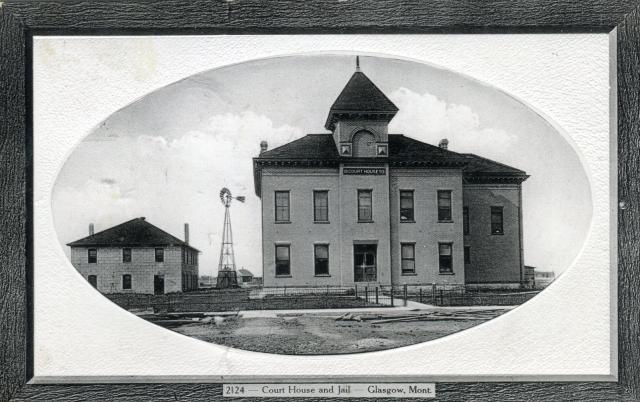
The Valley County Courthouse The Jail is on the left
I first heard the story from Tom (T.H.) Markle sixty years ago. As a young man he had come West to seek his fortune. He got off the Great Northern passenger train in a little place called Glasgow Montana one morning in 1903. Glasgow had started off as a railroad siding in 1887, but had slowly grown as settlers, ranchers and railway workers poured in. In 1893 it became the County seat of Valley County. Much bigger than it is today, the county occupied all of Northeastern Montana from the Missouri Breaks to the North Dakota line. This meant it had a modern court house and a two-story county jail. Both of these institutions were badly needed as the area was rife with outlaws, rustlers, claim-jumpers and the occasional grifter who got off the train with a carpet bag full of nefarious schemes. In 1894 Kid Curry had killed Pike Landusky in the nearby Little Rockies. Then in 1901 Curry held up a train at Wagner Montana while the Valley County Sheriff was on it. A decade earlier the Sundance Kid had also tried to rob the train at Malta. Both outlaws would use their Montana resumes to one day join Butch Cassidy’s Wild Bunch.
After stepping off the train, Tom picked up his meager baggage and headed down 5th Street looking for lodging. Young Tom had a head for business and just enough cash to buy a wagon and team. He was going into the draying business, hauling cargo between the railroad and the scattered farms and ranches of the sparsely populated county.
As he approached Third Avenue, he could hear a commotion in the courthouse square. A crowd had gathered looking up at the second story of the courthouse. Tom stepped into the street to get a better look.
“My God!” he exclaimed to himself. “There’s a body hanging from the window! What in the hell have I gotten myself into?”
Turns out the body belonged to a petty criminal named Jack Brown. His chief crime was throwing his lot in with the wrong jailbird. I’ll get back to Brown later.
William Hardee was a drifting cowboy with a bad temper and an even worse opium habit. He had wandered into Northeastern Montana from Wyoming, looking for easy money to feed his addiction. In 1901 he partnered with a young man named Charles Snearley in a wild horse roundup operation. The frontier wasn’t quite closed and plenty of wild ponies still roamed the unfenced plains. It was easy pickin’s for a couple of enterprising cowboys. Just build a catch pen on the route to a water hole and drive them into it.
At first things went well for the pair. They managed to corral a small herd of the wild critters. But somehow on September 3rd, 1901 at the ranch of J.P. Smith near Culbertson, their little lot of horses managed to escape. All their hard work had come to naught. Hardee had desperately needed the cash to feed his opium habit. He blamed his young partner for the loss. They argued. Things got out of hand. Hardee threw his revolver down and dared Snearley to pick it up. Before Snearley could react, Hardee grabbed a shotgun and fired. Gravely wounded in the arm and lungs Snearley fell to the ground. A telegram summoned Dr. Belyea from Williston to treat the his wounds. It was hopeless. Snearley died in agony. Later, the Billings Gazette would quote Hardee as saying it was, “necessary to kill his man.”
The magnitude of his actions soon penetrated Hardee’s drug-fogged brain and he decided to make himself scarce. He jumped on a horse and lit out over the prairie. The North Dakota line was close. Hell, he even had a brother in the penitentiary there. Maybe he could hide out. Alas, it wouldn’t be long until the long arm of the law would catch up with him. He was captured when he sought refuge at a local ranch. Soon he would be residing in the formidable Valley County Jail.
Hardee was tried in Glasgow and sentenced to death by hanging for the Snearley murder in December of 1901. As he languished in jail his attorney, George E. Hurd, filed an appeal based on insanity. Hardee’s sister, Lottie, had provided an affidavit stating that their Grandmother in Iowa had become insane and committed suicide. She also stated that an uncle had died a lunatic. Dr. Mimmiminger of Glasgow asserted in his affidavit that, “Hardee was insane at the moment he committed the murder, and furthermore declares the man to be afflicted with homicidal mania. He further shows that Hardee has for years been a slave to morphine and liquor, a combination which has unhinged his mind and made him irresponsible for his acts.” The good Doctor also mentioned that since Hardee’s incarceration he had been prescribing him 12 grains of morphine daily to keep him alive. This was enough for Judge Tattan to delay the scheduled January 22nd execution date. More legal maneuvering kept the case active until the Montana Supreme Court upheld Hardee’s conviction in April of 1903.
The same day Hardee got the news about his death sentence being upheld by the Montana Supreme Court, he tried his first escape. At 7 O’clock in the evening on April 11, 1903, Hardee and two other prisoners, Albert Jackson and Jack Brown, broke out of the Valley County Jail. The prisoners had dug a hole through the brick wall at the back of the jail. They escaped while jailer John Dillard was away on a brief errand. Hardee and Brown made their way to the nearby Milk River and turned East. About 11 O’clock the next morning they were found hiding in a coulee about 15 miles from Glasgow by Under Sheriff Rutter and jailer Dillard. Weakened from his past bad habits, Hardee offered no resistance. Brown got an extra six months tacked onto his sentence for escaping jail.
Hardee spent the next six weeks getting himself in better shape. The gallows were about to go up for his scheduled execution on June 26, 1903. This highly anticipated event would be the first ever legal hanging in Valley County. To save his skin, he needed a plan. This time he would have new accomplices. He persuaded fellow inmates, Fred McKinney, and a man named Pierce to join his escape. Once again Jack Brown agreed to go along. They watched the guards and looked for their chance to escape.
On June 6, 1903 they saw their opportunity. At about 4 PM they sprang into action. Under Sheriff Harry Rutter was in the cell at the time. Jailer Dillard came in to get the dishes. The inmates grabbed and overpowered both men. One of the conspirators ran into the kitchen where he found a Winchester rifle. They also armed themselves with a Colt 45 revolver, probably taken from Rutter. Then they lay in wait for the other guard, Jack Williams, who had been on some errand in uptown Glasgow. As Williams opened the door, he saw the escapees. Turning to run, he was shot in the back with the Colt. The wound was mortal. Williams would linger until the next morning before expiring. Dillard and Ritter were badly beaten. The Great Glasgow Jailbreak had begun.
Armed and dangerous, they headed for the cover of the brush and Cottonwoods of the Milk River. They ditched a pair of shoes and some clothing before swimming across. An hour after the jailbreak three of the men were spotted by a ranch hand near the river. The quickly assembled posse was only 15 or 20 minutes behind.
Early on Pierce and the hapless Brown separated from the other two outlaws. Pierce apparently headed East toward North Dakota. Brown re-crossed the Milk River and headed West along the railroad tracks. Arriving late at night in Hinsdale, he sought help at a hotel claiming he had just been put off the train. He was fed and given a hat before going on his way. Brown was captured near Hinsdale on June 10, 1903 by Joe Miller and Under Sheriff Ritter. Having recovered from his beating, Ritter had been tipped off as to Brown’s whereabouts. Brown said he had lost his Winchester while swimming across the river and offered no resistance. He was returned to the Valley County Jail, this time facing far more serious charges.
Hardee and McKinney had taken two horses from a ranch near Glasgow. At first it was assumed that the pair were heading east toward the North Dakota line with Pierce. The Milk and Missouri River valleys were scoured carefully all the way to Wolf Point. Though rumors of their whereabouts persisted, the posse found nothing. On reaching the Missouri Hardee and McKinney had turned west and headed upstream. They were bound for the Missouri Breaks. The rough and barren Breaks had been a favorite hiding place for all manner of outlaws for decades. Hardee had some familiarity with the country from his days as a cowboy.
A witness saw Hardee and McKinney skulking around the Missouri, thirty miles south of Glasgow. Hardee had a bandage wrapped around his head and was carrying a Winchester. McKinney was in his undershirt and trousers with rags tied around his shoeless feet. At Stevenson’s ranch near the river they abandoned their horses and stole a boat. They managed to row it across the river before Sheriff Harry Costner’s posse could catch up with them. Costner and the posse found their own transport and crossed the river in hot pursuit.
On June 20, 1903 Hardee and McKinney holed up in some brush on a hill as the posse approached. One of the posse members, Charles R. Hill, had been a schoolmate of Hardee’s from his days in Buffalo, Wyoming. Hill, who had a ranch nearby at Snow Creek, was reminiscing with the other posse members about Hardee. He even mentioned being a part of a Wyoming posse that had once pursued Hardee. He revealed that he hadn’t been too diligent in his earlier posse duties, not wanting to shoot his old acquaintance.
As the posse combed the brush looking for the outlaws a shot rang out. Hill toppled from his horse, shot square through the eye. He died instantly. The pinned down posse returned fire, but with little effect. The outlaws had good cover behind the rocks and brush. They did catch a glimpse of one of the fugitives moving through the brush, but apparently failed to hit him.
Earlier, posse member Frank Loomis had separated from the group. Hearing the firing, he had hastened to make his way back. A shot rang out from behind a hill, narrowly missing his head. It was McKinney making his escape. Loomis took cover until it was safe to rejoin the rest of the posse. With nothing to shoot at, the posse hunkered down and waited. The hot afternoon faded into a long, anxious night.
At daybreak the posse crept forward to reconnoiter the hideout used by the fugitives. They found Hardee lying dead in a pool of his own blood, shot through the lungs. McKinney was gone. He was quickly burried near where he fell. There was no ceremony.
By now, word had spread throughout the scattered ranches and homesteads of the river country. One desperate outlaw remained. McKinney was armed, desperate and dangerous. No telling what he would do to save his own skin.
After 14 days of the chase, some posse members were worn out and had to return to their homes. The Sheriff recruited new posse members from the local ranches and more men arrived from Glasgow. That evening, he renewed his pursuit of McKinney. Everyone was on the alert, rifles and handguns always at the ready.
The Darnell Ranch was located on the South side of the Missouri some 80 miles southwest of Glasgow. Just about dark on June 24, one of the Darnell daughters was making a trip to fetch something from the icehouse. Sensing something was out of place in the darkened dirt-covered dugout, she summoned her father. As the two of them approached, McKinney appeared with a Winchester rifle. He raised the rifle and aimed at Darnell. The weapon jammed and McKinney struggled to chamber a round with the malfunctioning lever-action . As he fumbled with the weapon, Darnell’s daughter rushed to the house to get a rifle for her Dad. Thankfully she returned in time.
Aiming his rifle, Darnell commanded McKinney to put up his hands and surrender. McKinney refused and made a dash to escape. Darnell fired, striking the outlaw in the arm. McKinney fell, but got up and started to run again. Darnell demanded his surrender once more. The outlaw responded that he would rather die before he would quit. Darnell’s next shot hit him in the lower back tearing through the intestines. This time McKinney was down for good. He lingered for another 3 hours before expiring. As he lay in pain he lamented that Hardee had only lasted 3 or 4 minutes after being shot by the posse.
Meanwhile in Glasgow, the last chapter of the Great Glasgow Jailbreak played out. Word had reached the town about the shootout that had killed posse member Charles Hill. About 10:30 PM an angry mob assembled at the jail and demanded they be given Jack Brown. It didn’t take much persuading to get the still-shaken jailers to turn him over. The vigilantes drug Brown to the 2nd floor of the Court House and put a rope around his neck. They tied the other end to a radiator and threw him out of the window. He gagged and kicked for a few minutes as the crowd watched by lantern light. Then he was dead. The mob left him to hang all night. By morning he was as cold as the radiator he was tied to. The Great Glasgow Jailbreak was over.
Of the four escapees, only Pierce was never accounted for. Pierce is alleged to be the one who killed jailer Jack Williams during the escape. In Buford, North Dakota on June 22, 1903 a billiard hall operator named Kublick was killed by a 30-30 rifle at his establishment at 1:00 AM. It was believed that his killer was the fugitive Pierce.
Tom Markle, stayed on in Glasgow. He became one of the town’s leading citizens and his name still graces the businesses he started.
Thanks to Jack McRae for the following information:
-John Darnall was the rancher who killed Fred McKinney.
-William Hardee and Charlie Hill were buried side by side where Hardee was killed.
-Thanks to Pegg Rutter Cornwell, I have gotten more info on Undersheriff Harry Rutter and corrected the spelling of his name. He is in the Montana Cowboy Hall of Fame. Harry Rutter Was a Cowboy – Montana Pioneer
(There is a findagrave.com memorial for Hardee in the Glasgow Highland Cemetery, but it doesn’t list an actual plot number. Could be just a placeholder.) William Hardee (1870-1903) – Find A Grave Memorial
REFERENCES:
Note: The Great Falls Tribune of 19 June 1931 is said to have the complete story of the Glasgow jailbreak.
The Williston Graphic, Williston, ND, Sep 12, 1901.

















 Outlaws, Outrages and Outright Lies