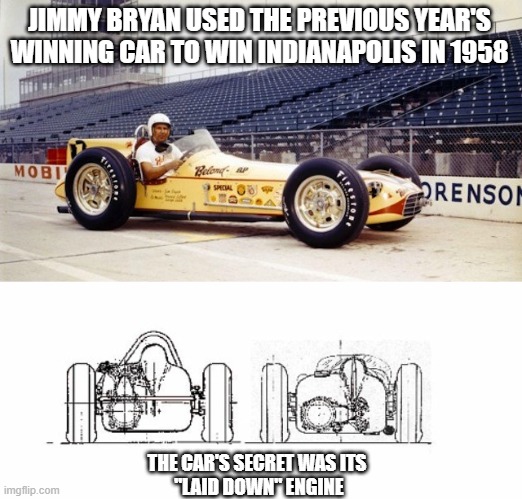
Today is the 105th running of the Indianapolis 500. As a 13 year-old I listened to the 1958 race on KLTZ radio in Glasgow. The year before there had been a technological revolution in cars. Someone got the idea to lay the Offenhauser engine that dominated the race on its side. This lowered the profile of the cars, making them faster. With the hood open, the cars looked a little weird. The entire drivetrain was shifted off the center line. Sam Hanks won the ’57 race using this design. By the ’58 race, it was obvious you couldn’t win without a “lay-down” engine. That race was marred by a first lap crash that took the life of one of my favorite drivers, Pat O’Conner. The crash took out half the field. Jimmy Bryan won in the same car Hanks had used the year before. A rookie named A.J Foyt made his debut at the 1958 race.
The 1958 Indy 500 first lap crash that took the life of racing great Pat O’Connor
Film of the 1958 Indianapolis 500 race, to include the crash that claimed the life of Pat O’Connor https://youtu.be/RvNK-jXSvFU
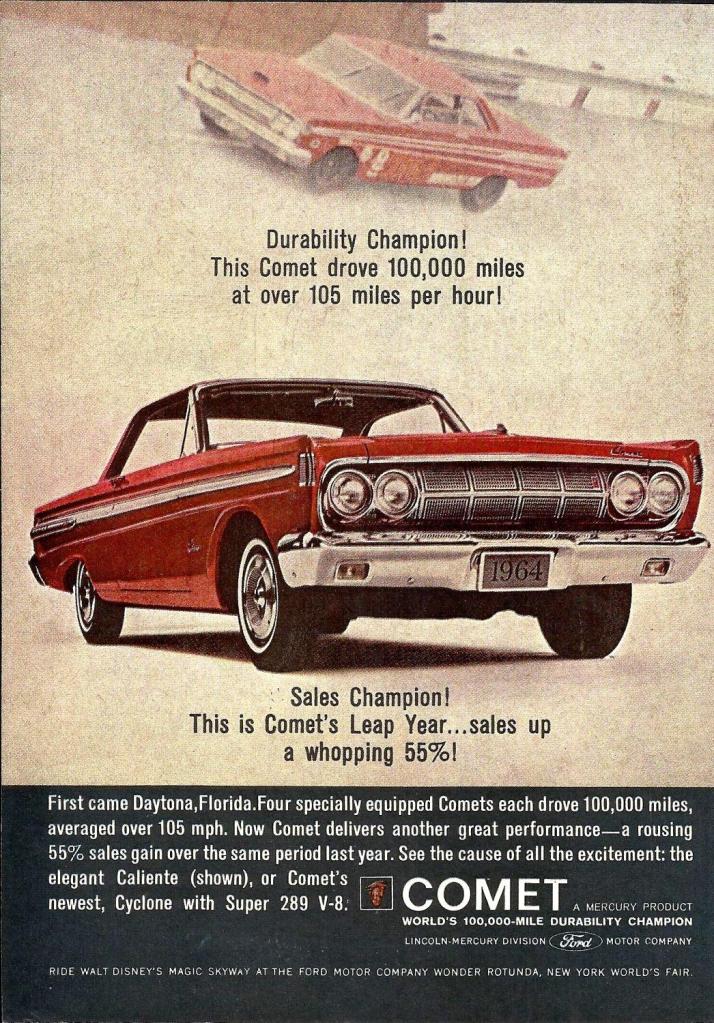
In the Fall of 1963, Beatlemania was sweeping the land. Meanwhile, Ford’s Lincoln-Mercury Division was engaged in a spectacular stunt to prove the power and endurance of it’s sporty 289 V-8 equipped Comet Caliente. Five Comets would attempt to circle the high banks of Daytona Motor Speedway for 40 days and nights at over 100 miles an hour.
To accomplish this incredible feat, Mercury fitted its version of the Ford 289 “D”-Code engine with a slightly larger 4 barrel carburetor. (Ford would not allow them to use its more powerful solid-lifter “K” Code 289. Though the Mercury engine fell short of the High Performance Ford HiPo engine’s 271 horsepower, they called it a “K”-Code anyway.) The five cars used in the record attempt were equipped with beefier suspensions, roll bars and heavy-duty 3-speed manual transmissions. They pitted for driver changes and maintenance every two hours. Four of the five Calientes managed to complete the 100,000 miles without incident. The fifth had a broken valve spring, causing it not qualify for the record. It was repaired and set its own record for 10,000 miles at 124.421 miles an hour. The trial was slowed by two tropical storms in the area. About a hundred people; drivers, mechanics, timers and NASCAR officials participated in the affair. Mercury followed up the achievement with an ad campaign touting the slogan, “100,000 Miles at 100 Miles an Hour!’ (Actually, the fastest car averaged 108 MPH.)
Ford made its fabulous small block Windsor engine as used in the record-setting Comets from the 1962 model year to 2002. Displacements ranged from 221 to 351 cubic inches. The most desirable versions were the high performance units like the Ford’s “real” “K”-Code” 289 engine with its 271 horsepower. These are mostly found in 1964 1/2-1967 Mustangs. Carroll Shelby modified the “K”-code to 306 Horsepower and fitted them in his Shelby Mustangs. Another highly sought after version of the Windsor engine is the 1969-70 Boss 302. This engine featured the better breathing cylinder heads from from Ford’s Cleveland engine series. It was rated at a modest 290 horsepower due to insurance considerations. Another great performance version of the Windsor was the High Output 5.0 used primarily in Mustangs from 1987-1993. These engines were very popular and helped end the “Malaise Era” where American cars suffered from a lack of performance. Sadly the miss-labeled “K”-Code engines used on ’64 Comets aren’t really all that desirable unless they are in one of the five 100K cars.
I have owned a bunch of Windsor small-blocks: An original 221, two 260’s, two 289’s, three 302’s, an HO 5.0 (302 CID) and two 351’s. One of the 289’s powered three different cars. The Achille’s heel of the early versions of the Windsors were their wimpy timing chains. They stretch and fail beginning at about 80,000 miles. This was made worse on the early engines which had a resin-fiber bottom timing gear to reduce engine noise. Typically, a worn timing chain will jump one tooth on start-up. The engine will still run, but the ignition and valve timing will be off. If not replaced it will jump again. This time the valves will collide with the pistons leading to a catastrophic engine failure. I got really good at replacing timing sets on all those Windsor engines. One of the few that never needed replacement was the High Output 5.0 on our ’89 Mustang LX. If you find an early Windsor small block with the original timing set, be careful when you change it. Early engines had a spacer on the front of the cam that is not used with most aftermarket timing gears. Neglect to remove it and your new timing chain will eat up your aluminum timing cover. (Don’t ask me why I know this.)
They said he rode with Curry, but we can never tell,
but at the ridin’ and the ropin’ we knew he did excel.
Perhaps he had a long rope, an orphan calf or two,
those farmers and the ranchers never had a clue.
Tall and slim and fitted out in the finest clothes,
Long George was the best hand, everybody knows.
From Pendleton to Calgary, he always won the prize,
started up a ranch ‘neath the big Montana skies.
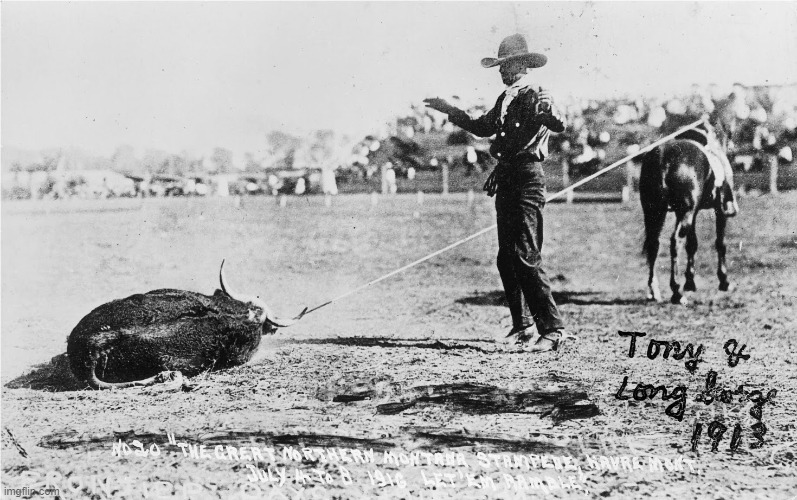
He had a horse named Tony, at ‘dogging did they shine,
and for the fair Amanda, his lonely heart would pine.
She’s teachin’ school at Simpson out on the lone prairie,
but Long George stole a horse, and then he had to flee.
For two long years he hid out somewhere in the ‘Paws,
the Sheriff looked the other way, said he had no cause.
Then George he starts ‘a thinkin’ that what he done was wrong,
Then sweet Amanda says “I’ll wait, six years ain’t that long.”
He stands before His Honor, heart upon his sleeve,
“Before I go to Deer Lodge, can I get a small reprieve?
And if ever you should grant it, I promise I won’t stray,
You know I gotta’ see my girl, she’s in a family way.”
On Christmas Eve he’s granted his final fervent wish,
He’s headed up the river, with gifts his sweetheart will cherish.
He opens up the stall and hollers out at Tony, “Shoo!
When you hit the mountains, you’ll know what to do.”
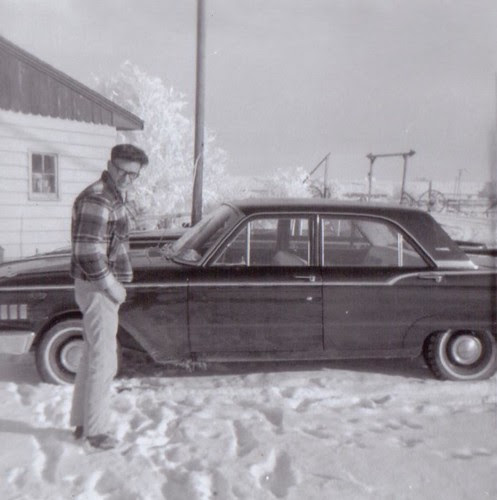
Crankin’ up the Hupmobile, he heads out in a rush,
the flurries they are flyin’, road of frozen slush.
Slippin’ and ‘a slidin’, easin’ off the clutch,
Snow is fallin’ harder, the light there isn’t much.
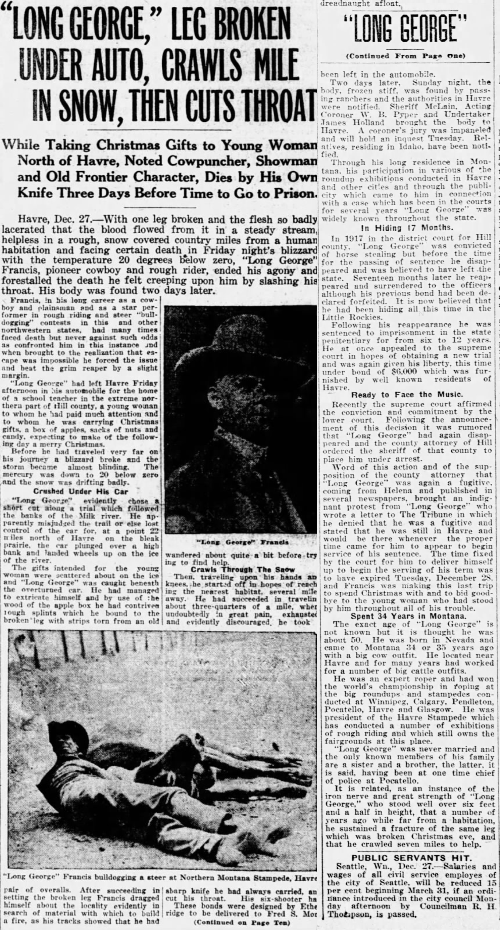
He missed the curve and slid off at the river bend,
Crumpled up on the ice, the car has met its end.
Looks down at his leg, the bone is stickin’ out,
A crate and some denim will fix it up no doubt.
Climbs up on the bank followin’ the road,
Maybe there’s a farmer bringin’ in a load.
He crawls a mile or more freezin’ in the snow,
he’s thinkin’s that it’s gotta’ be twenty below.
Now he’ll never make it, he’s fadin’ and forlorn,
Soon that pretty schoolmarm is gonna’ have to mourn.
He thinks about that pistol underneath the seat,
if he only had it, he’d match Curry’s final feat.
But all he’s got upon him is a pocket knife,
and sweet Amada Spears will never be his wife.
LDT May 14, ‘20
Long George Francis (1874 -1920) was born in Cedar Valley, Utah. He first came to Montana with the Warbonnet Cattle Company in 1894. He is buried in Highland Cemetery in Havre, Montana. Tony, his bay horse, roamed free in the Bear Paw Mountains for years. In 2008 Long George was honored with the Montana Cowboy Hall of Fame Legacy Award.
Schoolteacher Amanda Spears was born in Minnesota in 1890. Old-timers say she left teaching after George’s death. Her baby did not survive.
Johnny-Before Vic and Irene got it I used to ride with Uncle Vic in a ore hauling truck, we would stop by and get a cup of coffee, learned a lot from those days
Michelle- I have memories of chasing lizards and only havin tails. Flying in a airplane. Taking walks down the warsh. My first dog came from there, a abused truckers dog, named him Shadow. He protected me from everything and everyone. My brother Jody getting bitten by a donkey. Being in the lounge playing pool. My grandma’s accounting desk, which I still have!
Randy- I remember going there with the folks when I was a young teen. It is the first time I remember meeting Dayla. Through the years on my trips to or from Montana, I go by and check out the place. It gets less and less like my mind’s memory! The hills, though are gonna be there forever and I remember Vic showing me bottles filled with layers of different colored sand that he had collected around the truck stop. I haven’t forgotten them, either!
Larry- For me La Sal Junction was always a place of refuge. I’d hit there lonesome, broken-hearted or down on my luck. Every time I visited, my fortunes would turn around. I had an improbable encounter with a UFO when I left there in ’67. https://azrockdodger.com/2021/05/02/the-comet-and-the-ufo/
Movies
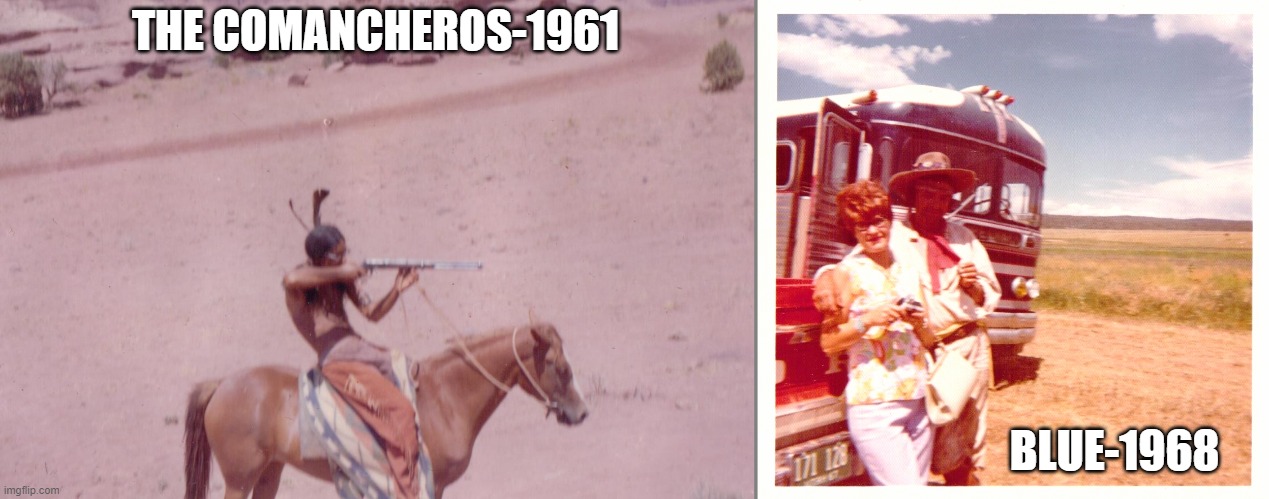
Lots of movies were filmed in the Moab-La Sal area. Here’s john thill in The Comancheros and Rex (with Irene) in Blue.
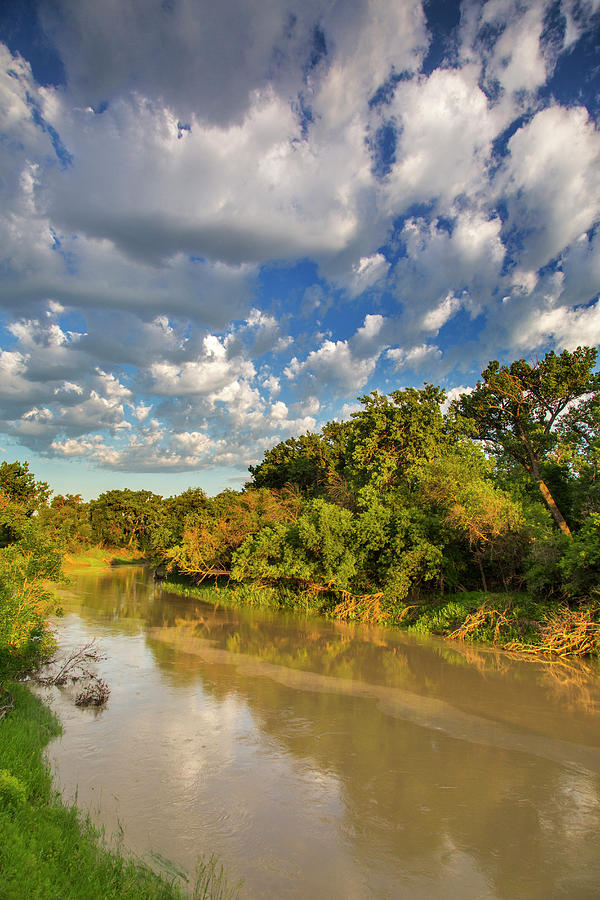
The Milk River joins the Missouri just below Fort Peck Dam.
The Milk is the little river that could. It steals much of its water from the Saint Mary’s Syphon. It uses the valley that the Missouri ran through before the last ice age. Fort Peck Lake filters the water of the “Big Muddy”, but the Milk soon befouls it.
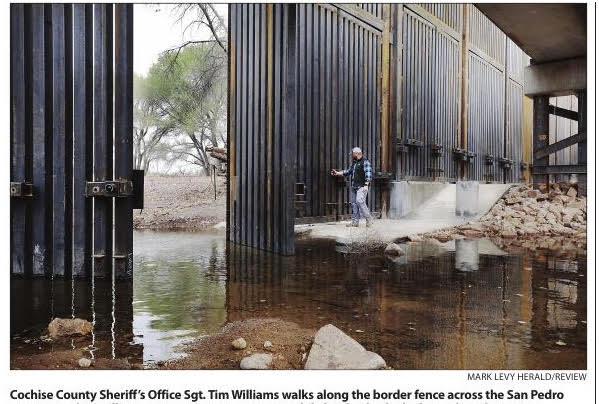
Above is a picture of the US/Mexico border on the San Pedro River about 4 miles from where we lived for 21 years. My first reaction to the photo was, “My God, what have they done to my river? This unsightly steel barricade was installed under the Former Guy’s Border wall initiative. It was built without any input from local citizens or government officials. Apparently no consideration was given to environmental or hydrologic concerns either. They just threw it up claiming some kind of emergency authority.
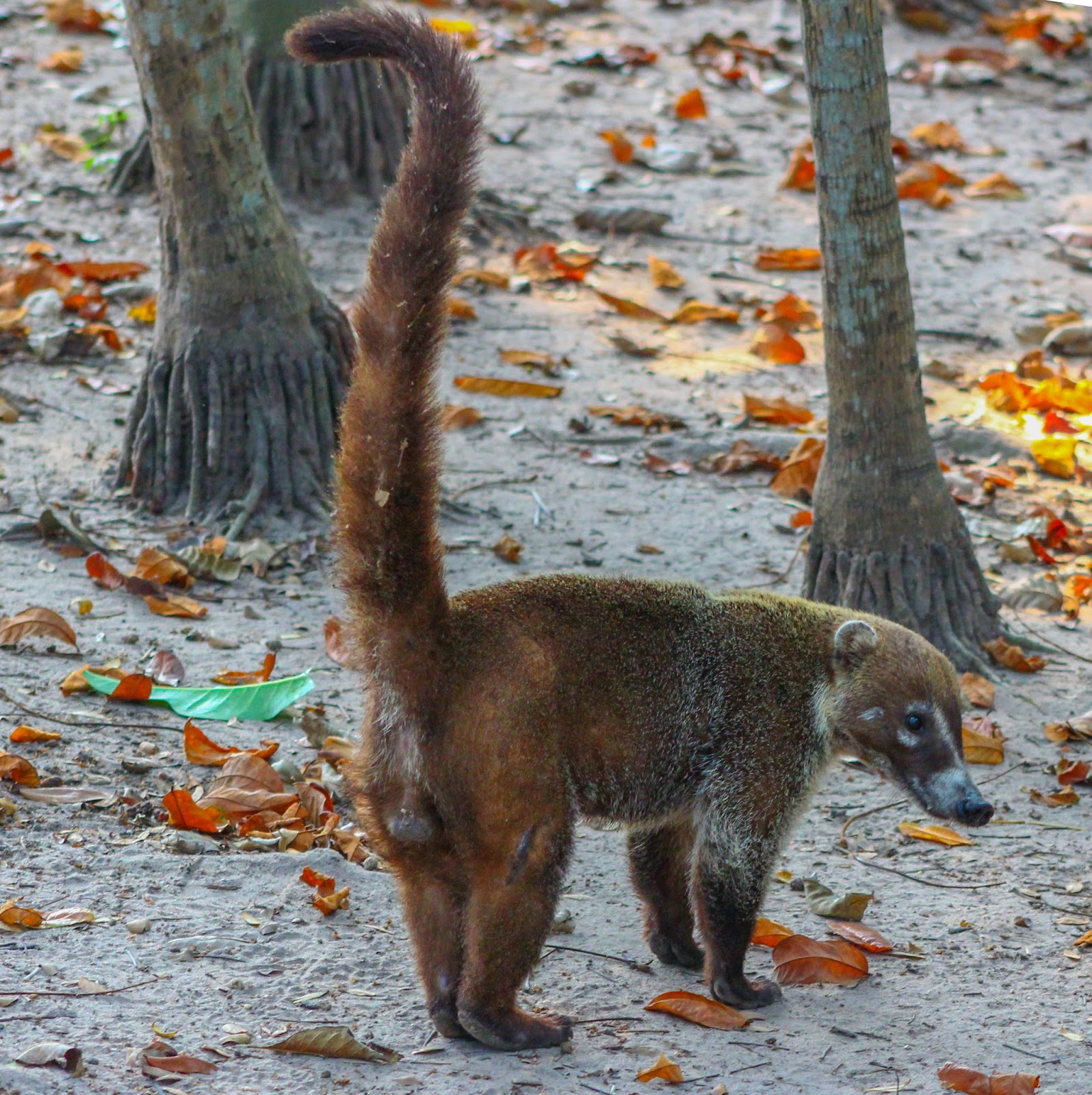
The San Pedro River is a local treasure. it is the only un-dammed free-flowing desert river in our state. The riparian area is rich in biodiversity. It serves as a North-south flyway for numerous migratory birds. Animals unique to the Chihuahuan Desert travel up and down its course. Ocelots and the occasional jaguar have been sited recently. Then there’s my personal favorite, the White-Faced Coati Mundi.
Coati Mundi
The San Pedro is the lifeline of our valley. We work hard to keep its calming waters flowing under the towering cottonwoods. The Federal Government has long been our ally in protecting this precious desert resource. through judicious management the flow of its aquifer has been stabilized and maintained. A while back, beaver were re-introduced to the river. They are thriving. Now all is threatened by what amounts to an obstruction at the border.
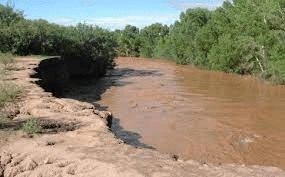
People have been using the San Pedro as a path for commerce and travel since long before Coronado passed this way in 1540. Most of them left only their tracks in the sand along the bank. The monstrosity recently built by the feds is an exception to the tranquil passing of time along the river. It is ugly, poorly-designed, unnecessary and dangerous. The San Pedro may not look like much, but during our Summer Monsoons, it can become a raging torrent. Rainfall rates of 6 or more inches per hour are common. The power of the unchecked flood is enormous. The locals know to get the hell away from the river when they see dark clouds forming.
San Pedro River after a Monsoon rain
The poorly designed “wall” across the San Pedro features gates designed to be manually opened. The assumption is that when it rains, a courageous Border Patrol Agent will wade out to the river and open the gates allowing the unimpeded flow of the flood waters. There are some obvious problems to this crude design. Even if the agent succeeds in opening the gates, the waters are likely to stack up debris against the gate posts. This will likely dam up the water, creating a lake in Mexico. Eventually the dam will give way, leading to rapid down-stream flooding. this could prove catastrophic to wildlife, livestock and the few remaining structures along the river. The resulting erosion and chaos would damage the river for decades.
My old neighbors generally agree that some type of sturdy border fence is necessary. Everyone understands, however, that no fence or border wall is going to stop desperate people from crossing borders. Walls are easily defeated. One can go around, over, under or through them. Agile people can scale the best of them in less than 30 seconds. Tunnels under border towns are common. A portable chop saw can take down a steel barricade in minutes. Drugs can be passed by hand through most sections of the wall. Tiny drones can pass over the wall undetected. There are, however numerous ways to catch people who defeat the wall.
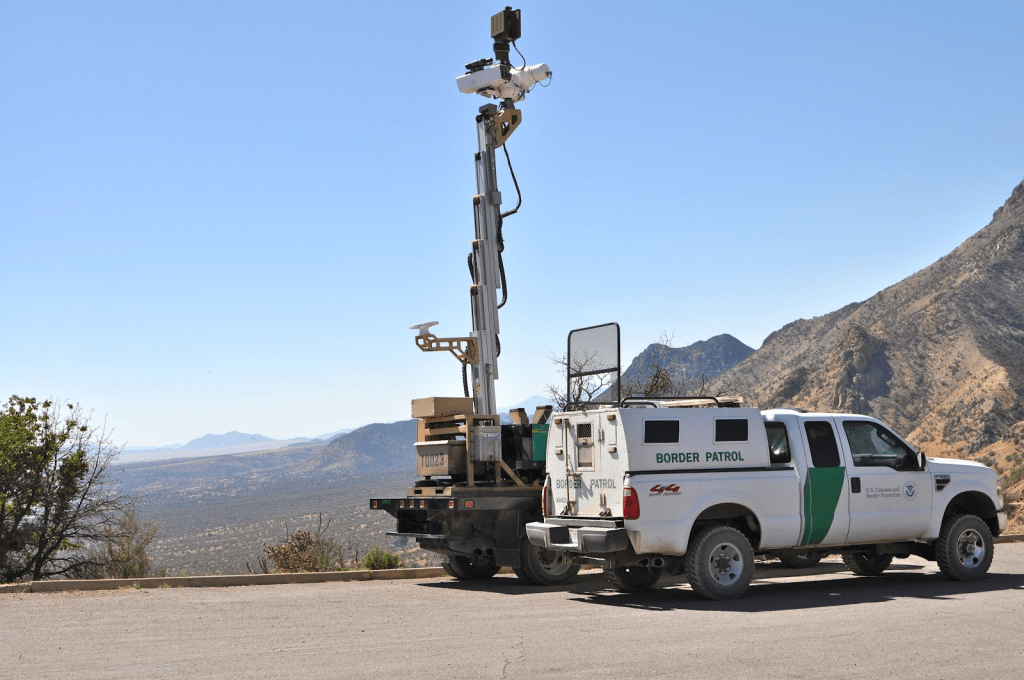
Before the barricade was put up across the San Pedro, there was an effective system in place to monitor, impede and interdict traffic up the river. A sturdy steel rail fence on the flood plain and and some massive boulders in the river bed kept vehicles from entering. A tethered radar blimp at Fort Huachuca can spot low-flying aircraft. The Border Patrol has numerous surveillance devices overlooking the river. Twelve miles away at the Naco Station about 900 agents stand ready to respond to any intrusion. There are far more Border Patrol vehicles on Highway 92, which parallels the border, than there are private cars most days. If anyone gets past the border, there are border check stations at places like Whetstone, Tombstone and Sonoita. Anyone trying to get around them is likely to be spotted.
Everywhere one goes in the San Pedro Valley, he feels like he is being watched. This surveillance outpost is at the top of Montezuma Pass and looks out over the San Pedro and San Rafael Valleys.
Lastly, I’d like to dispel any opinions you may have formed about how dangerous the border is. When we lived in the unincorporated community of Palominas, we generally felt safe. The threat from illegal border activity was when smugglers were running from the authorities. There are occasional crashes and fatalities. In one case, a local couple and 5 illegals were killed in a crash. The last shooting death we had was a friendly fire incident where 3 Border patrol Agents shot it out with each other in the dark. Sadly, one was killed and another wounded.
Most of the illegal entrants we have come across were harmless. Many are headed for jobs in agriculture, food processing or domestic work which few Americans want. Few stay in our valley, as we don’t have these kinds of jobs. Elsewhere in Arizona, these willing workers are welcomed with open arms by eager employers. In some cases they are exploited by overseers who threaten to turn them into authorities if they complain.
In happier times, we used to use the border fence for a volleyball net.






 Outlaws, Outrages and Outright Lies