Contents:
The Deadly Cargo of the St Peters (1837 Smallpox Epidemic on the Upper Missouri) https://azrockdodger.com/2021/07/14/the-deadly-cargo-of-the-st-peters/
-The last Hour of Normal a Poem
-Lucy: A Frozen Heroine
-COVID a Poem
-Herman Cain a Limerickhttps://azrockdodger.com/2022/04/09/is-the-anecdote-the-antidote/
Is the Anecdote the Antidote?– A COVID rant- https://azrockdodger.com/2022/04/09/is-the-anecdote-the-antidote/
-RIP H. Scott Apley A Limerick
-A Victim of the 1918 Influenza Pandemic
Science -A COVID Poem https://azrockdodger.com/2021/07/21/science/

The Last Hour of Normal

The Last Hour of Normal
Remember a time with the sun shining bright?
Not a worry or trouble anywhere in sight.
You hurried to work not a care in the world,
and held your breath as Old Glory unfurled.
People touching and caring in the usual way,
then the last hour of normal slowly slipped away.
Did you see the workers set off for their jobs?
Just regular folks, not them Wall Street snobs.
They toiled and they played, not a care around,
taking for granted the blessings they found.
Just laughing and singing their worries away,
‘til the last hour of normal just slipped away.
Did you don a mask and hide from the world?
Or sit on the couch, all comfy and curled.
Sad and alone, just mopin’ at home,
Countin’ the days until you can roam.
Hopin’ for good news that’ll make us all gay,
when the first hour of normal returns to stay.
LDT
12 Apr ‘20
Lucy: A Frozen Heroine
Lucvy: A Frozen Heroine
Decoding the 1918 H1N1 Influenza Virus
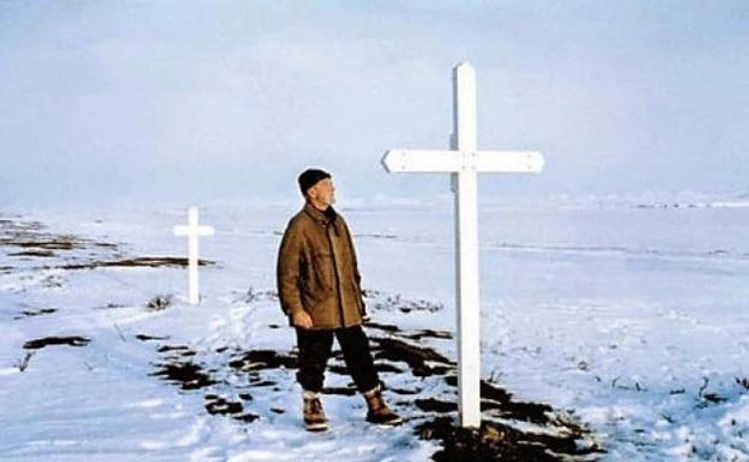
Seventy-Two year old Dr. Johan Hultin had seen this desolate place before. He knew some of the horrific secrets buried beneath the permafrost. He had been there in 1951 while the crosses yet stood to mark the site. Now only their rotted stumps remained. For Hultin, the stumps were a metaphor for the dream that was dashed after his last visit. Though he had tried valiantly, he had failed to crack the frozen secret. His dissertation would never be written, his PhD never to be awarded.
The 1918 Influenza Pandemic had hit the little village of Brevig Mission, Alaska very hard. About 90 percent of its 100 or so souls had perished in five days of absolute terror. Decades later, as the science of Epidemiology improved, people wondered about the 1918 flu. What was it? Would it ever come back? Would we be ready if it did? Science had made great strides. If we knew more about the virus, maybe we could be ready for its return. A curious young graduate student at the University of Iowa heard these questions and thought he might be able to find the answer.
Johan Hultin approached his advisors with the idea. It would form the basis for his dissertation. Somewhere beneath the Artic permafrost lay a secret ready to be unlocked. Perhaps humanity could be protected from a return of this deadly disease. His advisors agreed. The quest was on.
First Hultin enlisted the help of a friend, Otto Geist, who was a Research Assistant in Paleontology at the University of Alaska. Geist researched the impact of the 1918 pandemic on Alaska. Using his knowledge of the terrain, he narrowed the search to a couple of villages north of Nome. In the summer of 1951, Hultin, Geist, and two of Hultin’s professors made the long journey to one of Alaska’s remotest inhabited places. It took a trip with a bush pilot, a native whaleboat and a hike to get the four them to the village of Brevig Mission.
You don’t just walk into an Inuit settlement and start digging up the graves of their ancestors. Hultin and the team used diplomacy and logic. They found three survivors of the pandemic to explain the gravity of the flu outbreak to the populace. This helped to convince the village matriarch that their mission was worthwhile.
Soon the group was hard at work thawing and digging in the frozen ground. They found the first bodies at about four feet. Quickly extracting their samples, they found that preserving them would be a challenge. Their dry ice supply had evaporated. Improvising, they put the tissue samples in their vacuum thermos bottles and tried to cool them with a shot from a fire extinguisher.
Back home in Iowa, the team was unable to gain much in the way of scientific information from the degraded tissue. In 1951 there just wasn’t the technology to do much viral research on old tissue. Their mission a failure, Hultin gave up on his goal of a PhD at the University of Iowa. Instead he earned his MD. For years he would ask himself, “If only….”
Fast forward to 1997. While skimming through the journal Science, Hultin saw an article by Virologist Jeffrey Taubenberger of the Armed Forces Institute of Pathology. Taubenberger was trying to analyze the gene structures of the 1918 Influenza Virus. He was using tissue samples that the Army had taken from the pandemic’s victims in 1918. His task was made difficult by the small size and age of the specimens. Hultin decided they needed to talk.
It wasn’t long before Hultin was back on the trail of his fifty-year old quest. He landed at Brevig Mission and looked up the village matriarch. As luck would have it, she was the granddaughter of the lady who had helped him so much in 1951. Immediately sensing the importance of the mission, she tasked 4 husky tribal members to help with the digging.
As they toiled away under the Midnight Sun, they found a problem. The first bodies they unearthed were mere skeletons. The climate had warmed considerably since the 1950’s. The village’s permafrost wasn’t so permanent after all. It was not until they had dug 7 feet down that they found an intact specimen.
It was the body of a 30 something female. The fact that she was overweight had helped preserve her internal organs form the occasional thaw. Hultin named her Lucy. Then he did a quick autopsy. The lungs showed the tell-tale signs of damage from the virus. He had found his Holy Grail!
After taking the specimen, Hultin tenderly reburied Lucy with all the respect he could muster. Then, before leaving Brevig Mission he found some timbers. In a final act of reverence, he duplicated the two original crosses he had seen in 1951. Students from the high school helped him erect them. Lucy and the others would not be forgotten.
Back in the lower 48, Taubenberger and his associates went to work on Lucy’s lungs. They were able to identify the 1918 Influenza Virus and decode its entire genetic sequence. They even replicated it in the lab. This research helped lead to better vaccines and therapies to treat modern versions of the flu and other viral diseases. The 1918 virus was identified as H1N1. It would reappear many years later. Thanks to Lucy, this time we would be ready.
In 2009 a new version of the H1N1 virus would threaten our health again. Some say we botched our response to the threat of the new virus and cite the fact that 12,500 Americans died from it. This somehow justifies the delayed response to the current COVID-19 Coronavirus outbreak. The facts concerning our response to the 2009 H1N1 pandemic say otherwise.
The 2009 virus first appeared on our doorstep via neighboring Mexico. The first US case was identified on April 15. Thanks to the work of Taubenberger and others, we could already test for it. It proved to be H1N1. Within a week an alarmed CDC activated its Emergency Operation Center to deal with the emerging threat. Within two weeks the CDC had accelerated the development of a real time test making it much easier to identify those infected. The test worked well and was immediately shared with governments throughout the world. By the end of April, the government had declared a public health emergency.
Recognizing the threat, the CDC immediately began working on a vaccine. Trials started in July. The vaccine was approved by the FDA on September 15. Yes, it did take time to ramp up production of the vaccine. You need to grow strains of the virus to make the vaccine. That takes time, too much time. By December 100 Million doses had been made. Once the vaccine had been developed it was routinely included in the annual flu shots for the years that followed. Consequently, the vast majority of people have been spared Lucy’s fate.
I hope that we can respond to the COVID-19 Pandemic quickly and responsibly. We can do the finger-pointing after it is whipped.
LDT
3/21/20
REFERENCES:
No, President Trump, the Coronavirus Is Nothing Like H1N1 Swine Flu Either
Influenza 1918. PBS Documentary

COVID
COVID’s not your friend,
It can get you in the end.
Wear a mask, keep your space,
maybe you will win this race.
Don’t be no Covid fool,
Don’t break no Covid rule.
Talk to Grandma use the phone,
Don’t you make her die alone.
LDT Thanksgiving 2020

Herman Cain
Herman Cain, he did complain,
to wear a mask was such a pain.
Of the virus he had no dread,
then he caught it, now he’s dead.
Don’t you be no Herman Cain!
A Victim of the 1918 Influenza Pandemic
In Memoriam
A victim of the 1918 Spanish Influenza Epidemic
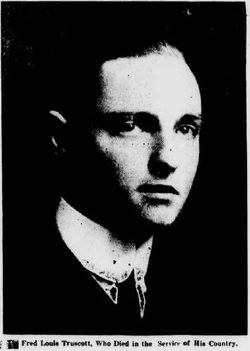
Fred Truscott, Age 27, Glasgow, Montana
1918 was a horrible year for small towns all across America. A war was raging far away. Many young men were called to serve. People made sacrifices. They bought Liberty Bonds. Anxious families awaited news of their beloved Doughboys. Sometimes it was bad. People prayed.
The little town of Glasgow, Montana had other problems. A drought had severely curtailed the harvest. More men were about to be called up for the war. Then the influenza hit. The Glasgow Courier was full of reports of people struggling with this especially virulent edition of the annual nuisance. Many took ill, some died. Schools closed. Deaconess Hospital had a surge in patients.
They called it the Spanish Influenza. Unknown to most folks on the Montana plains, it was rapidly ravaging the entire globe. Millions were dying. Governments at war were downplaying the threat. Spain wasn’t at war and saw no need to censor the news about the pandemic. Though the virus appears to have originated in rural Kansas, it would be forever known as the Spanish Flu.
Fred Truscott was one of Glasgow, Montana’s favorite sons. He had been in the first graduating class of Glasgow High School in 1908. Then he went off to Notre Dame, earning a degree in Electrical Engineering in 1913. After working for Montana Power Company for a few years, he joined his father, John, in the mercantile business. He became one of the Directors of the local Chamber of Commerce and Agriculture. This young man was going places.
When the Great War came in 1917, Fred made himself useful to the war effort. He served on committees for the Red Cross and Liberty Loan Drives. He was a Director and Lieutenant in the Home Guard. When called to active duty, he faithfully reported to Camp Lewis, Washington. The discovery that he had a bad lung got him sent home three weeks later. In spite of this setback, he persevered. In September of 1918, he proudly reported to Jefferson Barracks, Missouri to take up special limited service duty.
The crowded Army camp was a perfect place for the spread of infectious disease. Many young men were catching the Spanish Flu. Some would develop pneumonia from it. In the days before anti-biotics, many would die.
Shortly after his arrival, Fred Truscott reported to Sick Call with flu-like symptoms. His condition quickly worsened. He developed the dreaded pneumonia. A telegram summoned his Mother and Sister to his bedside. They made it in time to comfort him. His father came too late.
After a hard fight for life, he passed away at six O’clock in the evening of Thursday, October 17, 1918. His body was shipped to Helena, Montana for burial next to a sister. The war he wanted so much to be a part of would end barely three weeks later.
Why did I pick now to relate the sad odyssey of Fred Truscott? It’s complicated. Fred was a victim of a worldwide pandemic, like the one now sweeping through China, Italy and a hundred other countries. The 1918 influenza infected much of the world’s population and killed 50 million or more. There was no vaccine and precious few therapies with which to treat it. Fred was typical of its victims. I also feel a small connection to Fred as I grew up in the same town and attended the same schools he did. My father was one year old when Fred died. My Grandmother was pregnant with my Mom. Fortunately, they lived on remote ranches where exposure to the virus was less likely. I had an older brother who graduated from Glasgow High School in 1958. The speaker at the ceremony was the only surviving member of that first graduating class some 50 years before. She reminisced about Fred. My young mind made a connection. For me Fred Truscott is the face of the 50 million who died in 1918.
A Century has passed since Fred’s death. We find ourselves facing a trial much the same as Fred faced. The Coronavirus, or COVID-19, is a “novel” virus. That means it has never, ever appeared on this planet before. No one living today has any immunity to it. Like the 1918 flu, it is highly contagious. Because it is a novel virus, there is no vaccine and no effective treatment for it. It appears that it can live on inanimate surfaces for quite some time. The 1918 pandemic often killed young, healthy people in the prime of life. Thus far, COVID-19 appears to be targeting people of all ages, but it is mostly killing the elderly. (The average age of the many Italians who have died is 81.)
Our nation has been slow to respond to the threat of the Coronavirus. Being tough Americans we didn’t worry as much as we should have. Tests for the virus were slow in being developed and still appear to be in short supply. Prominent leaders and some media pundits have tended to downplay the very real threat COVID-19 poses. As with the wartime censorship of 1918, many Americans lack information. Many were confused by the conflicting reports of the danger. A lot of them saw it as something that didn’t affect them. They said it wasn’t much of a problem and it damn sure wasn’t OUR problem. Consequently, the pandemic has spread throughout the land.
Coronavirus Task Force has been established. It includes some of the best minds from our scientific and medical communities. They are desperately trying to “flatten the curve”. If we fail to decrease the rate of new infections, our healthcare system will be overwhelmed in a few short weeks. All Americans have a stake in this battle. It will get worse according to the experts. How much worse depends on you and me.
It’s been a while since a contagious disease this dangerous has gotten this far out of control. We need to take drastic steps to keep us from ending up like Fred Truscott. Personal sanitary practices are not enough. We need to spend the next few weeks, or however long it takes, maintaining our social distance. Some, who show no symptoms, can still spread the virus. You may get the Coronavirus and shrug it off with little consequence. But what about your neighbor, weakened by some other disease? Do you really want to kill your elderly relatives? If you don’t get the disease, you won’t be spreading it.
Stay home if you can.
Avoid crowds and gatherings.
Use good sanitation.
Say your prayers.
LDT
3/16/20
 Outlaws, Outrages and Outright Lies