There is a Bench
There is a bench in Marietta Ohio. It’s a quiet place. Overlooking the Ohio River, it watches over the traffic on that stream as it has for 200 years. Beautiful in any season, whether the Spring flowers a bursting forth or the Fall leaves are blazing a hundred shades of amber.
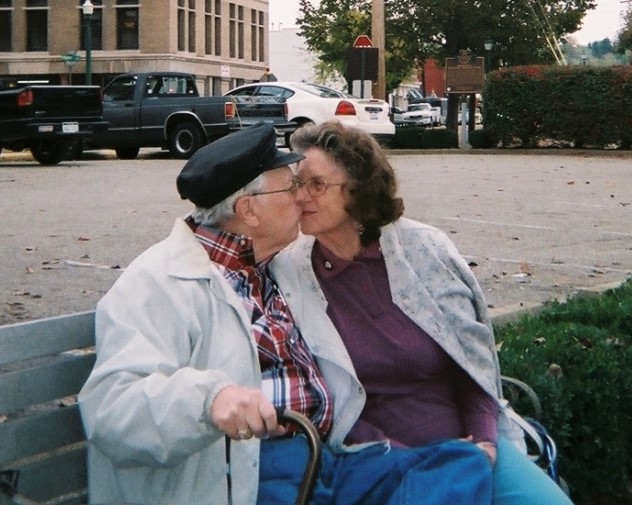
Lovers often sit at that bench. The young ones excitedly plan their lives, their dreams for the future. The oldsters hold hands, reflecting on all that their lives have been blessed with. Maybe there is just a solitary soul sitting alone on the bench, thinking of those who have passed beyond. The river just rolls on, a metaphor for the people.
Sometimes the river is placid, smooth as glass. Then it twists and turns, meandering as if trying to find its way. It starts somewhere up yonder and ends somewhere beyond the sunset. As it flows, it gathers up the waters of countless other streams, gaining power. It gives life to everything it touches on its journey. Even the river’s sporadic bursts of anger enrich the bottom lands. Though it’s sometimes troubled, like most of the lovers, it will flow ever onward. Only at the end will it pour out the last of its glory. May I invite you to sit on that bench in Marietta and share with you the journey of one remarkable man on the river of life?

Father, husband, friend, faithful servant. That was William Brower Bogardus. For the record, he lived, loved and toiled on this mortal Earth for 91 years. He left his mark and we are all better off for his lifetime of caring and achievement.
He grew up in tough times. Born on April 7,1929, the stock market would crash a mere six months later. As his family struggled through the Great Depression, his father left when he was just five years old. His mother, a woman of courage and faith, struggled to raise Bill and his two older sisters, Betty and Dorene. Much of his thriftiness no doubt came from his experiences during the Depression. Undaunted by poverty, Bill grew up always striving for a better life. Perhaps even more importantly, those he loved would never feel abandoned.
He was always there for his family. None of them ever suffered from lack of attention, support or love. In his youth he helped his Mom. When he was old enough, he sold shoes. A good student, he found time for football, drama and music. Unable to afford college, he went to work full time after graduating high school in 1946.
Bill was just 12 years old when the Japanese attacked Pearl Harbor. He would follow the events of the war closely. No doubt he got involved in scrap drives or letter writing. Too young to serve, he admired the service and sacrifice of those who fought in this, America’s most consequential war. His final high school years were spent with relatives in El Monte, California. His father, Dewitt, probably regaled him with sea stories about his service in the Navy during World War I.
Even as America was still de-mobilizing from the war, Bill enlisted in the fledgling United States Air Force in 1948. Working first in operational communications, he thrived in the military. He advanced steadily through the ranks acquiring skills that would serve him well throughout his later career as a senior civilian Communication Specialist. His assignments took him to far-flung places like Goose Bay Labrador and Elmendorf Air Force Base Alaska.
While serving in the military, Bill would meet his wife, Iva, and start a family. Karen and Linda would be his little Eskimos, born in Alaska. They lived in a tiny trailer, Number 2, Trails End “Tratel”, near Anchorage. There might be frost on the windows, but inside there was a warm, loving family.
In 1956, he left the Air Force as a Master Sergeant and entered the Civil Service. His first civilian job was at Andrews Air Force Base, near Washington, D.C. Son Tracy was born there. Next came Scott AFB in Illinois where Mark was born. Then he accepted a position with the Defense Commercial Communications Agency in Washington, D.C. Daughter Dorene was born next door in Virginia in 1965.
Right after Dorene’s birth he quit his job and moved to Utah to be closer to family. Tough times followed. He sold water softeners to get by. Finally, the Army called. SWalt lake City would have to learn to put up with hard water. In March of 1967 he got a job with the Army’s Strategic Communications Command which had just relocated to the remote post of Fort Huachuca, Arizona. The command had an important mission to perform, and it didn’t need a lot of urban clutter getting in the way. Housing was scarce in the little desert town of Sierra Vista, so Bill commuted by bus from Tucson. Once, during the Monsoon Season, the bus got caught in a raging torrent in Pantano Wash. Bill took off his shoes, rolled up the pants legs of his suit and helped the other passengers as they waded out. His youngest child, Lynette, was born in Tucson in 1968.
In 1969 the family finally made a home in Sierra Vista. The town was now big enough to meet their needs. Bill continued to work in commercial leased communications at the Fort. In 1975, he organized and became the first director of USARCCO. The new unit brought together a variety of leased communications efforts throughout the Army in an organized, efficient manner. ARCCO paid for itself by saving millions in contract costs. Bill would serve as its director until his retirement in 1983. His work earned him the US Army Meritorious Civilian Service Medal.
After retirement, Bill and Iva moved to Modesto, California, Iva’s hometown. Bill would volunteer with a children’s service agency while working on his passion, his family’s genealogy.
Bill was proud of his Dutch family roots. His ancestors, Everadus and Anekke Jans Bogardus were amongst the first Dutch settlers of New Amsterdam. Often an outing with Dad included trapsing through the local church’s graveyard or scanning records on microfilm at the Library of Congress. It was an exacting, time-consuming process to trace one’s family roots in those days. There were no computers, no data bases, no Ancestry.com, no DNA. Bill wrote information down on cards. He made charts. He corresponded with hundreds of Bogardus “cousins” who urged him on in his work. He drew encouragement from the Mormon Church, which used the information in some of its sacraments. Eventually he wrote a book about the Family. “Dear Cousin” was the crowning achievement of his life’s work as a genealogist.
From California, Bill moved on to Wilmington, Ohio not far from that bench in Marietta. There he would marry Raymona in 1987. That bench became the favorite spot for the two fifty-something teenage lovers. In Wilmington, Bill and Raymona would surround themselves with grandkids and unconditional love. They stayed busy with church, family, masonic, travel and genealogical activities for the next thirty-one years until Raymona’s passing in 2018. Between the two of them, they had 34 Grandchildren and 43 Great Grandchildren. They last Great Grandchild was born into this world even as Bill was preparing to leave it. The baby had some life-threatening conditions. Suddenly, the child was fine, on his way home. Bill believed in miracles. This one made his passing so much easier.
Bill spent his last two years in a senior living facility in Marysville, Ohio, not far from son Mark’s home. They could socialize, play checkers and grab an occasional meal at Bill’s favorite restaurant, Bob Evans. All six of his children gathered there to help him celebrate his 90th birthday last year. Sadly, COVID would limit these visits by Mark and his siblings as Bill’s health declined.
All of us remember special things about Bill.
“Turn the lights off, electricity costs money.”
If you got a card or letter from him, it was neatly typed on his antique Underwood typewriter. There were no margins, Bill used every last square millimeter of the paper.
Bill loved to travel, by car, late into the night. One kid would stay up to keep him alert. They would massage his scalp. He loved it.
Don’t even think about getting caught driving 96 miles an hour on the Highway 90 bypass. There will be consequences, but you will still be loved.
Bill would want us to remember him as a doer, not a talker. He made things happen. Still, he was a great conversationalist and a joy to be with.
What will you remember as you sit on that bench in Marietta?
Karen: He helped me overcome my handicap. Hitting a whiffle ball with a plastic bat was huge. He ran after me as I wobbled down the gravel street on my bike. He found a way to teach me to swim in motel pools. Later, he let me drive his Falcon Futura down the street. I was 14. I learned to carefully prepare the stamps for his collection.
Linda: When I was dating in High School, I would stand on the front porch with my date and if we stood there too long Dad would flip the front light on and off three time and that’s when I knew it was time to go inside.
Tracy: I hyperventilated on purpose to get out of sweeping the driveway in Tucson. When I fell and then you had to sweep the driveway in the summer
I called him once and he sensed I was having trouble with income. I never told him the details. He and Raymona sent me a check that made it possible to make ends meet until the Income resumed. This was when the housing market crashed. I never asked, he never said anything to me.
The one thing that shaped my life was sitting by the side of his bed on a Saturday with him talking about going into a genealogy business. That gave me the desire to be in business for myself.
He was probably one of the most generous men I knew. He gave a substantial amount of his income to the church, veterans organizations, feeding the poor, Native American organizations, cancer research and many others.
Mark: Gena and I visited the Gold and Silver Pawn Shop in Las Vegas. This is the one from the show Pawn Stars on TV. While visiting dad and Raymona and I told him about our visit and asked if he had ever watched the show Pawn Stars. He told me that they had watched PORN STARS. Everyone in the room just started laughing.
Dorene: Going to his office at Greely Hall where he overlooked the theater floor below from the windows where projectors would have been.
Soaking stamps. Adding up sales tax from receipts (It was tax deductible back then.)…scratching his head.
Lynette: When dad bought a box of stamps and Dorene and I were soaking the stamps and putting them on towels.
Many years ago, Bill taught one of his grandkids how to play “Chopsticks” on the piano. He put colored dots on the keys to guide her. The child went home, but the dots stayed. After all, when you have 33 more grandkids… The Piano has since been passed down to his granddaughter Mindy…….the dots remain.
Curated by Larry Thill
 Outlaws, Outrages and Outright Lies