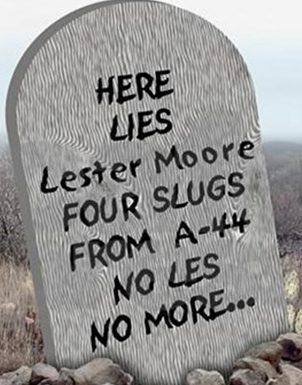
Well Maybe not…
Back in the Sixties Ford Motor Company coined the slogan, “Ford Has a Better Idea!” Those were heady times, Boss Mustangs, Talladega NASCAR racers, F-150 Trucks, the GT-40. Everything Ford did generated excitement and sales. Trying to appeal not just to car nuts, Ford made all of their cars stylish and easy to drive. Tired of reaching down to disengage your emergency brake? Ford had a better idea. Starting in the mid-sixties upscale Fords like the Thunderbird began getting vacuum-operated emergency brake releases. Just put the car in gear and drive! No more ruining rear brakes by driving with the E-brake partially engaged. What could go wrong?
Enter the Ford C-6 transmission. In 1966 Ford came out with a new automatic transmission. Like its little brother, the C-4, it had three forward gears and a lightweight aluminum case. Bigger and stronger, it could handle the torque of Ford’s big block motors. It was widely used in trucks, luxury vehicles and muscle cars. Indeed, the C-6 was a better idea. At least for a few years.

I have owned a couple of Ford’s with the C-6 transmission. In 1988 I bought a ’77 Ranchero with one. It also had an awesome 429 cubic inch engine from an earlier Ford model. With breathtaking power and torque, I loved it. My Ranchero was no Malaise-Era slug.
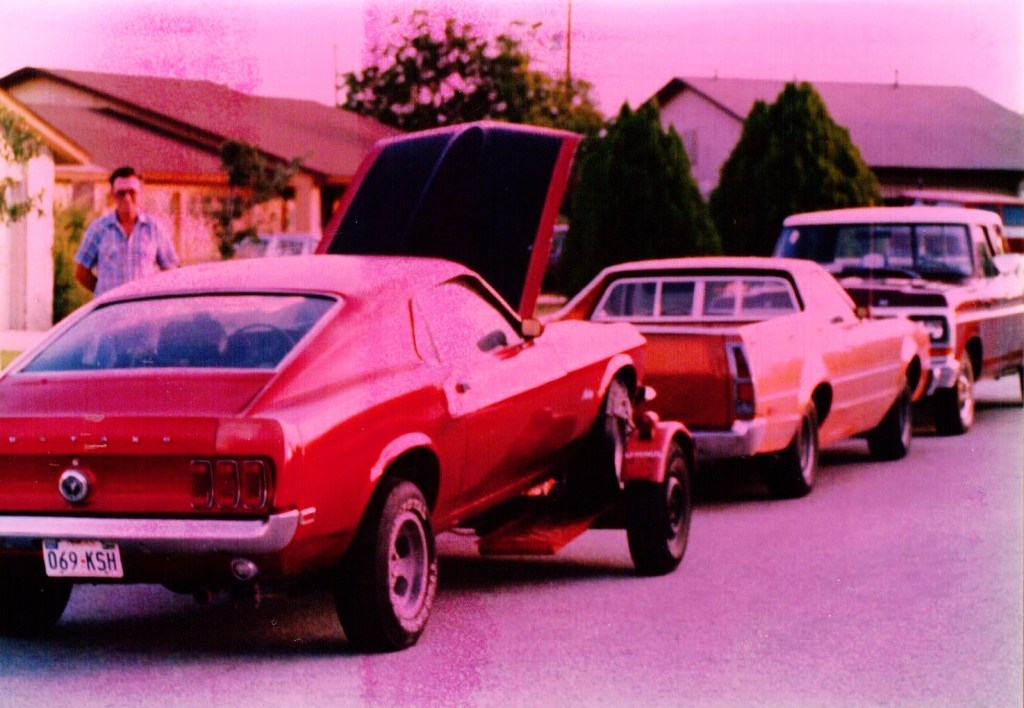
Very early on, I discovered an odd feature on the Ranchero. The first time I went to release the emergency brake I couldn’t find a lever or handle. This was seriously weird. Crawling under the dash, I eventually located a tiny lever that released the brake. Upon releasing it, I heard a clunk and a hiss. Later on I tried to engage the e-brake while the motor was running and the truck was in gear. It wouldn’t engage. Maybe that’s a good thing I thought as I played around with the brake. Soon, I noticed that the emergency would engage if I was in park and automatically release when I put it in gear. Well that’s nice, or so it seemed.
This was in the late ’80’s. The C-6 transmission had been out for over twenty years. Millions of them were on American roads. Some were getting older, parts were starting to wear. Unbeknownsed to me, there were some alarming reports of Ford automobiles slipping out of park and motoring off by themselves in reverse. Ford blamed careless drivers. Drivers claimed their cars were in park and that they had set their emergency brakes and blamed Ford.
On television, there was a video of a driverless Lincoln Continental circling a cul-de-sac in reverse with the driver’s door open. It went for an hour before a brave cop jumped in and stopped it. After watching the video, I went out and disconnected and plugged the vacuum line that powered the brake release on the Chero. I would just have to use that little hard-to-find lever in the future.
The problem with Ford transmissions was serious. What happened all of a sudden to make these cars so dangerous? Analysis showed that most of the reported transmission slipping into gear incidents were in older cars. After ten or twenty years, shift linkage bushings were wearing out. Inside the transmission, the detent springs the held the selector in place were getting weaker. Since the problem wasn’t happening to other brands, Ford’s transmission design also came under suspicion. These issues coupled with a car with an automatic brake release spelled trouble, big trouble.
Reports started rolling into the National Highway Safety Administration. 23,000 incidents, 1710 injuries and 98 fatalities. NHTSA responded in 1978 by warning drivers not to leave their cars in park with the engine running. Lawsuits against Ford began to pile up. The magazine, Mother Jones, did an expose. NHTSA threatened to recall 10 million Fords. They backed down when Ford agreed to send a letter with a warning label to 23 million owners in December 1980. Complaints, injuries and as many as 300 more deaths occurred after the warning. Whoever owned my ’77 Ranchero in 1980 failed to attach the label to the dash as recommended. (Note, the problem was not limited to the C-6 transmission, but seemed more common on them. Larger, fancier Ford products with big engines used the C-6 along with the automatic emergency brake release in most cases.)

If anything is to be learned from the Ford transmission fiasco, it is that both machines and people are fallible. Machines wear out. Sometimes people put forth defective designs, then try to cover up their mistakes. If you find something wrong with your machine, get it fixed or find ways to reduce the danger. And, yes, I did love my Ranchero!
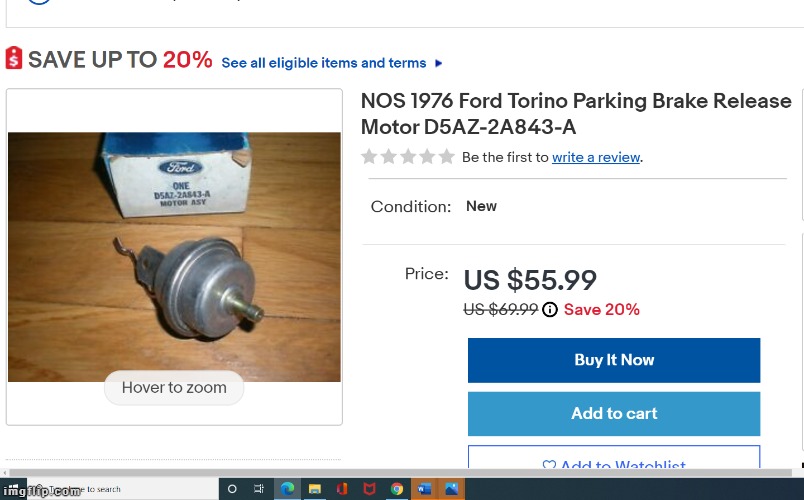
It will cost you 56 bucks and maybe your life!
REFERENCE: Ford Transmissions Failure to Hold in Park – The Center for Auto Safety
LDT July 17, ’21
Main Menu: http://www.azrockdodger.com
 Outlaws, Outrages and Outright Lies
You are so full of new information. In spite of the fact that I owned two of these cars over time, I was totally unaware of this glitch. I remember those signs, though! Maybe that’s why they have recalls today instead of just warnings. Thanks for another great writing, and it wasn’t even political!!!
LikeLiked by 1 person