before his two decades on the run.
A shadow dances on a canyon wall,
where once was heard the bugle call.
His moccasins tread lightly o’er,
the tangled trail that lies before.
A warrior of a long-lost band,
the last to wander in this land.
They shipped him to the Everglades,
though he wasn’t with the renegades.
Somewhere past the Mississip’,
he left the train and gave the slip.
The stars to guide his lonesome trail,
he longed to hear the coyote wail.
Sierra Madre, Mexico,
the last wild place for him to go.
For twenty years he made his way,
he moved by night and camped by day.
One day he stole a native bride,
soon her love she couldn’t hide.
Chased by troops in Mexico,
across the line they had to go.
Then a posse tracked him down,
somewhere near Socorro town.
His family says he saved them all,
when he took his fatal fall.
Sometimes if you listen close,
you can hear Massai’s ghost.
The wind that whispers high above,
or in the soft sound of a dove.
They tell us all that he is near,
it’s freedom’s song that we hear.
LDT February 18, ‘22
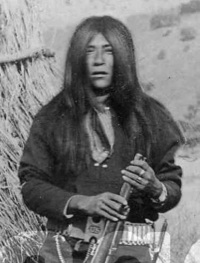
Massai was a Chiricahua Apache who served as a scout for the US Army in the early 1880’s. Like most Chiricahua, he was not with Geronimo’s renegade band that surrendered in 1886. Unfortunately, the decision was made to send all of the Chiricahua to Florida as prisoners of war. Massai escaped from the prison train somewhere near St Louis and made his way, undetected, back to his homeland. Living alone, he traveled between the mountains of Arizona, Sonora and New Mexico. At one point he kidnapped a young Apache girl named Zanagoliche from the Mescalero Reservation. She became his soulmate as they lived the wild life of the Bronco Apache. After 20 years on the run, Massai is believed to have met his fate at the hands of a cowboy posse in New Mexico in 1906. His daughter says that after ensuring their safety Massai tried to recover their horses when he was killed and dismembered. Zanagoliche and their children re-settled at the Mescalero Reservation in New Mexico. Massai’s 20 years of freedom can be contrasted with the 27 years of captivity of the rest of the Chiricahua who did not regain their freedom until 1913. By then their ranks had been decimated by the White Man’s diseases. Massai Point in the Chiricahua Mountains is named in honor of Massai. It is a quiet, reflective place with a spectacular view.
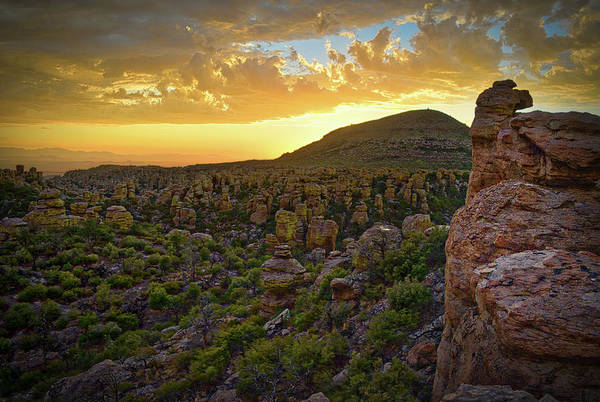
Chiricahua Mountains.
Main Menu: http://www.azrockdodger.com
 Outlaws, Outrages and Outright Lies
The white man has gotten away with a lot of crap, haven’t they!
LikeLike