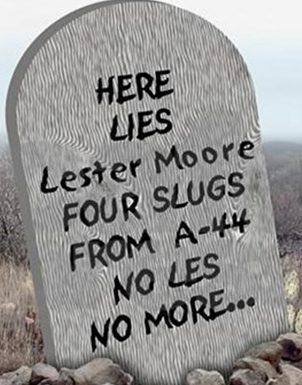
“This court is now in session. Would the defendants please rise?”
The three men looked around as if seeking allies in the crowd. Two of them slowly began to stand.
“Git yer sorry ass up!” demanded the farmer serving as both guard and bailiff. He nudged the reluctant man with the butt of his Sharps rifle. The Squatters Court of Linn County was in session. The judge was another free-soil farmer, Ben Searles.
“State your name and residence,” ordered “Judge” Searles pointing toward the first man.
”Isaac Jones, Linn County,” said the first man.
“You are charged with stealing and butchering three hogs from the Silas McKay farm on or about March 25, 1857. How do you plead?”
“I am innocent and I don’t recognize the legitimacy of this court. Try me at Fort Scott before Judge Williams if you must.”
“The good citizens of Linn County do not recognize the authority of slave courts. I will record your plea as not guilty.”
The remaining defendants also plead not guilty.
“Is there anyone here that will speak for the defense?” Searles asked.
“I will.”
“And you are?”
James Snider of Clinton County, Missouri.”
“How do you know the defendants?”
“Two of them were my neighbors back in Missouri. I was partners in business with the other, Mr. Jones.”
“Place your hand upon this here Bible. Do you swear to tell the truth and nothing but the truth, so help you God?”
“I do.”
“Would you please tell the court why you think these men are innocent?”
“These men are good, God-fearing citizens. I have never known them to steal, lie, or cheat. They cannot possibly be guilty of this crime.”
“Where were you during the last week of March of this year?”
“Home in Clinton County.”
“Did you see any of these men on or about March 25, 1857?”
“No Sir.”
“Sit down. Are there any other witnesses for the defense?”
The crowd looked around, but no one stepped forward.
“Alright. Does the prosecution have any witnesses?”
“We do, Your Honor,” said a man acting as the prosecuter.
“Where is he!”
“Here, Your Honor,” said a man in the crowd.
“State your name and residence.”
“Mel Wagner, Linn County, Kansas.”
“Put your hand on the Bible and swear to tell the truth”
“I, Mel Wagner, do solemnly swear to tell the truth.”
“How do you know the defendants?
“I’m a neighbor of Isaac Jones. I’ve seen the others around Sugar Mound. I’m the owner of the hogs they stole.”
“Describe the theft.”
“On the night of March 25th, I was awakened by my dogs barking. I checked my place and found the gate open to the hog pen. Three hogs were missing. The next day I confronted Jones, who had given me some trouble before. He sneered at me and acted pretty damn guilty. Then I checked his barn and found the other two rascals there busy butchering three hogs.”
“Did anyone see them take the hogs?”
“Yessir. Ab Jenkens came along on the road as they were herding them into the Jones place.”
“Is Jenkins here?”
“Here I am Your Honor.”
“Come up here and get sworn in. Do you swear to tell the truth on this here Bible?”
“Yep.”
“Tell the court what you saw.”
I come up the road early that mornin’ and saw three men herding three hogs onto the Jones place.”
“Are those three men here now?”
“Yep. Them thar’s the ones,” Jenkins said pointing to the defendants.
Someone in the crowd slapped his leg and shouted, “Guilty! A few protested with “No!
Searles banged the butt of his revolver on the table and hollered, “Order! We will decide the guilt or innocence of these men by secret ballot after we’ve heard all the evidence. Every man here is empaneled as a juror. Are there any more witnesses?”
There was no answer.
Searles banged his pistol on the table again. He looked sternly at the assembly. “Each of you will come forward one at a time and mark your ballot. We’ll use my hat.”
Reuben took his place in the line to vote. It was the first time he had voted on anything. When his turn came, he wrote guilty on the paper, folded it in half, and dropped it into the hat. The final vote was sixteen to five. The five were relieved that Davis had let them vote by secret ballot. Maybe their farms wouldn’t be visited by the Sugar Creek Company that night.
“You men are guilty of the theft of the hogs as charged. I sentence you to pay fair restitution to Mr. Wagner. I also assess ten dollars in court costs, payable immediately.”
There were cheers from the free-state men in the group. They knew that “court costs” meant they would soon enjoy a jug of Searles’ whiskey. Reuben stayed for the party but didn’t imbibe.
His civic duties finished, Reuben left for Westport a few days later to pick up his bride. He was there as the steamer Paul Revere was docking. He studied the passengers anxiously. The slaves who served as deck hands tossed a rope to men on the shore. Soon it was tied up fast and the ramp lowered. Margaret was one of the first to disembark. She dropped her satchel as Reuben ran through the crowd.
“Reuben, I missed you so much!”
There was a long embrace and warm kisses. “Did you have a good trip?”
“The boat stopped at a few places in Missouri where I didn’t feel welcome. They even searched my cabin looking for guns and abolitionist newspapers. Telling them I was from Polk County, Missouri helped.”
“I’ve got a lot to show you when we get to our place. I think you are going to like it.”
“Oh, I can’t wait. I’ll have so much to do turning our cabin into a home.”
Reuben gulped and said, “Well it’s still pretty rough. The walls are up and the roof is near done.”
“It will do just fine. Did the stock make it through the winter?”
“It was a bad one, but the grazing association got them all through. We’re getting some calves now.”
“I can’t wait to see the place.”
Soon Reuben had the luggage loaded in the wagon. There was so much he wondered what the fare had been but didn’t ask.
The trip back to Linn County helped them catch up on the news. All was well back in Iowa. Reuben had plowed another ten acres. The neighbors were nice. The wagon rolled on.
“Oh my, it’s beautiful!” exclaimed Margaret as she got her first glimpse of the farm. The cabin was set near the sugar maples that lined Sugar Creek. There was a lush green carpet of new grass in the pasture. The freshly plowed fields were neat and orderly. Margaret could see the small front window she had insisted upon. She frowned a bit knowing she’d have to shorten the curtains she had brought with her. Reuben had made the window just the right height to place his Sharps on the sill if he had to defend the cabin from bushwhackers. There were small rifle slits in the other walls. He had started a wall of rocks around it to provide further protection. The daffodils he had gotten from Clarinda Montgomery were now in bloom.
“I love it!”
Reuben picked her up playfully and carried her across the threshold. They were home. The next few weeks would be a buzz of activity as they improved upon the place. Margaret learned to cook on the hearth of the stone fireplace. The neighbors came to meet her and finished the roof.
By summer the couple had the cabin livable. The furniture was crude but functional. The crops were doing well and livestock were thriving. It was all thanks to their hard work. The threats from the pro-slavery faction continued to diminish as more and more free-state settlers poured into Kansas. Southeastern Kansas, including Linn and Bourbon Counties, remained contested ground.
Twenty miles to the south of Linn County was the town of Fort Scott. It had become the center of pro-slavery agitation. It was full of drunks, gamblers, and other hangers-on who were quick to use the pro-slavery cause as an excuse to abuse and rob the free-soil settlers. The federal judge at Fort Scott, Joseph Williams, demonstrated his pro-slavery sentiments in his rulings. He protected the men who raided Linn County when they returned to their sanctuary. The Sugar Creek Company was constantly on alert for raiders whether they came from Fort Scott or Missouri. They had to be ready to counter any threat.
“I have information that our ‘friend’ George Washington Clarke is planning another raid,” Montgomery told his assembled company. They’ll be coming from Bourbon County on Monday afternoon. They plan to catch us off guard in the night. I’m going to stop them. Who is with me?” Montgomery calmly asked his men.
Reuben joined a chorus of “I am!” responses. It was time to stand up to Clarke. A spot on the Leavenworth to Fort Scott Road was selected for the confrontation. The men went home to gather and clean their guns. They would reassemble on Monday morning and await the raiders.
The site for the company to make its stand was a narrow passage through a grove of trees. Montgomery issued strict instructions to the men before they took their places behind rocks and bushes.
“Remember men, we are not here to commit murder. No one shoots unless we are fired on. Once Clarke’s men fall into our trap, I will go out on the road and explain their peril. If they agree to lay down their arms, I want two men, you, Schmidt, and you, DeLay, to come out and help me disarm them. We’ll take their horses and guns. They can walk back to Fort Scott. Any questions?”
“I’d sure like to settle a few scores,” said one of the men.
“We are not here to start further trouble. If we teach them a lesson, that will be enough. We don’t want another Pottawattamie Massacre. If we start shooting with the advantage of our position and arms, we’ll kill or maim most of them. That will bring the Federal Army down on us and alienate our friends and the papers. We win by showing restraint and voting in larger numbers than they do. Kansas will never be a free state if we overreact.”
Montgomery’s men took their hiding places. With their Sharps rifles at the ready, each man had a commanding view of the road. In-spite-of Montgomery’s admonition, a massacre remained a possibility. All eyes were focused on the road coming from Fort Scott.
“Let them pass that dead tree over there. Then show yourselves, but don’t shoot,” commanded their leader.
Reuben stared down the sights of his rifle, practicing aiming at rocks and b ranches along the road. If he had to shoot, he was ready. He understood why Montgomery urged caution though. He hoped for a peaceful outcome. Then he saw the column of riders approaching. It looked like about twenty-five mounted men. Some carried rifles and shotguns across their saddles.
The invaders had almost reached the dead tree when one of the defenders’ horses reared and whinnied. Clarke raised his hand to stop the column. He motioned his men to fan out and envelop the ambush site from the sides. The element of surprise had been lost.
Ka pow! One of Montgomery’s men fired a warning shot. Clarke’s horsemen began to retreat. A few tried to get off a shot before they left. Montgomery’s men fired a few shots after them.
“Hold your fire!” roared Montgomery.
Fortunately for Kansas history, the frightened riders had skedaddled out of range. None had fallen from their saddles. It was good, however, that they had been driven off. Perhaps they were now forewarned of the dangers of raiding into Linn County. The Sugar Creek Company had faced down the bushwhackers from Fort Scott. No blood had been shed. Perhaps, they wouldn’t come back.
The best hope of the settlers of Linn County was that a legislative solution might resolve the slavery issue once and for all and ease the tensions. That would be a long and convoluted process. That Fall, some Kansas delegates were toiling away in Lecompton. They were working on a constitution that would see Kansas enter the Union as a slave state. In typical Kansas fashion, the Free-Soilers had boycotted the election for the convention delegates. This gave the opposition a free hand to draft a pro-slavery constitution. In the middle of their deliberations, a new state legislature was elected. This time, the Free-State side won both houses. The Lecompton Convention began to realize public sentiment was no longer on their side.
“I’m confused,” Margaret said quizzically. “Why are there two votes on Lecompton?”
“That’s an easy one,” answered Reuben. “Kansas has two governments, one slave and one free. We don’t vote in their elections, and they don’t vote in ours. If we all voted together, we’d probably have to shoot each other. The exception was the vote for the legislature. We knew they’d cheat, but we won anyway. Shucks, they turned in a whole bunch of votes from people on the Cincinnati, Ohio City Register. Then, wonder of wonders, Governor Walker threw out those votes. That pulled the rug out from under the Lecompton cabal. They know they are outnumbered, but they’re holding a rigged election on their slave constitution anyway.”
“Rigged? How so?
Reuben frowned, “The way it is worded we lose either way we vote. It should be a straight yes or no vote, but it isn’t. We’re boycotting it and we’ve scheduled our referendum for January 4th.”
“Let me see if I understand. The December vote is for the Lecompton Constitution with or without slavery. What’s wrong with voting for the Constitution without the slavery clause?”
“The way the proposition is written, a vote for the Constitution with the no slavery clause doesn’t prohibit slavery.”
“Doesn’t prohibit slavery? It says Constitution with no Slavery. How does that mean Kansas keeps slavery?”
“It’s a trick. The clause only prohibits the importation of slaves. It lets the enslavers keep the slaves they have and there is nothing to keep them from sneaking more in. The vote we scheduled in January has three options; No on Lecompton, Lecompton with Slavery, and Lecompton without Slavery. If we turn out the vote, the Constitution will be defeated. We won’t get to become a state, but at least we can go back and write a better Constitution.”
“Politics,” fumed Margaret. “So exasperating. If women could vote we’d fix this nonsense in a heartbeat.”
Reuben chuckled but didn’t take the bait. Women’s suffrage wasn’t going to happen anytime soon.
The first vote on the Lecompton Constitution was held on December 21, 1857. As expected, the Free-Soil Kansans boycotted the vote. The Constitution with the Slavery Clause passed overwhelmingly. The Free-State side remained confident that their vote scheduled for January 4th would be far more decisive. The three options seemed fair to both sides. Perhaps Popular Sovereignty would work after all.
Before the vote, Reuben and Margaret would have Christmas to celebrate. They made little things for each other; a knitted scarf to keep out the cold; a pair of carved wooden candleholders. Life would get even better for them in the new year. It had to. They were expecting their first child!
Index: Unbowed: The Saga of a Civil War Cavalryman- https://azrockdodger.wordpress.com/wp-admin/post.php?post=6662&action=edit
 Outlaws, Outrages and Outright Lies
Jeez…Politics was as underhanded then as now! I’ve gotten to look forward to the next chapter of Ruben’s adventures. I figure it’s like those continued stories in the magazines of yore. Thanks for letting us keep abreast of the story!
LikeLiked by 1 person
Thanks, Knowing you are reading it is a huge motivational factor. I am having tons of fun with the writing.
LikeLike